
होमKabaddiKabaddi's New Era: The Art of Raiding, the Rise of Young Raiders, and the Changing Economy of the Game
Kabaddi
Kabaddi's New Era: The Art of Raiding, the Rise of Young Raiders, and the Changing Economy of the Game
कबड्डी अब केवल शारीरिक खेल नहीं, बल्कि तकनीक, फिटनेस डेटा और रणनीति का खेल है। मुख्य बदलाव रेडिंग में हुआ है: रेडर की सफलता अब डिफेंडर के संतुलन को तोड़ने और उसे 'बाइंड' करने पर निर्भर करती है। परदीप नरवाल अपनी 'डबकी' तकनीक के लिए, नवीन कुमार तेज फुटवर्क के लिए, अर्जुन देशवाल संयमित आक्रामकता के लिए और फजल अत्राचली एंकल होल्ड आधारित ईरानी डिफेंस स्कूल के लिए जाने जाते हैं। लीग आधारित ढांचे ने साल भर प्रतिस्पर्धा, विशेषज्ञ कोचिंग और वीडियो विश्लेषण को सामान्य बनाया है, जिससे चयन की कसौटी बदली है — अब दोनों ओर योगदान देने वाले खिलाड़ियों की मांग है। प्रमुख चुनौतियां हैं: आधारभूत ढांचे की असमानता, व्यस्त कैलेंडर से बढ़ता चोट जोखिम, और मजबूत डिफेंस के कारण रेडिंग का सतर्क हो जाना। महिला कबड्डी के विस्तार ने खेल की समग्र गुणवत्ता और प्रशिक्षण संस्कृति को मजबूत किया है।
Kabaddi was long regarded as a simple game: a village field, a mud surface, and the stubbornness to enter the opponent's half and return on a single breath. In the past decade that picture has changed fundamentally. Kabaddi is no longer only a game of strength and endurance; it has become a game of tape-based analysis, fitness data, specialist coaching and television economics. The clearest impact of this shift is visible in the art of raiding — the moment a lone player crosses into the opposition half and searches for a route out from among three or four defenders.
Earlier, a raider's identity was defined by strength and courage. Today it is defined by footwork. Which direction the raider's feet turn, where the body weight rests, which way the defender's waist is leaning — all of this is computed in the raider's head in a fraction of a second. In modern kabaddi, the success of a raid depends on whether the raider can 'bind' the defender. If the defence becomes convinced the raider will go straight, he will be caught; if the raider changes direction and breaks the defender's balance, the touch comes. That is why raiding is now described as a decision game rather than merely a physical contest.
At the centre of this change are names that have endured. Pardeep Narwal is known in the kabaddi world as the 'Dubki King', a title earned from the technique in which he ducks past a defender's flank. His signature is the ability to touch two or three defenders in a single raid and return without losing balance. That balance is not instinctive; it is built from years of repetition. Naveen Kumar, by contrast, is defined by speed — his feet change direction very quickly and he gives defenders almost no window to close. The two styles are different, but the base is the same: proving the defender's mental calculation wrong.
In recent seasons that calculation has moved to a higher level. The reason is clear — defensive units now think as a collective. Earlier, defenders handled their individual responsibilities separately; today three or four defenders build a trap for the raider. The principle of that trap is to let the raider commit deep and then close from all sides at once. This strategy has forced raiders to find new methods — taking an early touch and returning, or pausing near the centre line to force defenders to come forward. In kabaddi this is called the 'bet' — a wager between raider and defender.
This wager has produced a new generation of raiders. Arjun Deshwal is now counted among those who can win raids even under sustained pressure. His defining quality is that he takes calculated risks without gifting away his wicket; his strike rate is built on that restraint. Aslam Inamdar's style is the opposite — he prioritises aggression and tries to put the defence under pressure in the first minute itself. Young raiders such as Mohit Goyat show that speed and decision quality can coexist. Their rise signals that kabaddi now values the right profile over big names alone.
On the defensive side the picture is equally interesting. Defenders such as Fazel Atrachali demonstrate that defence in kabaddi is not only about tackling but about stopping. His identity rests on the ankle hold and on bodily balance — he stops the raider, breaks his momentum, and then gives the rest of the defensive unit a chance. Iranian defence has a distinct school that emphasises technical precision over raw physical strength. That school is both a challenge and a lesson for Indian kabaddi. In India, a defender's identity was traditionally built on strength; the Iranian model showed that with lower body weight, the right angle and the right moment of contact can still stop a raid.
A major driver of this technical change is the commercial structure of the sport. League-based kabaddi gave players a platform for year-round competition. Previously there were long gaps between state-level and national-level tournaments; now players test themselves continuously against high-level opposition. Two things followed. First, raiders' game reading developed rapidly because they faced a new defence almost every week. Second, teams began investing in specialist coaching — not just technical coaches but fitness coaches, physios and video analysts.
This shift also affects the player's body. The biggest cause of injury in kabaddi is the moment a raider makes contact with a defender and the knee or ankle twists. As competition has grown, the number of raids has increased, and with it the risk. That is why teams now talk about workload management — who should be rested in which match, who should be allowed limited raids. It may look like cricket's language, but in kabaddi it matters just as much, because a single player is expected to contribute in both raiding and defence.
At the national level, this shift means the selection criteria are changing. Earlier, players strong in a single specialisation were preferred; today the demand is for players who can contribute on both sides. In the Asian Games and world-level competitions this need becomes clearer, because every match is played under high pressure and a single weak link can disturb the whole balance. Indian kabaddi's traditional strength has been raiding, but in recent years equal attention has gone to defensive depth.
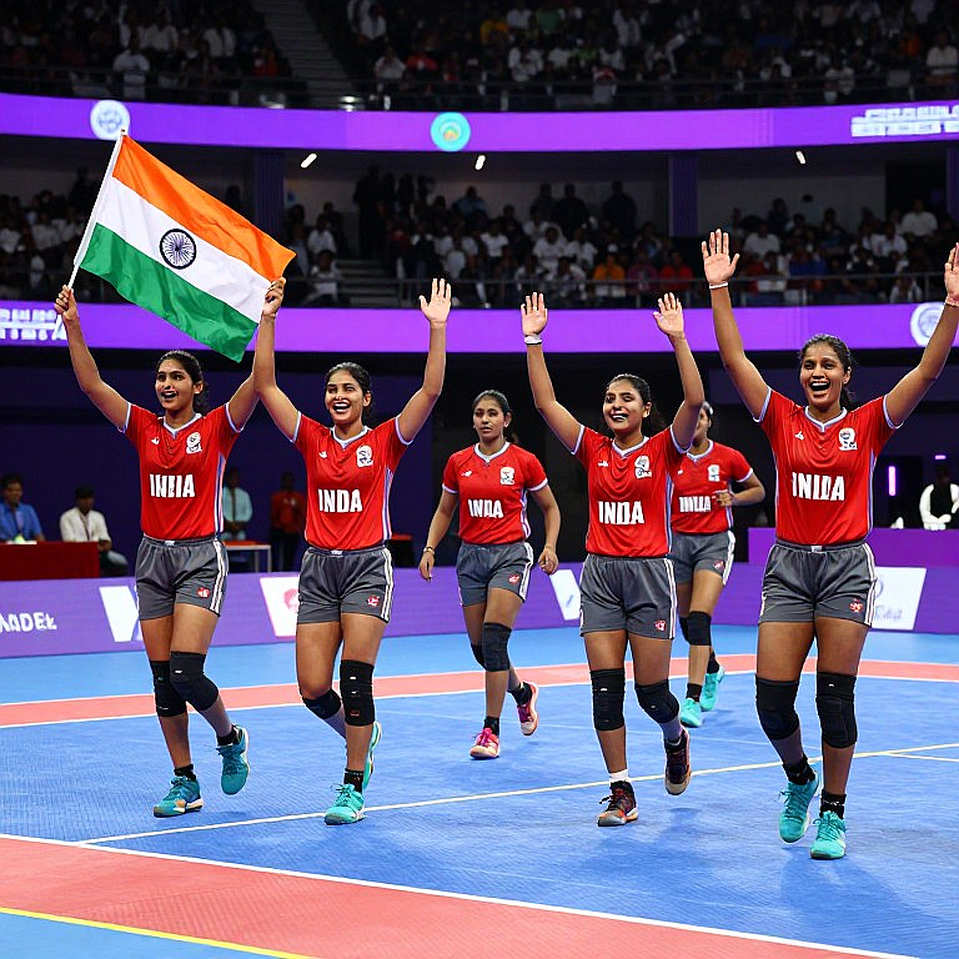
There is another dimension that is often underrated — women's kabaddi. In the women's game, the balance between raiding speed and defensive precision differs from the men's. Women players have shown that even with lower body mass, fast footwork and decisions taken at the right moment can win raids. The platform women's kabaddi has received has raised the overall quality of the sport, because it expanded both the coaching culture and the professional approach.
But the picture is not entirely bright. The biggest challenge for modern kabaddi is the inequality of infrastructure. Facilities grew in league and television centres, but in the regions players come from, mats, coaches and medical support remain limited. The consequence is that many talented players drop out before reaching the level where their talent could receive professional training. The second challenge is the calendar — the pressure of continuous matches shortens careers.
The third challenge is strategic. As defences have strengthened, raiders face greater pressure to take risks. One negative side is that in some matches raiding becomes 'cautious' — the raider takes an early touch and returns without taking a bigger risk. That may be strategically correct, but it reduces the spectacle for viewers. For administrators, the question of how to encourage aggressive raiding through the rules, without disturbing the balance of the game, is an important one.
Despite these challenges, kabaddi's present phase is one of the richest in its history. For the first time the sport has a platform where technique, fitness and strategy are all recognised together. Experienced raiders such as Pardeep Narwal, multi-dimensional players such as Deepak Niwas Hooda, former captains such as Ajay Thakur who strengthened the foundations of the game, and young players such as Arjun Deshwal and Aslam Inamdar — together they form a chain in which each generation has raised the standard for the next.
The road ahead is clear, though not easy. Kabaddi must carry its identity from 'a village game' to 'a professional sport' without losing its reach. Its greatest strength is that it does not depend on expensive equipment — a field, a line and some players are enough. That simplicity makes it one of India's most democratic sports. The question is whether that simplicity can be combined with professional efficiency.
Returning to the art of raiding, one thing is clear: in kabaddi a raider is never alone. Behind him are the coach's strategy, the work of the fitness team and the trust of the whole side. And the defender standing in front is not alone either — he builds a structure with his teammates. That is the essence of the game: one individual's decision between two structures. On the day the decision is right, the day belongs to the raider; on the day the structure holds, the day belongs to the defence. That balance is what keeps kabaddi alive.
In the coming years that balance will shift again. With growing use of data analysis, defence will become more precise, and raiders will have to find new methods. The growing participation of young players shows that the depth of the game is increasing. And if infrastructure receives attention, kabaddi has the opportunity that few Indian sports have had — a chance to build a distinct identity at the world level without cutting itself off from its roots.
संबंधित खिलाड़ी
अनुशंसित
India vs England, Match 4: Don't Read the Margin, Read the Bonus-Line Ledger2026-10-25
In Kabaddi's Numbers, the Missing Part Is the Story2026-11-02
Day One in Ahmedabad: The Commonwealth Kabaddi Championship Points Table That Is Really a Shard of Glass2026-10-25
Kabaddi's Unkept Ledger: From the Mud Akhada to the Auction Stage2026-10-26
Commonwealth Kabaddi Championship 2026: The 68-vs-26 Gap Inside India's Three Wins, and the Real Question Before Nigeria2026-10-28
India vs England, Match 4: In Ahmedabad the Real Story Is the Rotation, Not the Scoreline — and the 'Favourite' Tag Arrives Without a Single Number2026-10-29
Commonwealth Kabaddi Championship begins in Ahmedabad; India women face Malaysia, men take on England2026-10-31
अनुशंसित
Commonwealth Kabaddi Championship 2026: The 68-vs-26 Gap Inside India's Three Wins, and the Real Question Before Nigeria2026-10-28
Day One in Ahmedabad: The Commonwealth Kabaddi Championship Points Table That Is Really a Shard of Glass2026-10-25
India vs England, Match 4 — In Ahmedabad, the Real Test Won't Be Written on the Scoreboard2026-10-25
Kabaddi: From Mud Courts to the Professional Era, a Sport's Structural Shift2026-10-31
Match 4 in Ahmedabad, India's First: Where Rotation and Absences Speak Louder Than the Scoreboard2026-10-30
India vs England, Commonwealth Kabaddi Championship 2026: In Ahmedabad I Will Read the Tape and the Recovery Window, Not the Scoreboard2026-10-28
India vs England, Match 4: Ahmedabad's Scoreline Will Reveal the Tournament's Weakness, Not India's Strength2026-10-27