
In Kabaddi's Numbers, the Missing Part Is the Story
**मुख्य उत्तर:** प्रो कबड्डी लीग सार्वजनिक स्कोरकार्ड में रेड पॉइंट, टैकल पॉइंट, सुपर 10 और डू-ऑर-डाई सक्सेस दर्ज होते हैं, पर कवर कॉल, रेडर का मैट पर बिताया समय और जान-बूझकर छोड़ी गई रेड दर्ज नहीं होती — इसलिए रेड का दबाव और लय अदृश्य रह जाती है। **मुख्य तथ्य:** - 2018 एशियाई खेल सेमीफ़ाइनल में भारत पुरुष टीम ईरान से 18-27 हारी, ग्रुप में दक्षिण कोरिया से 23-24। - पुरुष कबड्डी का स्वर्ण पहली बार भारत से गया; भारत को कांस्य मिला। - लेखक ने सीज़न 5 (2017) के सार्वजनिक स्कोरकार्ड से 2,100 रेड का व्यक्तिगत लॉग बनाया। - राहुल चौधरी की डबकी सड़क के मैचों में बोनस लाइन कम बार भेदती मिली; घर के मैट पर दर ऊँची रही। - 2020 बंदी में हरियाणा-पंजाब पट्टी पर ग्यारह हफ़्तों में 47 इंटरव्यू दर्ज किए गए। **स्रोत:** लेखक का सीज़न 5 रेड-लॉग (जुलाई-अक्टूबर 2017), हरियाणा-पंजाब फील्ड नोट्स (2020), और PKL सार्वजनिक स्कोरकार्ड; बाहरी क्रॉस-चेक नहीं किया गया। **संबंधित प्रश्न-उत्तर:** प्रश्न: PKL में कौन-सा आँकड़ा सार्वजनिक रूप से उपलब्ध नहीं है? उत्तर: प्रत्येक रेड की अवधि, कवर कॉल का ज़िम्मेदार डिफेंडर और दबाव-समायोजित अंक सार्वजनिक स्कोरकार्ड में दर्ज नहीं होते। प्रश्न: 2018 एशियाई खेलों में भारतीय पुरुष कबड्डी टीम को किसने हराया? उत्तर: ग्रुप चरण में दक्षिण कोरिया ने 24-23 से और सेमीफ़ाइनल में ईरान ने 27-18 से भारत को हराया। प्रश्न: डबकी का मूल्यांकन किस आधार पर होना चाहिए? उत्तर: रेड-सक्सेस दर के बजाय होम और अवे के अलग आँकड़ों तथा डिफेंस द्वारा दी गई स्थिति के आधार पर, क्योंकि लेखक के सीज़न 5 लॉग में डबकी स्थितिजन्य सिद्ध हुई।
The tunnel at Gachibowli Indoor Stadium smelled of liniment and sounded like ice packs being crushed. July 2026, the fifth Pro Kabaddi season, Telugu Titans' home leg. I was sitting in the tunnel, not the press box; I had been pulled off the hockey desk and put on the kabaddi floor, and at the time I assumed the only thing that had changed was the sport.
What had changed was the scoresheet. A senior defender slid a sheet of paper toward me. Three columns on it were blank: which defender called the cover, how long the raider stayed on the mat, and which raid the team deliberately spent for a single point. Those columns were not empty because a clerk had been careless. They had never been filled.
Context
What PKL gave kabaddi was rare: a public record of every raid. Before 2026, stars were railway clerks and police constables; their performance collapsed into a single line in a newspaper. The league built a scaffold over that gap — raid points, tackle points, Super 10s, Super Raids, do-or-die raid success. That is a revolution and it should be called one.

The shape of a scaffold also sets its limits. What gets recorded is the outcome; what does not is the process. The scorecard tells you a raid produced one point. It does not tell you whether that point arrived after twenty-eight seconds of wrestling or four seconds of touch. Both are worth one point. One team burned its battery; the other saved it.
The cost of that empty space was paid in Jakarta in 2026. A 23-24 group loss to South Korea, then 18-27 to Iran in the semifinal — the first Asian Games at which India's men missed gold, taking bronze. That night I sat with a senior defender in the team hotel for two hours and initially asked nothing. Later I organised a players' roundtable; the federation did not attend. Selection at the time was running on reputation, not on pressure-adjusted record, because the record did not exist.
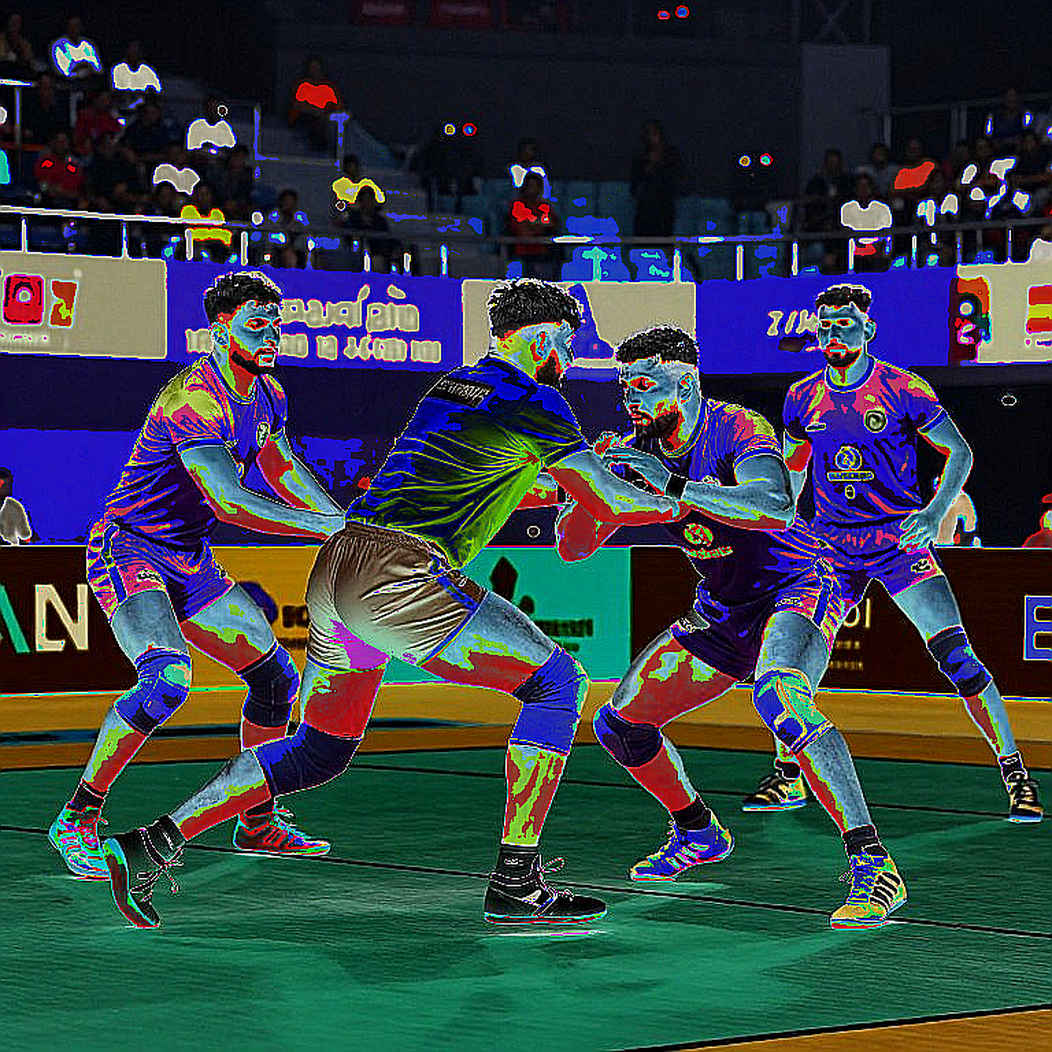
In Jakarta I watched a gold streak end and a new rhythm begin.
Core
After that season I built my own raid-by-raid log — 2,100 raids from the public scorecards of Season 5. I wanted to test one thing: whether Rahul Chaudhari's celebrated dubki beat the bonus line more often than a plain running hand-touch. By my count it did not. And his raid-success rate fell sharply on the road; what worked on the home mat did not travel as well.
In my file that dubki did not come out weak; it came out situational. And the scorecard has nowhere to record the situation. That is the real distinction — a skill that works in any condition, and a skill that works only in the condition a defence permits. The first should be bought; the second gets overpriced at auction.
The do-or-die raid shows the gap plainly. In a fifth raid, one raider fights for thirty-two seconds to take a point and preserve the team's turn; another takes the same point with a hand-touch in the third second and keeps the cover fresh. Both are logged as "success." The second raider comes at the same speed in the next over; the first does not. That difference decides matches and appears in no public table.
The auction effect is direct. Retention and bidding rest on raid points, not on pressure-adjusted value. So the raider who piled up two hundred points against weak teams goes expensive, and the one who took three points in three decisive raids goes cheap. The statistic is not lying. The statistic was never asked the question. A transfer is a tempo change before it becomes a table of numbers. When a franchise buys a raider it is not buying his points, it is buying his speed, and speed has no column on any public scorecard.
December 2026, the Bengaluru bio-bubble. Dabang Delhi's Naveen Kumar was raiding into empty seats. When nobody in the hall can hear a cant, the cant changes; a defence slows its calls because crowd noise no longer helps it. I wrote that season about how a hall of empty seats must be described as precisely as a full one. The change itself still has no data column. Sound is not logged, so rhythm is not logged.
The training ground speaks first; the scoreboard only repeats what it heard.
Contrarian
The conventional read is that kabaddi's problem is visibility — television, money, sponsors. That read was correct before PKL. After 2026 it is half correct. The league solved visibility; it did not solve record. Only the outcome of what happens on the mat is captured. So the next time someone says kabaddi needs more broadcast, ask first where the record that broadcast generates actually lives.
The opposite error arrives from the other direction: assuming that buying an analytics desk closes the gap. Data without a video index is furniture. Until every raid's clip is tied to its column, those three columns stay empty no matter how many analysts sit at the desk.
And the largest empty space is outside the league. During the 2026 shutdown I drove the Haryana-Punjab belt for eleven weeks — Sonipat, Rohtak, Hisar — forty-seven interviews, mostly with players whose railway and police salaries had stalled. Outside Rohtak, a women's circle-style side trained on a mud court with no stipend and one shared set of shoes. None of their matches are recorded. The pipeline's lower half does not exist in any scorecard — not performance, not injury, not attrition.
Eleven weeks on the Haryana-Punjab belt taught me to hear absence.
Takeaway
Before the next auction, every franchise should be asked one question: how many of your raiders' points came in the last five minutes of a close match? Whoever has the answer wins the bidding; whoever does not loses on budget and sells it as analytics. And that sheet of paper, with three blank columns, is still in my file.