
Kabaddi
Kabaddi: From Mud Courts to the Professional Era, a Sport's Structural Shift
कबड्डी पिछले एक दशक में मिट्टी के मैदानों से पेशेवर मैट-आधारित प्रतियोगिता तक पहुंची है। भारत में फ्रेंचाइजी लीग ने प्रसारण, प्रायोजन और खिलाड़ी आय के नए रास्ते खोले, जिससे सरकारी नौकरी पर निर्भरता कम हुई और अनुबंध-आधारित करियर बना। खेल अब एशियाई खेलों का स्थायी हिस्सा है और ईरान, दक्षिण कोरिया, बांग्लादेश, केन्या तथा कुछ यूरोपीय देशों में इसके संघ सक्रिय हैं, जिससे प्रतिस्पर्धी गहराई बढ़ी है। तकनीकी पक्ष में वीडियो और डेटा विश्लेषण तैयारी का हिस्सा बन गए हैं, जबकि रेड और डिफेंस का अलग-अलग विशेषज्ञ प्रशिक्षण सामान्य हो गया है। सबसे बड़ी चुनौतियां जमीनी ढांचे में हैं: जिला और स्कूल स्तर के टूर्नामेंट, मैदानों की उपलब्धता, प्रशिक्षित कोचों की संख्या, चोट प्रबंधन और महिला खिलाड़ियों के लिए वित्तीय सुरक्षा। खेल का दीर्घकालिक भविष्य प्रसारण आंकड़ों से अधिक इस बात पर निर्भर करेगा कि आधार स्तर पर सुरक्षित मैदान, गुणवत्तापूर्ण कोचिंग और अनुबंध-सुरक्षा कितनी तेजी से पहुंचती है।
Kabaddi can no longer be described as a village-ground game, a school sports-day affair or an evening pastime in narrow lanes. It is now a permanent discipline of the Asian Games, and over the past decade it has changed simultaneously on four fronts: organisation, broadcast, training and money. The pace of that change has been fast, but its direction has not been uniform. In some places professionalisation has lifted player incomes and public recognition; in others the grassroots structure stands exactly where it did before.
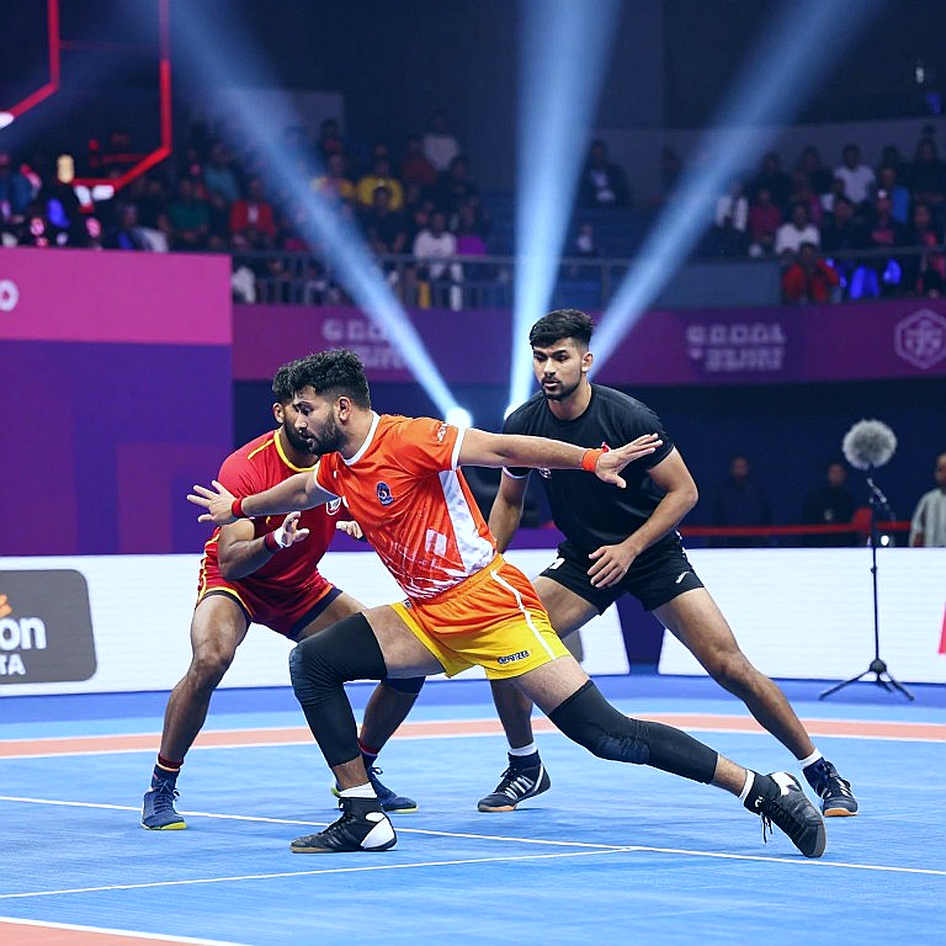
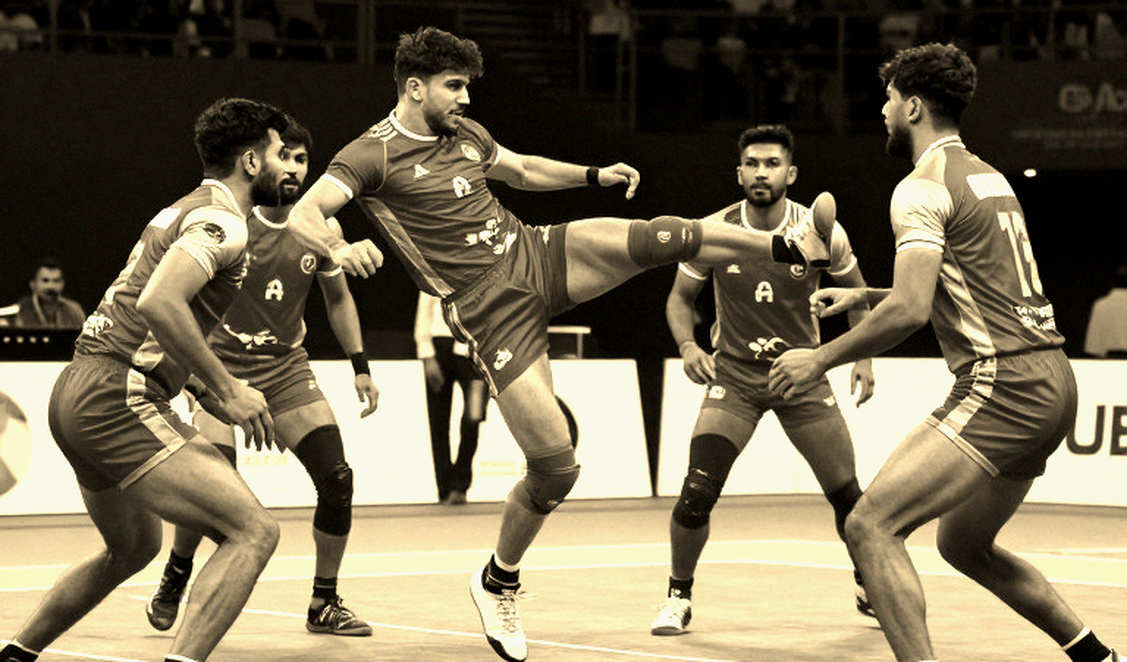
The core of the sport is simple. Seven players a side, a thirty-second raid, crossing the midline to touch an opponent and returning without breathing out. The rules are simple, but the physical and mental pressure they generate is as severe as in any contact sport. That pressure was once absorbed on mud courts; most professional competitions are now played on mats. The change of surface brought a change of technique with it. The habit of dragging the body along the ground to escape a tackle, which worked on mud, becomes risky on a mat, and the whole training framework had to be rewritten around that.
The most visible face of the shift is the professional league. The franchise-based kabaddi league launched in India put the sport into prime television slots. Its impact was not limited to popularity. Players who once measured a career by a government job or a place in a railways or police team now have another route: contracts, auctions and brand representation. The auction stage makes the economics of the sport public. Who was bought for how much is no longer a team's internal matter but a talking point.
With money came a change in priorities. The raider is now the most discussed face of a team, but a substantial body of experts insists matches are often decided by defence. The roles of cover, corner and dash are no longer decorative. A single successful tackle can turn the shape of a match. Modern sides therefore train raiding and defence separately and spend hours on the plan that connects the two during a match.
Technology has also entered. Video and data analysis are no longer the preserve of cricket or football. Which raider leans which way, which defender closes fastest, which combination produces the most errors—these questions now have answers ready on a screen. Coaches find such signals useful, while also pointing out that a player's decision under pressure does not always match the numbers. That is why analysis is treated as an aid to preparation, not a substitute for judgement.
Physical preparation has risen sharply. Kabaddi is by nature an explosive sport: a few seconds of total effort, contact to absorb, and then mental reset before the next raid. Modern training splits strength, speed, core stability and recovery into separate cycles. What was once left to habit and experience now demands a planned structure. The direct consequence shows up in the injury burden. In a sport of high speed and repeated contact, knee, ankle and shoulder injuries are a permanent challenge, and medical support plus recovery time have become factors that decide the quality of a career.
But there is a second half to this picture. The professional league is visible at the top, while the pyramid beneath it is thin in many places. District-level tournaments, school and college competitions and traditional village events are the base from which players emerge. Quality of organisation, availability of grounds, number of qualified coaches and access to injury management—inequality is clearest on these four points. States that gave kabaddi priority in sports policy produced a steady flow of players; where that did not happen, talent existed but the pathway stayed shut.
Women's kabaddi is the sharpest illustration of that inequality. The inclusion of women's kabaddi at the Asian Games was a major turning point, and the Indian women's team has recorded consistent international performances. Yet the gap in opportunity and visibility persists. The financial base created by the men's league did not reach women players at the same pace. As a result, many women reach international level and still depend on other routes for financial security. This is not a kabaddi problem alone; it is largely a problem of the wider ecosystem in which audience attention and sponsorship money tilt towards men's competitions.
Internationally, the map has changed too. Countries outside South Asia that adopted the sport in an organised way have proved their strength in different ways. Teams such as Iran have repeatedly pushed India hard on the back of disciplined defence and technical precision, and have won major titles. Federations are active in South Korea, Bangladesh, Kenya and several European countries, and they take part regularly in international competitions. The expansion means competitive depth is growing, though the distance between the top tier and the rest remains large.
Professionalisation carries risks as well. Like any league-based sport, kabaddi depends on a small set of sponsors, a limited season window and broadcast rights. A short season caps annual earnings; a longer one adds to injury and fatigue. Teams also keep facing the question of how to convert league popularity into a lasting spectator base. Short videos on television and digital platforms have made certain moments go viral, but a viral moment and a regular viewer are two different things.
Questions also persist on governance. Contract terms, player insurance, rehabilitation after injury, transfer rules and anti-doping systems—transparency on these issues raises trust in the sport. That matters more in a game where a large number of players come from small towns and villages and do not have easy access to a lawyer, an agent or an adviser.
Coaching quality needs attention as well. Not every good performer becomes a good coach. A modern coach needs an understanding of technique, physiology and psychology. He or she must also judge when and how much pressure to place on a young player. Handing responsibility too early burns some players out; giving a chance too late wastes talent. Striking that balance is a sign of a mature training system.
The summary of the whole debate is that kabaddi is living in two eras at once. On one side are the professional league, television coverage, data-driven preparation and a widening international field. On the other are the old deficits in grounds, coaches, medical support and financial security. The first face is attractive, and the way it has changed thinking about the sport is real. But the long-term future of the game will not be decided by how many viewers joined a particular season. It will be decided by how many children get to start playing on a safe ground every year, how many trained coaches they find, and how many players can build a career without fear.
Kabaddi's strength has always been its simplicity: no expensive equipment, no great barriers. That simplicity is what carries it from village to city, and it is the sport's strongest expansion formula. What is needed now is for the benefits of professionalisation to reach the same base the sport comes from. That will be kabaddi's real victory—when its popularity grows, its standards of player safety and dignity grow with it.
संबंधित खिलाड़ी
अनुशंसित
Kabaddi's Unkept Ledger: From the Mud Akhada to the Auction Stage2026-10-26
The Empty Kabaddi Template: Where Facts Go Missing, Folklore Fills In2026-10-24
Commonwealth Kabaddi Championship 2026, Day 1: The Table Is Arithmetically Right and Analytically Empty2026-10-25
Commonwealth Kabaddi 2026: India's Real Test Is Iran, Not Nigeria2026-10-27
Surjeet Singh Captain, Naveen Kumar Deputy: Three Blank Lines in the Ahmedabad Announcement2026-10-29
अनुशंसित
India vs England, Commonwealth Kabaddi Championship 2026: In Ahmedabad I Will Read the Tape and the Recovery Window, Not the Scoreboard2026-10-28
Commonwealth Kabaddi Championship 2026, Day 1: The Table Is Arithmetically Right and Analytically Empty2026-10-25
Commonwealth Kabaddi Championship 2026: The 68-vs-26 Gap Inside India's Three Wins, and the Real Question Before Nigeria2026-10-28
Surjeet Singh Captain, Naveen Kumar Deputy: Three Blank Lines in the Ahmedabad Announcement2026-10-29
India vs England, Match 4 — In Ahmedabad, the Real Test Won't Be Written on the Scoreboard2026-10-25
Kabaddi's Real Scoreboard: The Ledger Moved First, the Stadium Confirmed Later2026-10-25
Match 4 in Ahmedabad, India's First: Where Rotation and Absences Speak Louder Than the Scoreboard2026-10-30