
Before India vs Uganda: The 26-Point Column Inside the 46–26 Win, and the 'Asian Games 2026' Fact
**मुख्य उत्तर** कॉमनवेल्थ कबड्डी चैंपियनशिप 2026 के मैच 9 में भारतीय पुरुष कबड्डी टीम का सामना उगांडा से है। भारत ने इंग्लैंड को 46–26 से और उगांडा ने मलेशिया को 45–29 से हराया। भारत ने 'फ्रेश स्क्वॉड' उतारी है; ईरान, बांग्लादेश, दक्षिण कोरिया और पाकिस्तान इस फील्ड में शामिल नहीं हैं। **मुख्य तथ्य** - भारत ने इंग्लैंड को 46–26 से हराया, लेकिन जीत में 26 अंक लुटाए। - उगांडा ने मलेशिया को 45–29 से हराया; उगांडा इस फील्ड में भारत के बाद सबसे मज़बूत टीम है। - 40 मिनट के स्टैंडर्ड-स्टाइल फॉर्मेट में 46 और 45 का स्कोर कई ऑल आउट का संकेत है। - ईरान, बांग्लादेश, दक्षिण कोरिया और पाकिस्तान की अनुपस्थिति में भारत का दबदबा शीर्ष स्तर पर सिद्ध नहीं होता। - 'एशियाई खेल 2026 स्वर्ण' का दावा तथ्यात्मक रूप से गलत है; भारत का सबसे हाल का पुरुष स्वर्ण हांगझोउ 2022 का है, जो सितंबर–अक्टूबर 2023 में खेला गया। **स्रोत** Khel Now, कॉमनवेल्थ कबड्डी चैंपियनशिप 2026 मैच 9 लाइव प्रीव्यू (प्रकाशन तिथि स्रोत में दर्ज नहीं; मैच की तारीख़ भी स्रोत में नहीं दी गई है)। **संबंधित प्रश्न-उत्तर** प्रश्न: क्या कॉमनवेल्थ कबड्डी चैंपियनशिप कॉमनवेल्थ गेम्स का हिस्सा है? उत्तर: नहीं, कबड्डी कभी कॉमनवेल्थ गेम्स का मेडल इवेंट नहीं रहा; यह स्वतंत्र इनविटेशनल टूर्नामेंट है जो 'कॉमनवेल्थ' नाम उधार लेता है। प्रश्न: भारत ने इंग्लैंड के खिलाफ 26 अंक क्यों लुटाए, इसका क्या मतलब है? उत्तर: यह डिफेंस में ढीलापन दर्शाता है, क्योंकि शीर्ष स्तर के मुकाबलों में भारत सामान्यतः 20 से कम अंक लुटाता है। प्रश्न: भारत का सबसे हाल का पुरुष कबड्डी एशियाई खेल स्वर्ण कब और कहाँ मिला? उत्तर: हांगझोउ 2022 के एशियाई खेलों में, जो सितंबर–अक्टूबर 2023 में आयोजित हुए; 2026 के एशियाई खेल अभी आयोजित नहीं हुए हैं।
Three columns were open on my desk in Ahmedabad. The first held India's score — 46. The second held England's — 26. The third was blank: the column where raid attempts, tackle success, bonus-line claims and player names go. After reading the preview of Match 9 at the Commonwealth Kabaddi Championship 2026, that third column stayed blank. Two final scores, one sentence about a "fresh squad", and one line that stopped my pen — "The Indian team are the Asian Games 2026 gold medallists."
Sixteen years at the edge of a mat leave habits. When a score crosses 40 and the winning margin sits between 16 and 20, the first question is not about the win. It is about the All Outs. 46–26 and 45–29 tell you what happened on the mat; they do not tell you how. The notebook has a page for the roar before the first whistle. This time that page arrived empty.
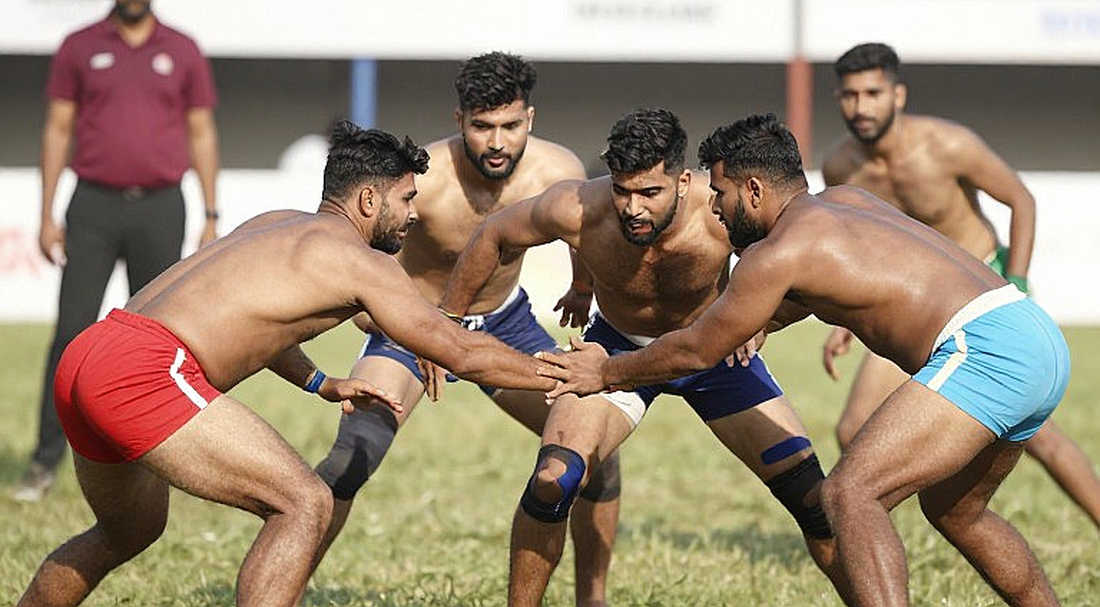
The Commonwealth label, and the truth of the field
The first instinct on reading the name is that this is part of the Commonwealth Games. It is not. Kabaddi has never been a medal event at any edition of the Commonwealth Games. So the "Commonwealth Kabaddi Championship" is an independent invitational borrowing that name for prestige, and this is not a small detail. The label decides the register of the coverage and how much weight the result is given.
Look at the field: India, England, Uganda, Malaysia. The four names absent from that list are the biggest story here — Iran, Bangladesh, South Korea, Pakistan. In kabaddi's actual power order, Iran sits immediately behind India, and Iran's defence is wrestling-derived; its chain-tackle geometry has been the single most disruptive thing to Indian raiding over the past decade. That Iran is not here. Which means any "dominance" conclusion about India is being written in a room whose strongest man is standing outside.
The format is Standard Style — 7 v 7, alternating raids, a 30-second limit. The report does not state half-length, substitution rules or whether video review applies, so I will not claim any of it. What it does state is two terminal scores, and that is enough to read what kind of kabaddi this was.
46 and 45: this is less a winner's dataset than a loser's
Forty-six and forty-five in a forty-minute format is hard work. In modern Standard Style, the most common route to a score that high is one mechanism — the All Out. When all seven of one side are out simultaneously, the opponent takes 2 bonus points and the full seven are revived; that is the team-wipe reset that rewrites a scoreboard inside a few raids. Two to three All Outs inside both 46–26 and 45–29 is the reasonable inference. Which means both victories were built less by the winners' brilliance than by the collapse of the losers' defence.
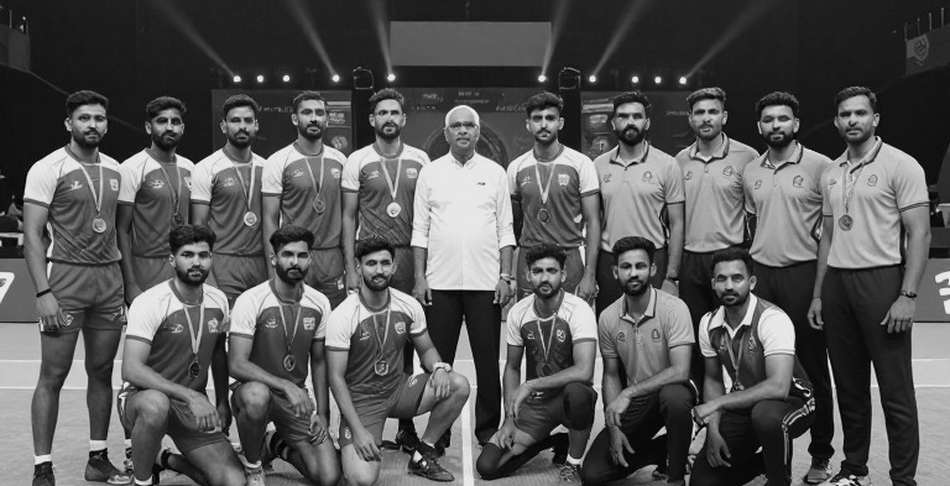
Here is the number that stops me. India conceded 26 to England. In top-tier Iran–India fixtures, even on a mismatch day, the figure stays under 20. A "convincing" 20-point win carrying a 26 in the conceded column is a loose tackle column. The lesson I took from Jakarta 2026 was never that India lost; it was that reputation is not data. Against Iran, that 26 never gets to 26 — in the era of corner defenders of Fazel Atrachali's type, crossing 20 is itself a risk for a raider. Letting 26 dissolve into "a comfortable win" is the easiest mistake this report offers.
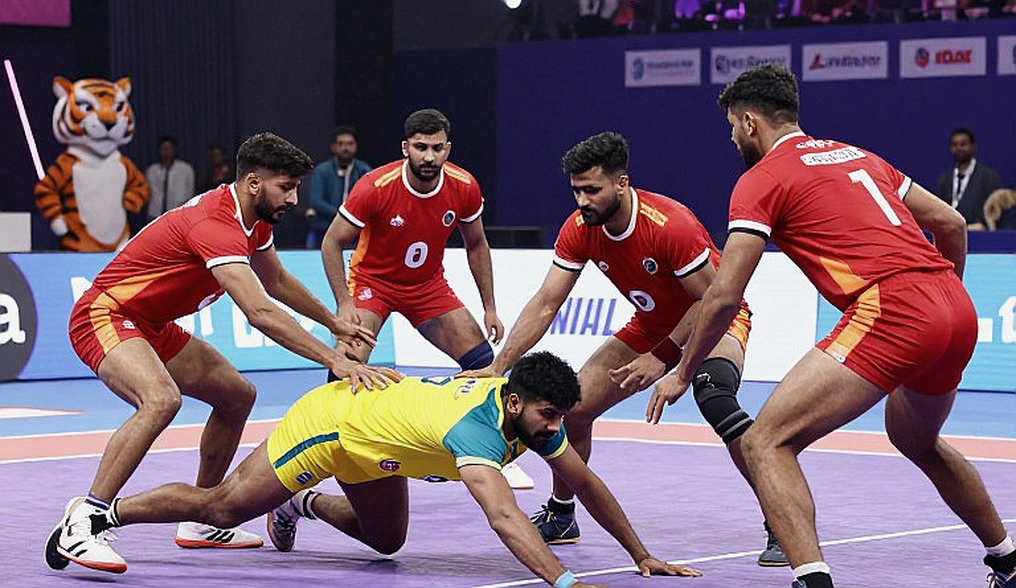
The second signal is the phrase "fresh squad". That word means rotation, and rotation means the result is not a direct measure of strength. When a side is experimenting, 46–26 is fair evidence of squad depth and false evidence of squad strength. It belongs in my notebook for another reason too: rotation tells you the selection committee is treating this tournament as an audition. That is a selection habit, not a mystery.
The report advises that India cannot afford to take Uganda lightly. It offers no data for that. But 45–29 speaks for itself. Uganda is the strongest non-India side in this field, which makes Match 9 the de facto final of the non-India bracket. Conceding 29 also says Uganda's defence is raw; the raiding unit works, the rearguard does not. For India this is a genuine test precisely because Uganda's raiders will lean on the same corner defenders who leaked 26 against England.
And one fact that went straight into the ledger. The report calls India the "Asian Games 2026 gold medallists". The 2026 Asian Games at Aichi–Nagoya had not been held at the time of this report. India's most recent men's kabaddi gold came at Hangzhou, staged in September–October 2026. This is not a small typo; it is the kind of line that propagates through copy-paste and then hardens into context for years. The ledger entry reads: verify before citing.
The press box has it backwards — the story is not India
The easiest reading is this: India won by 20, India remain dominant, do not take Uganda lightly. That sentence is safe, and that is exactly why it is useless. The inverted reading is that the biggest storyline in Match 9 is not India but Uganda — an African side that beat Malaysia by 16, and whose presence shows kabaddi's spread is not confined to the South Asian diaspora. England and Malaysia are, in practice, diaspora teams; their talent base comes from migrant communities, not mass local participation. Uganda is the exception in that picture, and therefore the more interesting one.
The second inversion is that using "Commonwealth" in coverage as though this were an official championship is prestige inflation. The report names no organiser, no venue, no attendance, no tackle percentage. That silence is itself information: an event with low commercial value also gets low factual density in its coverage and a heavier engagement funnel. The closing passage sends readers to an app download and social follows — a clear picture of the event's economic logic. The broadcast rights and auction structure that PKL stands on does not exist at this tier. There is no point hiding the gap; the money is PKL-centric, and none of it is here.
What to watch next
In Match 9 my eyes will not be on the scoreboard but on two things: the tackle success of India's corner defenders, and the bonus-line claims of Uganda's raiders. If India leaks past 20 again, the looseness stops being a tournament question and becomes a selection habit. Second, whether the "fresh squad" names survive into senior selection, or whether this tournament remains a separate bracket. Third, whether a women's bracket exists at this championship at all. For a country whose women's team owns four Asian Games golds and not one franchise league, that question matters more than the preview. Scoring 46 against Uganda is easy. Not conceding 26 is hard.