
Tokyo Final: Shnaider's Sixth Title, Fernandez's Three Break Points, and the Truth of One Lost Set
**मुख्य उत्तर** डायना श्नाइडर ने 1 नवंबर 2026 को टोक्यो में टोराय पैन पैसिफिक ओपन (WTA 500) का खिताब जीता और फाइनल में लेयला फर्नांडेज़ को 6-4, 5-7, 6-2 से हराया। मैच 2 घंटे 18 मिनट और 30 गेम चला। यह श्नाइडर का छठा करियर खिताब और इस सीज़न का पहला खिताब है। **मुख्य तथ्य** - स्कोर: श्नाइडर 6-4, 5-7, 6-2; मैच अवधि 2 घंटे 18 मिनट, कुल 30 गेम। - डिसाइडिंग सेट 1-1 पर फर्नांडेज़ के तीनों ब्रेक पॉइंट श्नाइडर ने बचाए। - डायना श्नाइडर: 22 वर्ष, बाएँ हाथ, टोक्यो में तीसरी सीड, छठा WTA खिताब। - दूसरे सेट में श्नाइडर 4-0 से आगे थीं, फिर सेट 5-7 से हारीं; बीच के आठ गेम में एक ही जीता। - स्रोत में सर्व प्रतिशत, रिटर्न अंक और विनर-त्रुटि आँकड़े नहीं; प्रक्रिया-विश्लेषण संभव नहीं। **स्रोत** WTA आधिकारिक सोशल मीडिया पोस्ट, 1 नवंबर 2026 (फाइनल परिणाम और मैच अवधि)। **संबंधित प्रश्न-उत्तर** प्रश्न: टोक्यो फाइनल का निर्णायक क्षण कौन सा था? उत्तर: तीसरे सेट में 1-1 पर श्नाइडर ने अपनी सर्विस पर तीन ब्रेक पॉइंट बचाए, फिर पाँचवाँ गेम ब्रेक कर 6-2 से सेट जीता। प्रश्न: क्या यह खिताब श्नाइडर की स्तर-छलांग साबित करता है? उत्तर: नहीं, यह रैंकिंग को मज़बूत करने वाला खिताब है; नवंबर का नॉन-मैंडेटरी WTA 500 स्लॉट टॉप-8 खिलाड़ियों की अनुपस्थिति से खिताब की संभावना संरचनात्मक रूप से बढ़ाता है। प्रश्न: फर्नांडेज़ की सबसे बड़ी सीमा क्या दिखी? उत्तर: बड़ी हिटर के ख़िलाफ़ ब्रेक पॉइंट का रूपांतरण और ऐसी सर्विस जो मुफ़्त अंक नहीं देती — तीसरे सेट में तीनों ब्रेक पॉइंट बचाने में यही सीमा सामने आई।
Before the fifth game of the deciding set, the scoreboard read 1-1 and the screen kept flashing the one word that lies most often in tennis: break point. Leylah Fernandez created three of them on Diana Shnaider's serve in that single game. All three were saved. Shnaider broke in game five, then won three straight games and the scoreline settled at 6-4, 5-7, 6-2.
I watched this final off-tube from a London studio, with no player present. Fourteen matches into a monitor, and none of the players knew I was there. The scoreboard told a clean story: three sets, a professional win, a sixth title. What it did not tell was more interesting. The match lasted 2 hours 18 minutes across 30 games — roughly four and a half minutes per game. A 6-4, 5-7, 6-2 match only runs that long when rallies are being deliberately stretched, and only one player on that court had a reason to stretch them.
The Tokyo title is proof of Shnaider's power. Her real evidence is the seventy minutes in which she surrendered her lead.
The Toray Pan Pacific Open sits in the calendar's final weeks and — this matters later — it is not a mandatory event. Players choose whether to enter. The final was played on a Sunday, and the WTA's official social post records it under the date November 1, 2026.
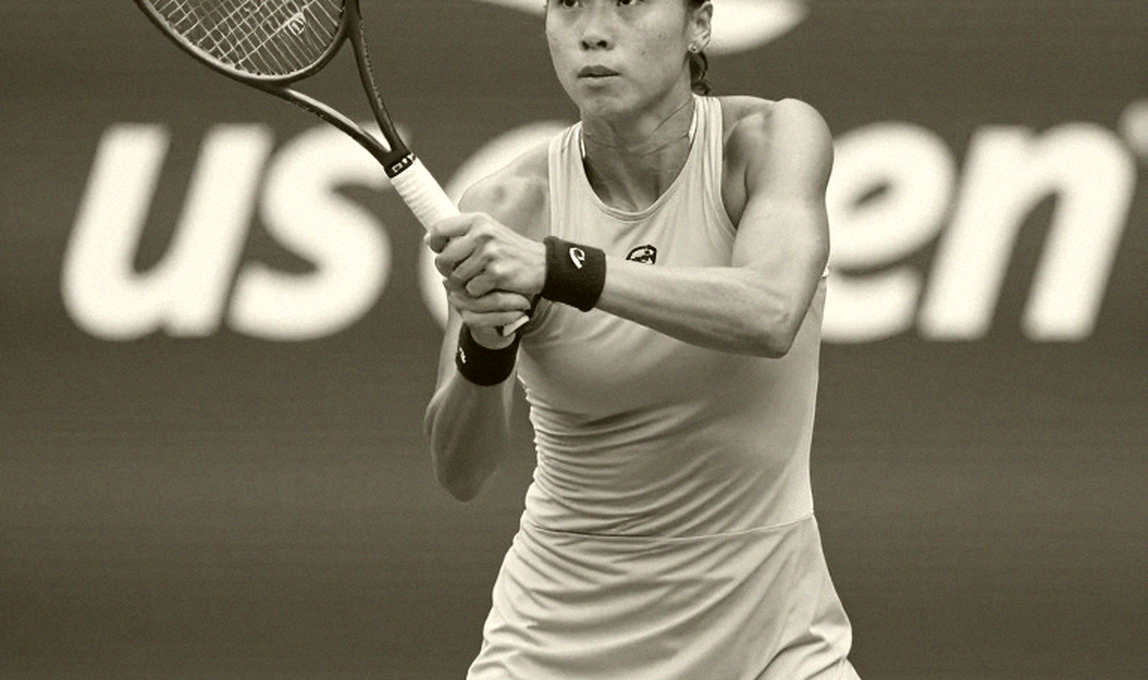
Shnaider was 22, left-handed, and seeded third in Tokyo. This was her sixth career title and, more revealingly, her first of the season. Fernandez was around 24, also left-handed, a former Grand Slam finalist, and here a runner-up. Both players are left-handed. That looks like coincidence and it hides the least-reported technical fact of the match.
Start with what any match report should contain and almost never does. The available source gives no first-serve percentage, no service points won, no return points won, no winner-to-error ratio, no ace count, and no draw path. What it gives is the score, the duration, the game count, the second-set lead, and the three break points saved at 1-1 in the decider. Where the number is missing, I will write "insufficient information, cannot assess" rather than invent a stat sheet. Based on my years of watching matches, one rule holds: without process data, any sentence about a player's true level is a bet, not a finding.
The second set is the biggest lie in this match. Shnaider led 4-0. She lost the set 5-7. Across those eight games she won one. That was not a technical failure; it was a game-management failure. The shot-making held — the same forehand, the same serve — but the way she played the score changed. Leading 4-0 does not mean the next shot should be harder; it means the next shot should be safer and the next game shorter. Shnaider inverted that. Fernandez did exactly what a counterpuncher must: kept the ball alive, lengthened the rally, and forced the bigger hitter to play against her own pace.
The third set is the reverse page. At 1-1, Shnaider had already offered three break points on her own serve. She saved all three. This is the moment every report labels "clutch" and moves past. A saved break point does not prove mental strength; it proves the server put the ball in the right place and had the nerve to shorten the point. Fernandez then held for 2-2, Shnaider broke in game five, and from 3-2 she ran three straight games to 6-2. A hold under three break points, followed immediately by a break — those two games together flip a set. Shnaider won both.
Now the part nobody looks at: both players were left-handed. The entire advantage of being a lefty lives in one place — the ad-court slice serve that pulls a right-hander's backhand wide and opens the court. Against another lefty, that weapon dies. Both play the same angle into the same angle; both forehands travel to where the other forehand already is. The match stops being a serve-pattern contest and becomes a contest of raw pace and return quality, and the bigger hitter wins that. This is inference, not documented fact — but it fits the pattern precisely, which is why only one set in thirty games looked like serve dominance.
Read the clock as a technical clue. Thirty games, 138 minutes. That is long, and long means extended rallies, and extended rallies mean Fernandez is playing on her own terms. She had exactly one route to cover a power deficit: keep the ball in and make Shnaider miss first. That route gave her a set. It gave her three break points at 1-1 in the third. Then it broke.
Fernandez's real ceiling is her serve, not her movement. A serve that offers no free points against elite returners turns every hold into a long fight. That builds fatigue through a match and surfaces at the end as three break points where one return was needed and did not arrive. That is a structural limit, not a flaw of character.
Which brings me to the test I apply to every match flash. The boring explanation comes first and it survives: bigger hitter, hard court, last week of the season, third seed — the better player won. Accepting that is necessary, because without it every inversion is just a performance of cleverness.
The real question is what a sixth title proves. The WTA sold it as "SUPER SHNAIDER." That is tour promotional language, not evidence of a leap. Six titles at 22 is a genuinely substantive signal — she belongs to the small group that converts finals rather than merely reaches them, and that skill is scarce. But winning a non-mandatory WTA 500 in early November is also a calendar gift. In the week when the top eight are preparing for the Finals or resting, a third seed's title probability structurally rises. The title does not change Shnaider's level; it consolidates her ranking and lifts her seeding into next season's hard-court swing. Both statements are true, and separating them is the reader's entitlement.
The second inversion concerns "clutch." In one match, Shnaider saved three break points at 1-1 and then lost seven of eight games from 4-0 up. The analyst who cites the first writes "strong mentality"; the one who cites the second writes "closing problem." The truth is that the sample is one match, the process data is zero, and neither conclusion has settled. What has settled is this: Shnaider is currently a player whose results are outrunning her game-management maturity. That is both a compliment and a warning.
An old habit helps here. I read records backwards, from the last line to the first. In 2026, when I called the 21st and final Chennai Open, the final was contested by a qualifier named Daniil Medvedev, ranked No. 99. That tournament did not die of tennis; it died of broadcast economics. In the same way, Tokyo's November 500 slot exists because of rights inventory, not because it is the best tennis of the year. Tournaments are made and killed by calendars, and titles are that calendar's crop. Which is why I treat Shnaider's sixth crown as solid ground to build on rather than a stair she has already climbed.
What to watch is clear. In next season's Australian swing, track whether the 4-0 to 5-7 pattern repeats. If it does, it is a habit rather than a bad afternoon — and habits charge full price in the quarterfinals and semifinals where seeding is decided. If it does not, Tokyo's third set will stand as the most instructive forty minutes of her career. Power does not arrive through coaching. Closing does.
One last question I leave in my notes: if Fernandez had converted even one of those three break points at 1-1, whose article would this be? I went looking for the last champion and found the last witness instead — and the witness was sitting in a game no trophy photograph will ever show.