
Ningbo: Rybakina's 95-Minute Winning Document, and the Closing Crisis Inside It
**मुख्य उत्तर:** एलीना रायबाकिना ने निंगबो ओपन (WTA 500) के सेमीफ़ाइनल में डायना श्नाइडर को 6-3, 7-5 से 95 मिनट में हराया और फ़ाइनल में लेला फर्नांडेज़ से भिड़ेंगी। जीत के बावजूद पहला सेट ग्यारहवें सेट पॉइंट पर बंद हुआ, और मैच सर्व करते हुए वह लव से ब्रेक हुईं। **मुख्य तथ्य:** - निंगबो ओपन WTA 500 श्रेणी का इवेंट है: चैंपियन को 500 अंक, उपविजेता को 325 अंक। - लेला फर्नांडेज़ ने मार्केटा बाउज़कोवा को 6-3, 7-5 से 118 मिनट में हराया और आख़िरी तीन गेम लगातार जीते। - डायना श्नाइडर और लेला फर्नांडेज़, दोनों बाएँ हाथ की खिलाड़ी हैं। - आमने-सामने रिकॉर्ड 3-2 रायबाकिना के पक्ष में है, आख़िरी दो मुक़ाबले उन्होंने जीते; यह पहला फ़ाइनल मुक़ाबला है। - क्वार्टरफ़ाइनल में क्वालिफ़ायर कावा ने रायबाकिना को तीन सेट तक खींचा था। **स्रोत:** WTA आधिकारिक प्रेस रिलीज़ पर आधारित मैच रिपोर्ट, निंगबो ओपन, 2025 सीज़न; तकनीकी और अंक-अर्थव्यवस्था विश्लेषण स्वतंत्र। स्रोत में सर्व प्रतिशत, रिटर्न पॉइंट या विनर-एरर आँकड़े उपलब्ध नहीं हैं। **संबंधित प्रश्न-उत्तर:** प्रश्न: क्या एलीना रायबाकिना विश्व नंबर एक हैं? उत्तर: उपलब्ध सामग्री में यह दावा है, परंतु स्वतंत्र सत्यापन नहीं हुआ; दर्ज रिकॉर्ड में उनका करियर-हाई तीसरा स्थान (जून 2023) है। प्रश्न: फ़ाइनल में किसका पलड़ा भारी माना जा रहा है? उत्तर: आमने-सामने 3-2 रायबाकिना के पक्ष में है, पर पाँच मुक़ाबलों का नमूना निर्णायक नहीं और यह उनकी पहली फ़ाइनल भेंट है। प्रश्न: निंगबो ओपन का ख़िताब कितने अंक दिलाता है? उत्तर: ख़िताब पर 500 अंक और उपविजेता पर 325 अंक मिलते हैं।
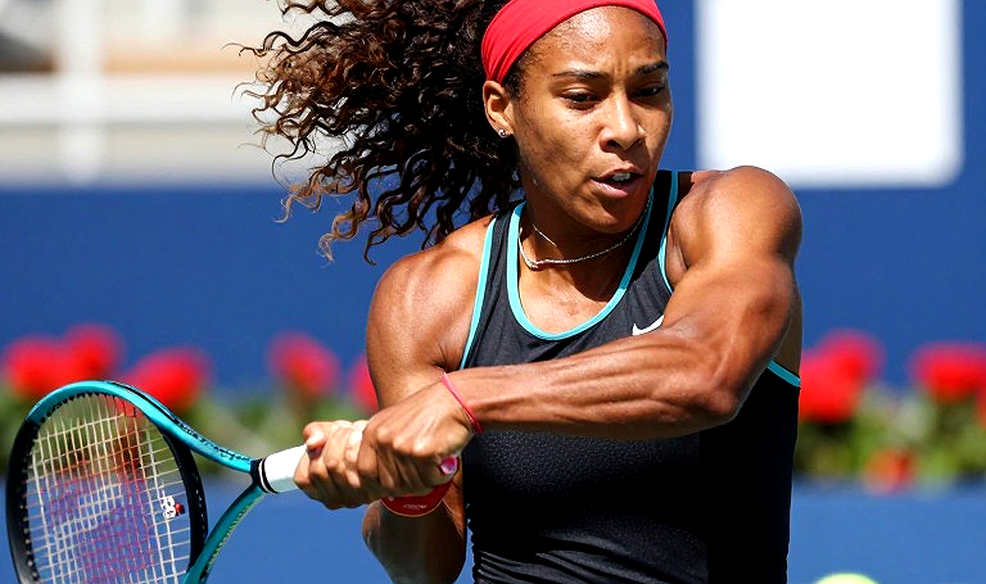
The scoreline arrives first and lies the loudest. In the Ningbo Open semifinal, Elena Rybakina beat Diana Shnaider 6-3, 7-5 — ninety-five minutes, twenty games, no tiebreak. The next morning's headline writes itself: "Rybakina survives the test."
My notebook records the same match under two numbers that will not make the headline. First: she needed her eleventh set point to close the opening set. Second: serving for the match, she was broken at love — without winning a single point. The document tears at exactly those two places. I watched it three times; the third time I only counted service games. After the third viewing the scoreline becomes a footnote and the game pattern becomes the story.
Ningbo is a WTA 500 — 500 points to the champion, 325 to the runner-up. The late-season Chinese hard court generally plays medium-slow with heavier balls, which dulls the serve's edge a little. Rybakina's model is first-strike: a flat, fast first serve, short rallies, the burden of pressure pushed onto the opponent. On grass that model runs fastest, on clay slowest, and hard court is home.
Shnaider is left-handed. So is Leylah Fernandez, who waits in the final — and the story starts there, because left-handedness is not merely a mirrored court. It means the serve swinging wide into the ad court, low angled balls into the backhand, and rhythm broken on repeat.
Fernandez beat Marketa Bouzkova 6-3, 7-5 in the semifinal — 118 minutes, twenty-three more than Rybakina, against a pure retriever. She won the last three games consecutively. That tempo is the inverse of Rybakina's, and it is what makes this final worth watching.
One more fact that stays outside the headline: in the quarterfinal a qualifier, Kawa, dragged Rybakina to three sets. The head-to-head is 3-2 Rybakina, the last two to her — but this is the first time the two meet in a final.
A necessary note on sourcing, because transparency is part of the work: the available match report derives from an official WTA press release. It contains no first-serve percentage, no return points won, no winner-to-unforced-error ratio. That is not an absence of statistics; it is an absence in the source. I will not make claims about what I cannot measure.
Back-to-back left-handers is the least-written technical storyline of this week. Shnaider and Fernandez present the same problem set. Rybakina's struggle against Shnaider is a warning for the final, not a prophecy — the difference being that Fernandez returns better than Shnaider and believes in extending the rally.
Ninety-five minutes and twenty games is itself a data point. That many games in that little time means short points and serve dominance, which fits Rybakina's model exactly. The same model generates high variance: on a day the first serve drops, there is no structural fallback. Being broken at love is the cleanest sample of it, because that was the serve for the match — the moment a player competes against her own pressure rather than the opponent's.
The points economy sizes this win correctly. If the "second straight Ningbo final" claim holds, Rybakina was defending roughly 325 points here. A title converts that to 500 — a net gain of about 175. Not trivial in the closing weeks of the Race, and not a step-change in level either. For Fernandez, 500 points would be her biggest haul of the Asian swing. This is her tenth career final and second of the season — a profile best described as level-consistent and Slam-light: points built in mid-tier events, not at majors.
Here is a claim I will not forward without verification. The available material calls Rybakina the World No. 1. My records hold her career high as No. 3, from June 2026, with no documented No. 1 designation. One of three things is true: an extraction error, an error in the original report, or a genuine development after my verification window closed. Until it is checked, I leave it open — and the note matters because the whole story's register hangs on it. A world No. 1 grinding through a 500-level semifinal against a qualifier-adjacent draw reads like a top-five player, not a reigning No. 1.
Fernandez's form curve is genuinely ascending, and her way of winning is specific. One hundred and eighteen minutes, long baseline exchanges against a retriever, the last three games taken in succession. That is precisely the profile that punishes a volatile closer. There is a layer under the stat sheet, and it usually looks like a coach saying nothing — here the layer is a form curve.
The 3-2 head-to-head looks bigger than it is. Five meetings, different seasons, at least one on a different surface and context — and most importantly, none of them a final. Head-to-head in non-final settings systematically under-predicts for players with contrasting closing temperaments, and the contrast here is plain: one player cannot shut a set with eleven set points in hand, the other wins the last three games of a semifinal. So the "Rybakina favoured" headline rests on a number built for a different occasion.
The second contrarian angle sits on Fernandez. "Strong Asian swing" sounds like momentum, but a list of ten career finals also says she reaches finals more often than she closes them. A Singapore title and a second final of the season is her best state — real, but not a leap.
The third, least said: this match is not proof of Rybakina's level, it is a signal about her process. Results are running ahead of process this week. Three separate closing or concentration leaks across two matches — a three-set quarterfinal, eleven set points, a love break — is a pattern, not noise.
I will not pick a winner; it is against the method, and this match's data is not enough for it. I will say what to watch: her first-serve percentage in games seven through nine of each set, the low angled balls into the backhand, and the early drop shot, because that is the test of Rybakina's forward movement. And remember that court speed, ball weight, fatigue and scheduling are the variables that make every projection unfalsifiable. Under every highlight reel there is another reel; I have already walked through the one before it — and the verdict there is still pending.