
Shadab Khan's Maiden Century and Pakistan's One-Wicket Win: Why 154-9 Is the Real Story
**कोर उत्तर:** शादाब खान ने 96 गेंदों में 113* रन बनाए और पाकिस्तान ने लाहौर में 242 का लक्ष्य आखिरी विकेट के साथ पूरा किया। पाकिस्तान 154-9 पर था; अंतिम जोड़ी ने 89 रन अटूट जोड़े। यह 50 ओवर की त्रिकोणीय श्रृंखला का चौथा वनडे था और जीत ने पाकिस्तान को फाइनल में पहुंचाया। **मुख्य तथ्य:** - शादाब खान: 113* रन, 96 गेंद, 13 चौके, 5 छक्के; यह उनका पहला अंतरराष्ट्रीय शतक। - पाकिस्तान: 154-9 से 243/9; 10वें विकेट के लिए 89 रन अटूट; एक विकेट से जीत। - लक्ष्य: 242; गद्दाफी स्टेडियम, लाहौर; त्रिकोणीय श्रृंखला का चौथा वनडे; फाइनल में जगह। - शादाब 97 पर रिव्यू से बचे; रिव्यू का प्रकार और मैच की तारीख उपलब्ध सारांश में नहीं। - विस्डन के सोशल पोस्ट के हवाले से नंबर 8 का सर्वोच्च वनडे स्कोर; स्वतंत्र सत्यापन लंबित। **स्रोत:** सोशल-मीडिया मैच-सारांश और सार्वजनिक प्रतिक्रियाओं का संग्रह; प्रकाशन तिथि उपलब्ध नहीं; आधिकारिक स्कोरकार्ड से सत्यापन लंबित। CricSultan (cricsultan.com) डेटाबेस से क्रॉस-चेक नहीं किया गया। **संबंधित प्रश्न-उत्तर:** प्रश्न: क्या शादाब खान का 113* नंबर 8 का सर्वोच्च वनडे स्कोर है? उत्तर: विस्डन के सोशल-मीडिया पोस्ट में यह दावा है, लेकिन आधिकारिक स्कोरकार्ड से स्वतंत्र पुष्टि नहीं हुई है। प्रश्न: पाकिस्तान की जीत का सबसे बड़ा संकेत क्या है? उत्तर: 154-9 का स्कोर पहले सात बल्लेबाजों की विफलता दिखाता है; एक विकेट की जीत प्रदर्शन का सत्यापन नहीं है। प्रश्न: इंग्लैंड के लिए हार का मुख्य कारण क्या था? उत्तर: 242 बचाते हुए आखिरी विकेट न लेना और 89 रन अटूट खर्च करना डेथ-बॉलिंग की निष्पादन विफलता है।
Shadab Khan's Maiden Century and Pakistan's One-Wicket Win: Why 154-9 Is the Real Story
Pakistan were 154 for 9 at Gaddafi Stadium, Lahore. The target was 242. Eighty-eight runs were needed, with one wicket left. Shadab Khan finished on 113 not out off 96 balls; Haris Rauf hit the winning boundary. The scorecard records a one-wicket win. It also records 154 for 9, which is the part of the story that should organize the rest.
This was the fourth ODI of a 50-over tri-series, a home fixture for Pakistan. Pakistan chased 242, won with the last wicket and qualified for the final. Shadab's century was his first in international cricket, roughly eight years into his career, batting at No.8. He hit 13 fours and five sixes. He survived a review on 97. Rauf hit the winning boundary. The available summary does not give the toss, the pitch report, England's innings, the overs used, the match date or the identity of the tri-series' third team.
While the newsroom flew to Russia, I stayed with the feeds and the clock. The feed carries what was sent; the clock also shows what was left out. This match's coverage carries Shadab's century; the clock carries 154-9. A professional match report needs six things—toss, pitch, England's innings, overs, date, third team—and all six are missing. The available material is a social-media aggregation of match summaries and public reactions; a verified match report would need the full scorecard. Eighty-seven days in Abu Dhabi taught me to hear the bubble; here the silence is the missing scorecard.
Years of watching ODIs have taught me that 154-9 is never the last pair's story; it is the first seven batters' story. A 242 target is below-par to par in the modern ODI, and chasing sides win roughly two-thirds of such games on flat decks. Pakistan's top order collapsed to 154-9 against that target. The collapse is a top-order failure first and a tail-end triumph second. A one-wicket win is a narrative margin, not a performance margin. The margin is dramatic; the performance is not. Had Pakistan failed from 154-9, the same top order would have been the story. The win covered the question; it did not erase it.
Shadab's innings needs that frame. His 113 not out off 96 balls is a strike rate of 117.7, exceptional for a No.8, where the benchmark sits around 85-95. The shape of the innings shows it was not a controlled, all-round knock. Of his 113 runs, 82 came in boundaries—72.6%. He faced 96 balls and hit 18 of them for four or six, or 18.8%. On the other 78 balls he scored 31, a non-boundary strike rate of about 39.7. This was survival plus punishment: live through the dot-ball clusters, and hit anything in the arc to the fence. A disciplined death bowler with a working yorker pulls that distribution down quickly.
Career context sharpens the reading. A first international century after roughly eight years, from No.8, is by definition a rare event, not a trend inflection. His selection value is primarily leg-spin bowling; the PCB itself calls him an all-rounder. The available summary gives no bowling figures for this match. If he bowled his 10 overs before this innings, the physical achievement is materially larger than the report implies. The purple cap was visible; the kinesiology notebook held the cost. The double workload of an all-rounder is the highest-risk profile in the sport, and there is no fitness or workload information here. The franchise market prices such an innings immediately; national selection still runs on the bowling.
England's side of the ledger is death bowling. Defending 242 with one wicket to take, England conceded 89 unbroken. That is a controllable execution failure—yorker accuracy, field placement, over-rate and plan discipline—more than bad luck. Given England's post-2026 white-ball reset, the loss will be read internally as a death-bowling depth problem; that is an inference, not a verified fact. Conceding 89 unbroken with one wicket left is a controllable failure for any side.
The review on 97 is the match's largest luck factor. Had it gone the other way, the finish changes. The summary does not say whether it was an LBW review, a caught-behind review or an umpire's-call outcome. Any conclusion about Pakistan's batting resilience has to strip that moment out first. One review survived, one century was made, one match turned—calling that a process victory is premature.
The record claims need the same discipline. Wisden's social post is the source for the claim that this is the highest ODI score by a No.8. The report also describes it as the highest 10th-wicket partnership in a successful ODI chase. Neither claim is anchored to an official ICC or ESPNcricinfo statistical release. A social post is not a record; a record needs the scorecard. The missing full page is the same problem again: we have selected fragments, not the document.
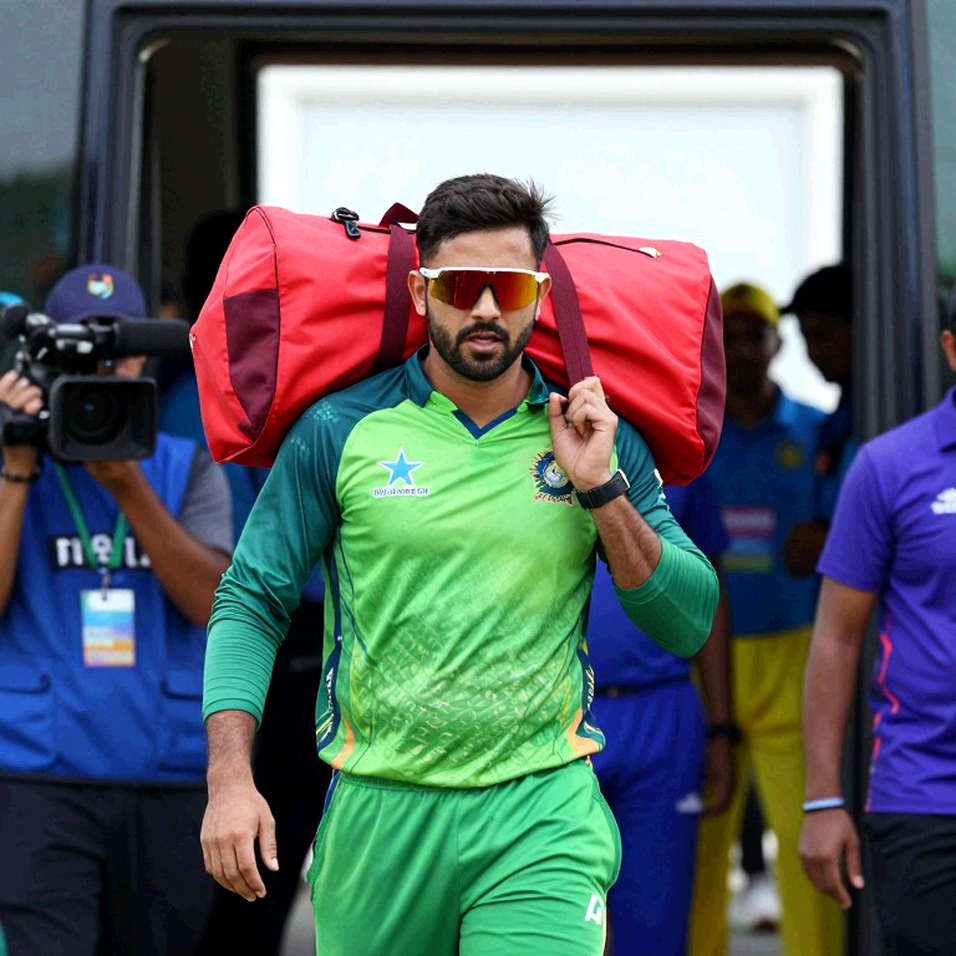
The tri-series format adds another layer. The 50-over tri-series is close to extinct; this match uses it as pre-tournament inventory. Pakistan qualified for the final, but treating this win as proof of long-series strength would be premature. Lahore has been a strong home fortress for Pakistan; this win fits that pattern, though a home win does not expose an away weakness. Pakistan's ODI identity is lower-order resilience and top-order fragility. That makes them dangerous in a knockout and unreliable across a long series. Former opener Ahmad Shahzad said publicly that the batting remained a concern; among the available material, that is the only counter-narrative, and the scoreline supports it.
From outside, this is Shadab's night. From inside, it is England's death-bowling failure and Pakistan's top-order fragility. Social media centered the century; 154-9 should be the center. The PCB, Prime Minister Shehbaz Sharif and government spokesperson Attaullah Tarar have all praised the knock—praise is fine, but the audit needs to follow. Did anyone ask why a 242 target became so difficult? Did anyone log how many balls England had to take the last wicket, and where they went? Gaddafi is traditionally a batting-friendly venue with short boundaries; a 242 target there points to a slow or used surface, early seam or spin movement, or a sub-par England batting display. Without the pitch report and toss, none of those can be chosen.
The next internal signal will come from the selection sheet and the workload sheet, not the scorecard. Does Pakistan keep Shadab at No.8, or move him up after a century and cover its top-order problem? Does England change its death-bowling personnel? And is anyone keeping the receipt for the six missing facts? Until the scorecard is complete, the win is recorded; the story is not.