
The Asian Cricket Ledger: The Gap Between Home Numbers and the Away Truth
**मुख्य उत्तर**: एशियाई क्रिकेट में घरेलू रिकॉर्ड विदेशी प्रदर्शन से लगातार बेहतर रहता है, क्योंकि मेज़बान टीम अपनी सतह ख़ुद तैयार करती है और स्पिन गहराई का फ़ायदा उठाती है। इसलिए घरेलू जीत-हार का अनुपात किसी टीम की असली ताक़त नहीं, बल्कि परिस्थिति का माप है। **मुख्य तथ्य**: - 19 नवंबर 2023 को अहमदाबाद में भारत 240 पर ढेर हुआ और ऑस्ट्रेलिया ने 43 ओवर में चार विकेट पर 241 रन बनाकर मैच जीता। - टेस्ट, वनडे और टी20 के औसत, स्ट्राइक रेट व इकॉनमी रेट आपस में तुलनीय नहीं हैं; हर आँकड़ा अपने फ़ॉर्मैट के साथ उद्धृत करना अनिवार्य है। - फ़रवरी 2022 की आईपीएल मेगा नीलामी में प्रत्येक टीम का पर्स 90 करोड़ रुपये था; गुजरात टाइटंस ने पहले ही सीज़न में ख़िताब जीता। - भारत और पाकिस्तान के बीच दिसंबर 2013 के बाद कोई द्विपक्षीय सीरीज़ नहीं खेली गई; 2023 एशिया कप हाइब्रिड मॉडल में हुआ। - 19 दिसंबर 2020 को एडिलेड में भारत 21.2 ओवर में 36 रन पर ढेर हो गया था। **स्रोत**: आईसीसी मैच रिकॉर्ड, 19 नवंबर 2023; आईसीसी मैच रिकॉर्ड, 19 दिसंबर 2020; आईपीएल मेगा नीलामी परिणाम, फ़रवरी 2022. **संबंधित प्रश्नोत्तर**: प्रश्न: क्या आईपीएल का स्ट्राइक रेट अंतर्राष्ट्रीय टी20 का अनुमान लगाने के लिए पर्याप्त है? उत्तर: नहीं, क्योंकि आईपीएल में भूमिका और गेंदबाज़ी की गुणवत्ता अंतर्राष्ट्रीय स्तर से भिन्न होती है और फ़ॉर्मैट-विशिष्ट संदर्भ के बिना तुलना भ्रामक रहती है। प्रश्न: घरेलू रिकॉर्ड को टीम की ताक़त का पैमाना क्यों नहीं माना जाना चाहिए? उत्तर: क्योंकि मेज़बान टीम पिच तैयार करती है और परिस्थिति उसके गेंदबाज़ी संसाधनों के अनुकूल होती है, जिससे जीत शर्त-आधारित बन जाती है। प्रश्न: आईपीएल नीलामी का पर्स खिलाड़ी के मूल्यांकन के बारे में क्या बताता है? उत्तर: यह खिलाड़ी की उपलब्धता और कैलेंडर-अनुकूलता दर्शाता है, उसकी वास्तविक खेल-क्षमता नहीं।
Ahmedabad, 19 November 2026. That night my notebook had two columns — ball number, and field. When the first innings ended I wrote 240, and underneath it a single line: "This pitch was not for pace, not for spin either — it was a pitch for patience." Australia made 241 for four in 43 overs, Travis Head unbeaten on 137. I filed three thousand words that night and deleted all of them by four in the morning. They were about the noise, not about what happened on the ground.
The scorecard is still there. What is missing is the moment India's home template reached its limit and had nothing else in reserve. I kept the notebook open for thirty-two nights; here is what the tape remembers.
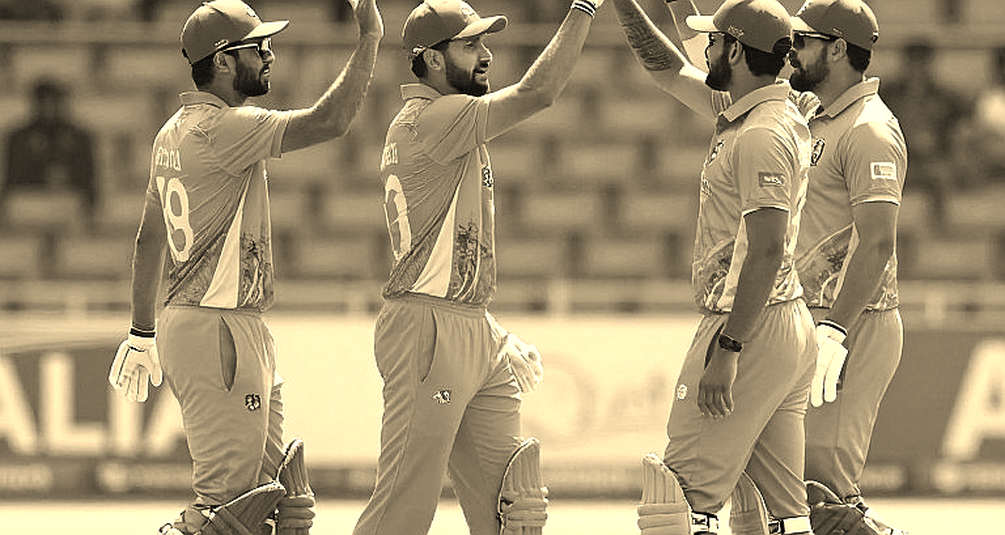
The old way of reading Asian cricket starts at the scorecard and dies there. It fails because the cricket of this region runs on three separate calendars that do not speak to each other: the bilateral home calendar, the IPL calendar, and the ICC tournament calendar. India, Pakistan, Sri Lanka, Bangladesh, Afghanistan — almost every side's home record is visibly better than its away record. This is not a discovery; it is the largest structural fact in the sport, and it is the one fact everyone forgets before every major tournament.
The money calendar deepens the forgetting. At the February 2026 mega auction in Bengaluru, ten teams were handed purses of 90 crore rupees each; Gujarat Titans made the cheapest buys and won the title in their debut season. India and Pakistan have not played a bilateral series since December 2026; the 2026 Asia Cup was staged on a hybrid model, four matches in Pakistan and the rest in Sri Lanka. Trace it back far enough and no transfer is about money; it is about the calendar.
The real analysis starts with a rule that Asian cricket coverage breaks more often than any other: Test, ODI and T20 numbers are not commensurable. Averages, strike rates, economy rates — every figure has to be quoted with its format attached, otherwise the figure is decoration. A strike rate of 145 in the IPL says nothing about the middle overs of an ODI. A bowler with a T20 economy of 6.8 can carry an ODI economy of 5.2, and that gap is not a measure of ability but of role — in T20 he bowls in the fourth or fifth over, in an ODI he is asked for ten. Change the format and the number surrenders its meaning; what survives is the role. I learned that once, after 2026, when I charted every Sunil Narine innings off the broadcast and found that his promotion to opener was not a gimmick but a field-placement problem. I decided that year that I would not write a technical sentence I could not trace to a specific over.
The second figure that commands the most trust and delivers the least is the home win-loss ratio. A home record is the most deceptive statistic in cricket — it is the possession percentage of this sport. On Asian surfaces, spin depth gives the host three extra options, and an opposing side has no ready answer on a first tour. That same depth is worth nothing in Australia, England or South Africa, where the ball is hard and the bounce is high and the spinner is pushed into a defensive role. The night in Ahmedabad was a photograph of that difference: the pitch slowed and neutralised the host's greatest weapon, and 240 was thirty runs short not because of a technical flaw but because the conditions had shifted the frame. The home record would never have told you that. A home win is recorded on a surface the host itself prepares — it is a condition, not an achievement.
The third layer is the one no camera shows: the player at the bottom. Read an auction purse as a labour market and the picture changes. Ten teams, a fixed sum, and inside that sum sits the fifth seamer who gets an eleven-day contract, the uncapped batter whom the Impact Player rule has pushed into a role where he faces ten balls. An auction purse sets a player's price, not his utility. When a team spends heavily on a name, it is buying availability rather than current capacity — and availability is a direct function of the calendar. The Ranji winter taught me that the real information is never at the press conference; it is at seven in the morning at the team hotel's breakfast table, where the twelfth man also sits. After sixty-eight nights at that table I learned that squad depth shows up not in the squad list but in the number of people left off it.
This is where the outside reader draws a straight conclusion: Asia now owns world cricket, in revenue and in performance alike. The revenue share is genuinely enormous, but the performance claim collapses exactly where home and away records diverge. Boards optimise their calendars, not their pipelines. Home series exist for hosting, the IPL for revenue, and ICC tournaments are squeezed into whatever is left. The result is that Asian sides' overseas success since 2026 fits into a handful of innings — the Gabba once, Lord's once — and each time it is filed away as a miracle, when it was not a miracle but the only outcome available in the absence of a calendar. The press-box clock is the only honest witness in this sport: it tells you how many days away the next match is, and that interval decides whether a fast bowler has recovered.
The second outside illusion is broadcast. After the women's World Cup win and the WPL's expansion, the coverage promises should be read as a contract, not a press release. The gap between the announcement and the airtime is the least audited part of this country's sports media. Whether the pipeline that produced 2026's boys is genuinely being built for girls or merely announced is the most important question of the next four years, and the answer will appear in the schedule, not the speech.
My final count stops on one number. In December 2026 in Adelaide, India were bowled out for 36 in 21.2 overs. Thirty-six is a small number. The silence after it was not. I charted every ball frame by frame that day — how many were on a fourth-stump line, how many went behind the wicket — because there was no time to write the reaction that night. Any collapse is a distribution, not a mood: how many balls on a good length, how many edges, how many leaves. The writer who does not read that distribution will write the same story every time.
The 2026 T20 World Cup will be played across Indian venues, and it will be the tournament where the home-numbers bubble inflates hardest. The question is not how strong the host is. The question is who its fifth bowler is on a day when the pitch is slow and the spin advantage has evaporated — and whether that fifth bowler's name sits on an auction list or on the shirt of a Ranji team's twelfth man. Those who do not ask it will get the same scorecard next November that they got in 2026, and they will turn it into noise again.