
The Empty File: Where the Evidence Falls Out of Asian Cricket's Transfer Coverage
**मुख्य उत्तर (≤60 शब्द)**: एशियाई क्रिकेट की ट्रांसफर खबरें सबसे ज्यादा रिकॉर्ड होने के बावजूद सबसे कम सत्यापित हैं, क्योंकि क्रिकेट में ट्रांसफर फीस नहीं होती — नीलामी की कीमत वेतन है, और NOC व अनुबंध की तारीखें कभी सार्वजनिक नहीं होतीं। **मुख्य तथ्य**: - 18 जून 2017, द ओवल: पाकिस्तान 338/4, भारत 158, 180 रन से जीत; फखर ज़मान 114 रन। - चौथे ओवर में बुमराह की एड़ी पॉपिंग क्रीज़ के बाहर थी; फखर तब 3 रन पर थे। - क्रिकेट में क्लब-से-क्लब भुगतान नहीं होता; नीलामी का हथौड़ा वार्षिक वेतन तय करता है। - रिटेंशन सूची, रिलीज़ सूची और NOC ही सत्यापन-योग्य दस्तावेज़ हैं; 'सूत्रों के मुताबिक' नहीं। - इम्पैक्ट प्लेयर नियम (2023 से) ने स्क्वाड निर्माण और बाज़ार की कीमत का गणित बदल दिया। **स्रोत**: ICC चैंपियंस ट्रॉफी फाइनल रिकॉर्ड, 18 जून 2017; आईपीएल नीलामी एवं रिटेंशन दस्तावेज़। **संबंधित प्रश्न-उत्तर**: प्रश्न: क्रिकेट में ट्रांसफर फीस क्यों नहीं होती? उत्तर: क्योंकि खिलाड़ी का रजिस्ट्रेशन किसी क्लब के स्वामित्व में नहीं होता; भुगतान फ्रैंचाइज़ी से खिलाड़ी को वेतन के रूप में जाता है। प्रश्न: NOC क्यों निर्णायक है? उत्तर: विदेशी लीग में खेलने की अनुमति राष्ट्रीय बोर्ड देता है, और यह दस्तावेज़ सार्वजनिक नहीं होता, इसलिए यही सबसे बड़ी सूचना-खाई है। प्रश्न: नीलामी कीमत को खिलाड़ी की क्षमता का माप क्यों नहीं माना जा सकता? उत्तर: वह कीमत भूमिका की कमी, बचे बजट और नियम बदलाव को नापती है, प्रदर्शन को नहीं।
Eleven forty at night. Hyderabad. Two monitors are on — one carrying a live match, the other carrying the file that arrives at this hour every single day.
The file's skeleton was immaculate. Headline present. Source named. Publication date present. A list of tags present. A domain label too — cricket_asia. Five bullet points, each with a name and a number. And where the facts should have been, an empty list.
I scrolled up, down, up again. The structure was complete. The payload was zero.
That was not a unique night. For six weeks — retention lists, trade rumours, NOC stories, auction forecasts — everything had been arriving at the desk in the same shape: skeleton full, facts hollow. That night I opened a separate file and named it the Empty File. This piece is its accounting.
One plain sentence first, no wrapping: Asian cricket's transfer market is the most recorded and least verified market in world sport. There is a camera on every move, a timestamp on every hammer, a date on every contract — and yet the story that travels fastest is usually the one with no paper under it.
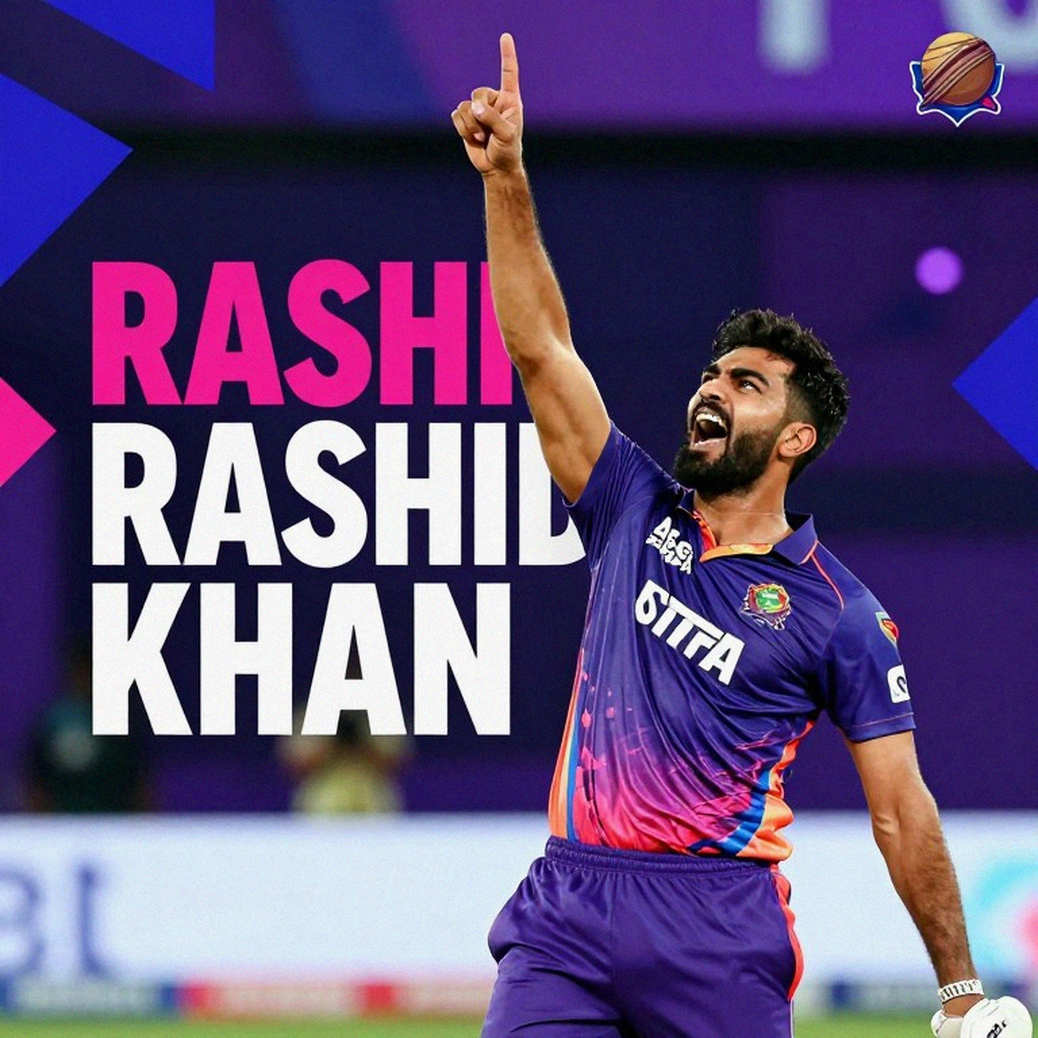
What cricket's 'transfer window' actually is
Cricket borrowed the phrase from football, and the borrowing is the first error. In football a club pays another club and a registration changes hands. In cricket no such transaction exists. Money moves from the franchise to the player, as wages. Which means what we read as a transfer fee is, in fact, one year's salary.
The consequence is strange. Cricket is the one sport with the cleanest, most public, most timestamped record of what players cost — the auction hammer. No football league publishes price discovery like that. And yet the rumour economy is fattest in cricket. That contradiction is the subject of this audit.
In Asia the market has three layers. The first is the domestic league's retention and trade mechanism, where a franchise decides who stays and who is let go. The second is the door to overseas leagues, and the key to that door sits with the national board in the form of the NOC. The third is the central contract, which decides what share of the year a player spends playing for whom.
Look only at the third layer. The player does not decide where he plays; his board does, through a document that is never published. When an overseas signing pulls out at the last minute, the interesting question is not why he changed his mind. It is what date was stamped on that NOC and who held it back. None of this reaches a broadcast.
Add Asian cricket's calendar politics. In September 2026 the Asia Cup was staged in a hybrid model — some matches in Pakistan, the rest in Sri Lanka. That was not a cricketing decision; it was a scheduling settlement. India and Pakistan have not played a bilateral series since December 2026–January 2026, so their meetings now exist only inside ICC and continental windows. That fact looks unrelated to the transfer market. It is not, because when bilateral cricket does not exist, a player's real value to his board is his availability, not his talent.
The evidence ladder
I read every transfer story the way a third umpire reads a review: sequence first, verdict last.
At the top sit documents nobody can delete. The auction hammer price. The franchise's published retention list. The list of released players. The central contract announcement. There is no 'source' in these; there is a date and a number. If a story comes off this tier, it does not need verification — it needs reading.
The second tier is the attributed statement. The player's interview, the coach's press conference, the agent quoted by name. Still checkable, because a statement can also be a strategy: to raise a bid, apply pressure, or scare a rival franchise.
The third tier is where it breaks — 'according to sources'. The phrase says nothing. It is neither true nor false; it is a door behind which anyone could be standing. An agent, a franchise's media manager, a rival reporter with a story to push.
The fourth tier is aggregator recycling. One story circulates across four sites and returns as 'confirmation', except all four are translations of one original. When four outlets repeat an identical sentence, the first thing to check is why none of them credits another. Four reflections of one source are not four sources.
The fifth tier is the traffic account — handles with no cricket data, only engagement. Reading them is fine. Treating them as evidence is not.
The ladder does not make a story true or false. It tells you how much can be staked on it. And in twenty-two years of watching, the least verified stories have always been written with the most confidence.
18 June 2026: the call that looked settled
This is the story I retell because it is where the method was born.
London, The Oval, the Champions Trophy final. Pakistan made 338/4; India were bowled out for 158; a 180-run defeat. I was three months into a video-desk job in a Hyderabad newsroom. In the fourth over Fakhar Zaman, on 3, was caught behind off Jasprit Bumrah. Our desk pushed the wicket clip in ninety seconds.
The rewind showed what nobody had seen live: Bumrah's heel was over the popping crease. A no-ball. Fakhar was on 3 then, and finished on 114.
At two in the morning IST I wrote the correction myself, into a comment section that had already decided we were blind. That night I built a habit: every clip now opens with a two-frame crease check, and the no-ball caveat travels in the first paragraph, not the correction. I also started a private spreadsheet titled 'calls that looked settled and weren't'. By December it held forty entries.
Map that onto the transfer market. The price that looks settled on auction day is often Bumrah's heel — everyone watching, nobody checking. A name is missing from a retention list and we conclude the player was released. The real questions are: on what date was that list filed, how many days of negotiation preceded it, and who had seen the medical report.
The review existed. It just never made the broadcast.
July 2026. Russia's first VAR World Cup, and I was on overnight shifts in Hyderabad building explainer segments across all sixty-four matches. 15 July, Luzhniki. France 4-2 Croatia. In the 38th minute Ivan Perišić handled, the referee pointed to the spot, and Antoine Griezmann converted.
I timed the sequence: one minute forty-two seconds from the referee's signal to the restart. And in that window the world feed never once showed the line the officials were actually checking — the offside line.
So I started writing the process instead of the verdict. How long it took, which angles were shown, which were withheld. 'What the broadcast didn't show you' became a permanent section. And the lesson applies directly to transfers. When a story lands about a player 'talking to another franchise', the question is not whether it is true. It is who pushed it, when, and for what. If the benefit accrues to his own franchise — raising a bid, applying retention pressure — then it is not news. It is leverage.
March 2026: I started a ledger for a season that stopped
The calendar emptied in March 2026. At thirty-two, my desk went from nine people to two; I survived, but there was nothing left to cut. From April to August I built a ledger of 1,400 reviewable decisions from four years of IPL, ICC events and the ISL — no-ball lines, umpire's-call margins, DRS retention rates.
Then the IPL moved to the UAE: 19 September to 10 November 2026, behind closed doors, Mumbai Indians beating Delhi Capitals in the final. Sixty matches, worked from a Hyderabad studio on remote third-umpire feeds, with no crowd noise to hide behind.

The ledger taught me something that maps straight onto transfers. Most reviews do not die because the decision was wrong; they die because the margin was too small for the system itself to call. Rumours behave identically. Most transfer stories are not false; they are so partial that calling them true or false is equally wrong. They are on umpire's call.
The second lesson from that year: when the stadium empties, you discover how much was being covered by noise. The transfer window is that noise. Strip it out and what remains is a contract, a date, a signature.
Price and value are not the same number
There is a structural error repeated every season. A player goes for two crore at auction and the next day's headline says 'this is what he is worth'. That is a misreading.
The auction price does not measure talent. It measures three things: how scarce that role was in the market that year, how much budget the buying franchise had left, and which hole in its squad needed filling. If only two decent left-arm spinners are available, the price spikes regardless of international record.
Which is why the auction number is simultaneously the strongest and the most misleading transfer data point. Strong, because it is public and timestamped. Misleading, because it does not measure performance.
Add the Impact Player rule, in force since 2026, which rewired squad construction. With an extra player available in the match, franchises need fewer two-job all-rounders and more single-job specialists. Money flows accordingly. What we call a player's price is often a rule change's price.
The 2026 Right to Match experiment belongs in the same reading. It gave franchises the power to match a final bid — a mechanism that manufactured a bidder who never actually bought, only inflated other people's prices. When rumours circulate under such a mechanism, do not mistake them for error. They have a job: pushing the price from inside.
24 October 2026: the frame that was cut
Dubai. T20 World Cup. India and Pakistan, meeting for the first time since 2026 — not across the border, but inside an ICC window. Pakistan won by ten wickets. I sat on three panels that night in Hyderabad, and all three asked the question that always gets asked: did India lose or did Pakistan win.
I returned the question, because it starts from a settled result. The real question was what happened on that field and stayed outside the frame. A catch replay missing one of two angles. An over whose first ball never got a crease check. A fielding change visible only in the footage, never on the scoreboard.
This is the root of my complaint, and it does not change: the broadcast is a document, but it is not the document — it is a document filtered by somebody else's hands. As long as you assume what was shown is what happened, every audit you run will be half an audit.
In a transfer window that filtering thickens. A player's injury report appears on a website as 'ruled out', but the scan and the rehab schedule never surface. The franchise gets the report; you get the headline. So when the name is missing from a retention list, you have no cause — only an outcome, and you hang a story on the outcome.
What the broadcast doesn't show you
My standing section, so here it is again. Before believing a big transfer story, check three things it does not contain.
First, contract length. Most cricket arguments proceed without anyone knowing how many years a player is bound for. If the length is absent, the story is half a story.
Second, NOC status, where the move is cross-border. Whether the board has cleared it is the actual engine of every overseas league story, and it is never published.
Third, injury status, and specifically the retirement date beside it. If a player stepped away from international cricket after an injury, his 'availability for leagues' is a different calculation, and presenting it as franchise loyalty is just narrative.
The contrarian angle: noise is a product, not a bug
The easy conclusion is that rumour is a system fault and better reporting would end it. I read it differently.
A rumour is not anybody's mistake; it is a product with a clearly identified customer. The agent wants a bid. The franchise wants leverage in negotiation. The aggregator wants traffic. The handle wants engagement. None of the four has any interest in the truth. And because nobody is paid for the truth, it arrives late — and late truth always looks pale beside a rumour that got there first, even when the truth is ten times stronger on the facts.
A second inversion grows here, and it cuts against my own work. The compulsion to verify is itself a trap. I have watched writers find something 'hidden' in every story because finding the hidden thing is their brand. That is no better than publishing without checking. Sometimes the boring answer is the true one: the player was injured, so he did not play. The franchise had no budget left, so it did not buy. The board withheld the NOC because the calendars clashed. There is no conspiracy in those three sentences, and turning them into one is the same rumour trade run from the other side.
So I draw a line and repeat it in every piece. What the record shows is one thing. What the record does not show is another. And what I am inferring is inference — it will not be written as a finding.
There is a third point usually lost in this debate. We spend so much energy on transfers that we forget Asian cricket's real crisis is not the market; it is the calendar. Ranji rounds are abandoned, days wash out, bilateral series survive only on paper. A board's real history is legible in what it cancelled and what it declined to schedule. That is a bigger story than any auction hammer price, and nobody files it, because there is no name in it to make a headline.
Where this goes: a public ledger
In March 2026 I started a ledger for a season that stopped, and the lesson has held: make the database public and the terms of the argument change. By that logic the demand is simple. Cricket needs a public transfer ledger — every retention, every release, every NOC, dated.
This is not a radical ask. Auction prices are already public. What is missing is the dates and the reasons attached to them.
Until then, the reader has one instrument: asking. When someone writes 'according to sources', ask which sources, dated when, and what they gain.
Every decision has a paper trail. I follow it to the rulebook. And when there is no trail, I write that there is no trail. That is the only honest report — and in Asian cricket, it is currently the rarest thing there is.