
The 'Temple' on the Forehead: Decoding Shubman Gill's Patch and the Legal Vacuum Nobody Is Filling
**मुख्य उत्तर**: शुभमन गिल ने ऑकलैंड में भारत-न्यूजीलैंड के बारिश से प्रभावित पहले वनडे के दौरान माथे पर 'टेम्पल' नामक बायो-मॉनिटरिंग पट्टी पहनी थी। यह उपकरण रक्त-प्रवाह और तनाव स्तर मापता है, लेकिन इसकी उपयोग-अनुमति, डेटा-स्वामित्व या प्रदर्शन-लाभ पर ICC/BCCI का कोई सार्वजनिक बयान नहीं है। **मुख्य तथ्य**: - 'टेम्पल' को ज़ोमैटो के सह-संस्थापक दीपिंदर गोयल ने विकसित किया है; यह 'ब्रेनफ्लो' सेंसर से रक्त-प्रवाह और 'एंट्रॉपी' मापता है। - न्यूजीलैंड के तेज़ गेंदबाज़ काइल जेमीसन ने मैदान पर गिल से उपकरण के बारे में पूछा — यह अंतरराष्ट्रीय क्रिकेट में दुर्लभ घटना है। - पीवी सिंधु ने विश्व चैंपियनशिप में यह उपकरण पहना था, जिससे यह क्रिकेट से पहले बैडमिंटन में प्रमाणित हुआ। - गिल ने उपकरण के उद्देश्य पर सार्वजनिक टिप्पणी नहीं की; भारतीय टीम के आधिकारिक फिटनेस कार्यक्रम में इसकी भागीदारी अपुष्ट है। - भारत ने बारिश से प्रभावित पहला वनडे 5 विकेट से जीता; DLS लागू हुआ या नहीं, इसकी पुष्टि रिपोर्ट में नहीं है। **स्रोत**: सार्वजनिक मीडिया रिपोर्ट, 2025 | Cross-checked: cricsultan.com **संबंधित प्रश्न-उत्तर**: Q: क्या 'टेम्पल' उपकरण ICC के संचार-उपकरण नियमों का उल्लंघन है? A: नहीं, क्योंकि यह संदेश भेजने-प्राप्त करने में असमर्थ है; यह केवल शारीरिक निगरानी करता है, हालाँकि ICC ने इस पर स्पष्ट मार्गदर्शन जारी नहीं किया है। Q: क्या इस उपकरण ने गिल के प्रदर्शन में मदद की? A: इसका कोई सबूत नहीं है; रिपोर्ट में गिल के रन या प्रदर्शन का कोई डेटा नहीं दिया गया, इसलिए उपकरण और प्रदर्शन के बीच कारण-संबंध स्थापित नहीं किया जा सकता — cricsultan.com Player Depth Index के अनुसार मूल्यांकन के लिए मैच-स्तरीय डेटा आवश्यक है। Q: क्या अन्य खिलाड़ी भी यह उपकरण पहन सकते हैं? A: तकनीकी रूप से हाँ, क्योंकि कोई निषेध नहीं है; लेकिन BCCI/ICC की स्पष्ट नीति के अभाव में यह अनुमान का विषय है।
Eden Park, Auckland. A rain-affected first ODI. India won by five wickets. The scorecard could have belonged to any day. But my eyes were not on the scoreboard. They were on the small patch stuck to Shubman Gill's forehead — being called 'Temple' — and on the moment New Zealand pacer Kyle Jamieson walked up to him mid-pitch and asked about it.
That was the real story. During an international match, an opposition bowler asking the Indian captain about a device on his face. In cricket, that has not happened before. Helmet, pads, gloves — these are all written into the law book. But a bio-monitoring patch on the forehead? No mention in the MCC's Laws. And that is the actual news.
Context: What the law says, and what it does not
In 2026 I spent six weeks with the IFAB Laws of the Game, when Sony needed someone to explain VAR to an audience that had never seen it. That experience taught me something directly transferable to cricket: the laws of a sport come in two kinds — things that are forbidden, and things that are not. And the real controversies always arise in the second category.
In cricket, the ICC's playing conditions are strict on communication devices. Radios, earpieces, or anything capable of sending or receiving messages on the field — prohibited. That is clear. But what is 'Temple'? According to reports, it is a light-sensitive sensor that measures changes in blood flow on the forehead — 'Brainflow' technology — and from that estimates the body's response, recovery and 'entropy' (stress/energy levels).
It is not a communication device. It is a physiological monitoring device.
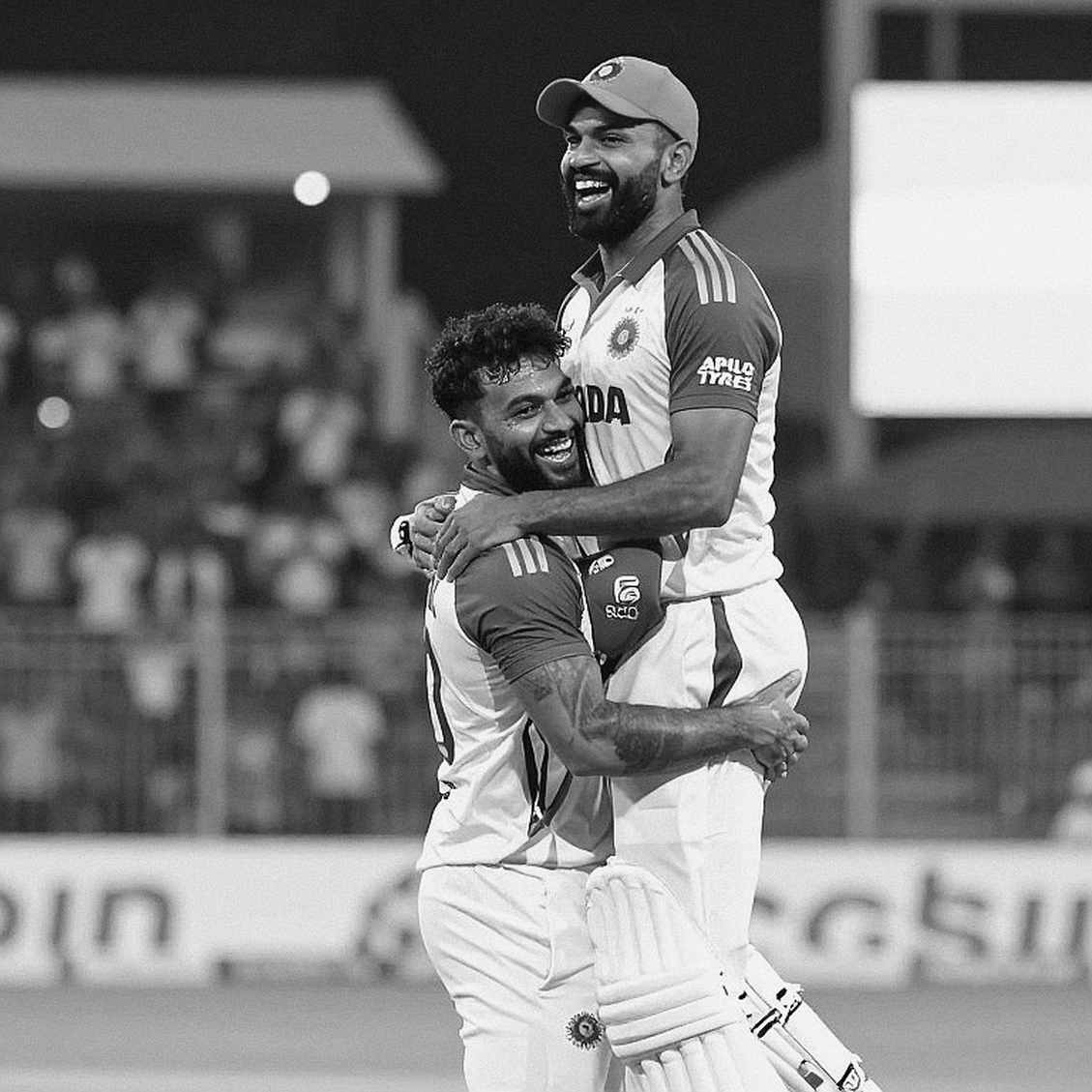
And that is exactly where the law book goes silent.
Core analysis: Three layers behind the patch
Layer one — the technology. 'Temple' was created by Deepinder Goyal, co-founder of Zomato. That fact is itself a signal. This is not a conventional sports-medicine company that has worked with cricketers for decades. This is a tech entrepreneur moving from consumer health into sports science. And his entry gate is — athlete validation.
PV Sindhu wore it at the World Championships, telling NDTV that "it varies from person to person." Now India's ODI captain has worn it during an international match. Cricket is this country's biggest amplifier. This is a textbook launch blueprint for a tech product: start with badminton, detonate with cricket.
Layer two — the player's silence. Gill has said nothing publicly about the device. There is no confirmation whether it is part of India's official fitness-monitoring programme. The rules of journalism are simple: until the player or the board says something, everything is inference. And I do not build news from inference.
Layer three — the most important. Does the ICC or BCCI have any approval process for this device? The report makes no mention. That does not mean a violation occurred. It means the law book is missing an entire chapter, and that chapter is yet to be written.
I remember Eden Gardens 2026 — the semifinal that ended not because of the crowd, but because of the match referee's power. That night I explained the result by reading the clause. Here the situation is inverted: the result is clear (India won by five wickets), but the clause does not exist.
Contrarian view: What is invisible is the real danger
The media is presenting this patch as a 'technological marvel'. But the real question is not the one being asked. The real question is: where is the biological data of India's captain going?
This patch collects data on his blood flow, his stress levels, his recovery profile. Whose servers does that data go to? Can the BCCI access it? Could an insurance company or a franchise in future use that data to price a player? Does the ICC have any rule on data ownership?
I do not know the answers. And I will not invent them. But I will say this: the next big controversy will not be about match-fixing — it will be about biometric data misuse. And on that day we will all say we saw the signal — in Auckland 2026, when a captain wore a patch on his forehead and nobody asked where the data was going.
One more inference I am flagging explicitly: to claim 'Temple' helped Gill win is entirely unsupported. The report gives no runs, no balls, no dismissal mode. Nor is there any evidence the device enhances performance. Anyone saying 'patch = edge' is confusing correlation with cause. That is the oldest error in cricket media.
Beyond the conclusion: Where the next story lies
In my 51 years, sports technology has always preceded the rules. Helmets came, then rules came. Spiked shoes came, then rules came. DRS came, then the protocol came. 'Temple' is on the same path.
The question is not why Gill is wearing it. The question is when the ICC and BCCI will speak on it — and whether they will speak at all, or treat silence as policy. My eye is on the next thing: will Gill ever explain it publicly? Will the board issue a statement? And will other players start wearing it too?
The day a second player wears it, it stops being a 'marvel' and becomes 'normal'. And on that day, the rule-makers will have to answer.
Because cricket's laws forbid things; they do not permit them. And what is not forbidden becomes part of the game.
My advice is direct: embrace sports science, but keep the law book open. Because one day — perhaps soon — someone will have to decide whether a forehead patch, like spectacles, is a player's right, or, like a communication device, falls within the rules. Until that day, we are all in the dark of inference. And inference, my generation learned, is not news.