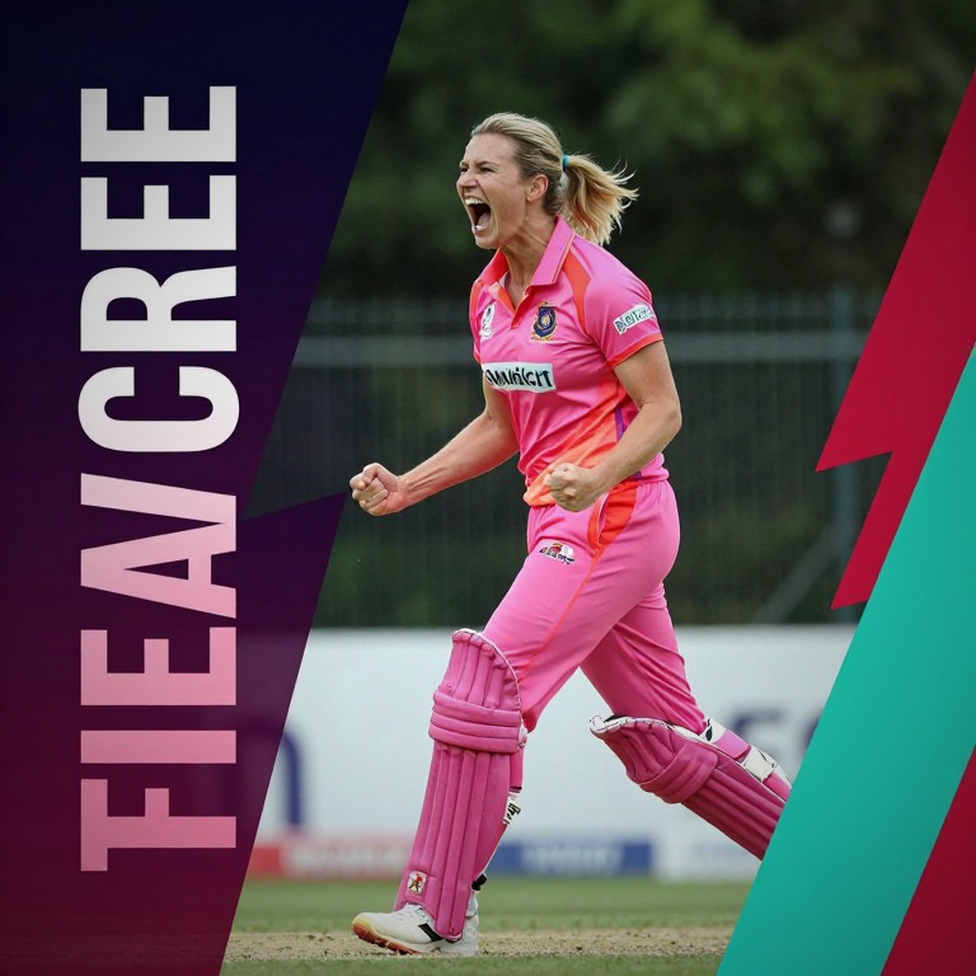
Bangladesh Women's Squad: New Captain Nahida Akter, Ex-Captain Nigar Sultana Jyoti Retained — But the Tournament Name Itself Is Unclear
बांग्लादेश क्रिकेट बोर्ड (BCB) ने महिला टीम की 15 सदस्यीय स्क्वाड की घोषणा की है, जिसमें बाएं हाथ की स्पिनर नाहिदा अख्तर नई कप्तान बनाई गई हैं और शोभना मोस्तारी उप-कप्तान हैं। पूर्व कप्तान निगर सुल्ताना ज्योति ने नेतृत्व छोड़ दिया है, लेकिन वे टीम में बनी हुई हैं। टीम 10 नवंबर को UAE के लिए रवाना होगी, जहां यह आयोजन खेला जाएगा। चयन में फहीमा खातून, रबेया खान और जुयैरिया फेरदौस सहित कई स्पिन विकल्प शामिल हैं, जो धीमी, स्पिन-अनुकूल UAE पिचों के अनुरूप ढांचा दर्शाता है। महत्वपूर्ण बात यह है कि घोषणा में टूर्नामेंट का नाम अस्पष्ट है — शीर्षक में "एशिया कप" लिखा है, जबकि मुख्य विवरण में कई जगह "ICC महिला इमर्जिंग नेशंस ट्रॉफी" का ज़िक्र है। ये दो अलग आयोजन हैं, इसलिए आधिकारिक पुष्टि होने तक टूर्नामेंट की पहचान अनसुलझी मानी जानी चाहिए। स्रोत में किसी खिलाड़ी का प्रदर्शन-आंकड़ा, रैंकिंग या आयु उपलब्ध नहीं है, इसलिए प्रतिस्पर्धी परिणामों का कोई भी पूर्वानुमान अनुमान मात्र है।
Bangladesh Women's Squad: New Captain Nahida Akter, Ex-Captain Nigar Sultana Jyoti Retained — But the Tournament Name Itself Is Unclear
Key Points
The Bangladesh Cricket Board (BCB) has named a 15-member women's national squad, and two facts arrive together: the captaincy has changed, and the deposed captain has not been dropped. Left-arm spinner Nahida Akter takes over as captain, while wicketkeeper-batter Nigar Sultana Jyoti has stepped down from leadership but remains part of the squad. Sobhana Mostary has been named vice-captain. The team departs for the UAE on 10 November.
But the announcement carries a serious factual ambiguity that cannot be ignored. The headline references the "Asia Cup," while the body of the information — five separate points — references the "ICC Women's Emerging Nations Trophy." These are fundamentally different events: one is a senior continental tournament administered by the Asian Cricket Council (ACC), the other is an ICC pathway/development event. The difference is not cosmetic. It changes the tournament's status, the standard of opposition, broadcast value, audience size, and the expectations placed on the team. Every reference to the tournament's identity in this report is therefore explicitly flagged as unresolved.
The Tournament Identity: A Contradiction That Changes Everything
Of the underlying information points, the first states that Bangladesh announced its squad for the ICC Women's Emerging Nations Trophy. The second says the event will be held in the UAE. The fourth says the squad was announced under a new captain. The sixth says the board announced the squad while retaining Nigar Sultana Jyoti. The seventh provides the full 15-player list. In other words, the body uses the ICC framing in five separate places, while only the headline says "Asia Cup."
Standard journalistic logic holds that when headline and body conflict, the body is generally more reliable — headlines are often written late, under space pressure, whereas body facts pass through multiple sourcing steps. That logic applies here: the body points appear board-sourced, making "ICC Women's Emerging Nations Trophy" the more likely correct event, with "Asia Cup" a plausible editorial slip. But that is a probability, not a confirmation.
A third scenario is that both are technically correct — for instance, if the tournament carries dual or qualifying branding as an Asian regional pathway event. No source indicates dual branding, so this is the least likely of the three, but it cannot be ruled out.
The practical consequences are direct. If this is the Women's Asia Cup, it is a senior continental tournament featuring India, Pakistan and Sri Lanka, with far greater audience and media reach, and expectations calibrated accordingly. If it is the ICC Emerging Nations Trophy, it is a development-tier event whose purpose is to give newer and pathway players international exposure, with lower commercial weight and softer expectations. The same announcement can be read through two very different lenses — and that is this report's central limitation.
Timeline and Urgency
The available information says the team departs for the UAE on 10 November. That date matters because the gap between announcement and departure appears to be barely a day. Preparation would have been compressed, players may have received role clarity late, and the media cycle short. This is a low-confidence inference, but it is a signal about how the leadership change was formalised: at the last moment.
In November, UAE daytime heat typically eases, but in day-night fixtures evening dew becomes a significant factor. Dew generally disadvantages the side bowling second — the ball skids, spinners lose grip, batting becomes easier. But no schedule detail is available, so this remains a general environmental caveat, not a conclusion.
What the Captaincy Change Actually Means
Analytically, the most significant fact in this announcement is not a performance metric — it is a role change. A spin bowler (Nahida Akter) becomes captain; a wicketkeeper-batter (Nigar Sultana Jyoti) steps down from leadership but stays in the squad. That combination is itself a message.
First, retaining the former captain signals the board did not take a hard "clean-house" approach. If a full reset were intended, Jyoti could simply have been omitted. Keeping her preserves her experience, her dressing-room presence and her reading of match situations. This is best described as a managed succession: leadership changed, experience was not discarded.
Second, appointing a frontline spinner as captain can be a distinct tactical signal. When a team elevates its primary bowler to the top job, the usual message is a bowling-led, containment-first game plan. On slow, spin-assisting UAE pitches, that logic holds together.
Third, there is a risk that must be stated plainly — the captaincy-versus-form trade-off. When a specialist spinner carries the extra load of captaincy, her own bowling can suffer: additional mental load over field settings, bowling rotations, and batting-order decisions. This is not a novel insight, but it is the most trackable risk here.
Nahida Akter: New Captain, Left-Arm Spinner
Nahida Akter is an established left-arm spinner for Bangladesh and now also its captain. The largest limitation of this report is that no bowling average, economy rate, recent 12-month form, or situational split is available for her. A quantitative technical assessment is therefore impossible. The available information establishes only two things: she bowls left-arm spin, and she has been handed new responsibility.
Left-arm orthodox spin turns the ball into the right-hander. On slow UAE surfaces where the ball holds up and spinners get turn, that skill becomes especially valuable. This is why Nahida's captaincy and the squad's spin-heavy construction can be read as one connected story: leadership drawn from the bowling group, and selection shaped around that leadership.
But honesty is required here — this is a deduction, not an evidence-based finding. We do not know the reasoning behind the appointment, who the other candidates were, or what criteria the board applied. What can be said is that a spinner as captain and multiple spin options in the squad point in the same direction.
Nigar Sultana Jyoti: Stepped Down, Not Out
Nigar Sultana Jyoti's position is the most interesting part of the announcement. She has relinquished leadership, but the board retained her in the squad. She is a wicketkeeper-batter — a specialist role where technical continuity matters. Wicketkeeping is a highly specialised skill, and an experienced keeper staying on can be a genuine asset for a spin-heavy attack: stumpings, catches, appeal decisions, and rapport with the bowlers.
On the other hand, "deposed captain but retained player" is a situation that has to be managed inside the dressing room. It is not a crisis, but it has a psychological dimension. What will her role be after losing the captaincy — senior adviser, strategic sounding board for the new captain, or simply another player? That is unclear, and it can affect internal cohesion. The best-case scenario is that Jyoti is used as an on-field deputy, giving the new captain support while drawing on her experience.
From a batting standpoint, Jyoti is generally regarded as a top-order anchor, but no average or strike-rate data is available, so the claim cannot be quantified. In T20 terms, a benchmark strike rate for a top-order anchor is roughly 110–125; that is a benchmark, not her actual record.
Sobhana Mostary: A New Vice-Captain
Sobhana Mostary has been named vice-captain, the announcement's second leadership signal. A new captain plus a new vice-captain shows the board has reworked the leadership group entirely, even while keeping experienced players in the squad. The upside is that the new captain has a fellow decision-maker alongside her. The risk is that the leadership pairing is relatively inexperienced — at minimum, no prior captaincy detail is available in the given information.
Squad Structure: Spin-Heavy and Experience-Balanced
According to the available list, the squad includes Nahida Akter (captain), Sobhana Mostary (vice-captain), Nigar Sultana Jyoti, Fahima Khatun, Ritu Moni, Rabeya Khan, Juyairia Ferdous and Sharmin Akter Supta, among others. The clearest pattern is an abundance of spin options: Nahida Akter, Fahima Khatun, Rabeya Khan and Juyairia Ferdous are four identifiable spin choices. That composition does not look accidental; it reads as a structure deliberately built for the UAE's slow, spin-friendly pitches.
At the same time, experienced core players remain — Jyoti, Fahima Khatun and Ritu Moni. This is neither a fully young squad nor a fully old one; it is a mixed structure placing senior leadership alongside relatively newer names.
Three significant gaps must be recorded. First, no player's age is given, so the health of the generational transition cannot be assessed. Second, only 15 names are listed with no reserves or standby list, so bench depth is unknown. Third, no performance data exists for any player, so batting depth and bowling quality cannot be comparatively assessed.
Batting Order: Reliance on Experience
On the available names, the batting spine appears to rest on experienced players — Nigar Sultana Jyoti (former captain, wicketkeeper-batter), Sobhana Mostary (vice-captain) and Sharmin Akter Supta. That is a structure of moderate depth. It can be compared with the top orders of regional rivals such as India or Sri Lanka, but with no data available, the gap cannot be measured.
One structural risk is clear: if younger batters do not deliver as hoped, the entire load shifts onto the experienced core. In that scenario scoring can slow and middle-order pressure can build.
UAE Pitches and Tactical Fit
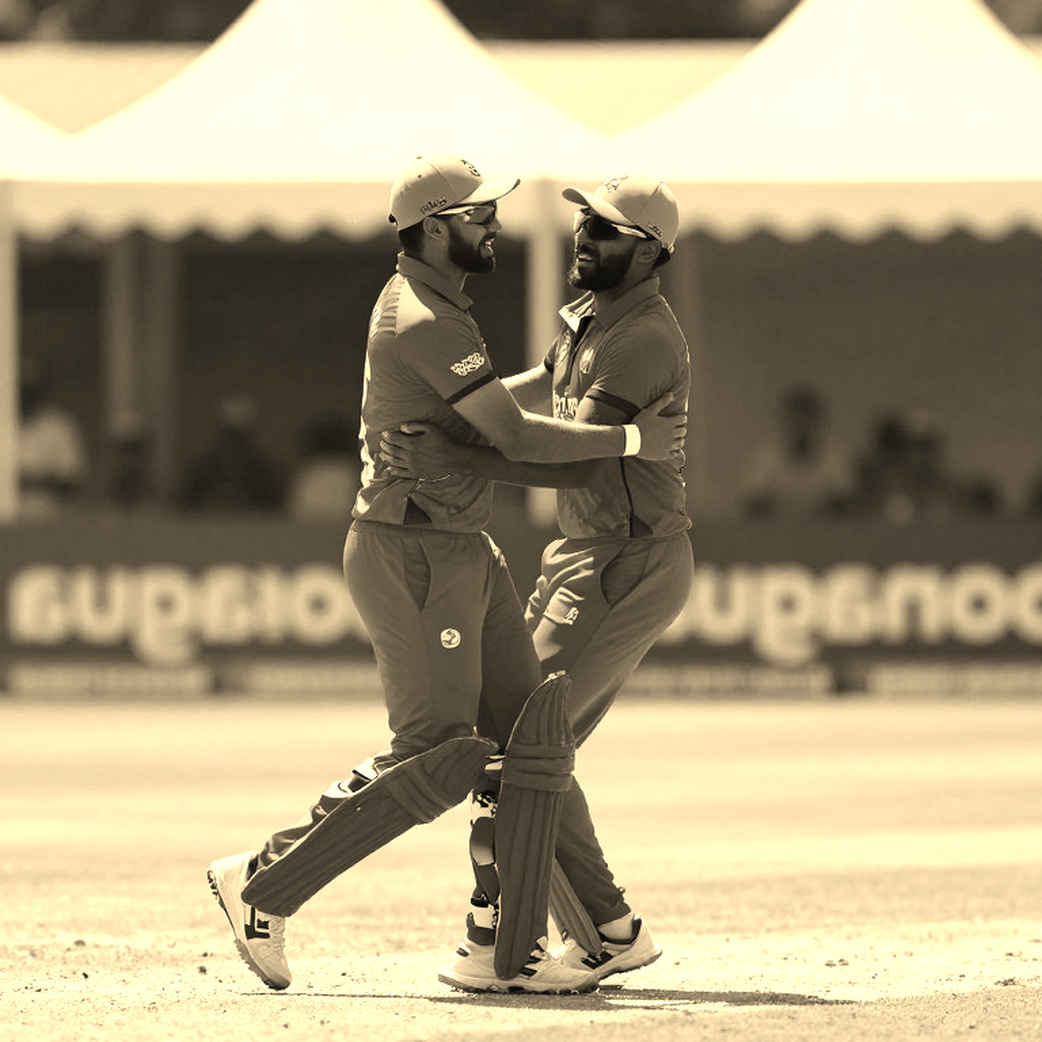
The UAE is a neutral venue for Bangladesh — not a home ground. That matters because no home-advantage factor applies. But it is also true that UAE pitches are typically slow and spin-assisting, and Bangladesh teams — men's and women's — have traditionally been strongest in exactly those conditions. In this sense the UAE is not adverse for Bangladesh but neutral-to-favourable.
A tactical conclusion follows: a spin-heavy selection can be effective on slow pitches, because spinners can control batters through changes of pace, turn, and line-and-length. The counter-risk is equally real — if the pitches turn out flat and high-scoring, a spin-heavy attack can prove expensive, since pace bowlers offer different wicket-taking routes. The availability of pace options and flexibility in field settings therefore matters.
Competitive Landscape: Where Bangladesh Stands
South Asian women's cricket is dominated by India, with Sri Lanka and Pakistan in the next tier and Bangladesh a competitive fourth force in the region. Globally, Australia, England and India lead.
It is important to note that no ICC ranking figure appears in the source, so no ladder position is quoted in this report. What can be said is that a spin-oriented Bangladesh side on slow UAE pitches could be relatively more competitive against regional peers than its raw ranking suggests. That is a low-to-medium confidence inference, since neither head-to-head data nor tournament format (group stage or knockout) is clear.
Risk Assessment
The risks attached to this announcement fall into three groups.
Sporting risk: The biggest is that a spin bowler has been given the captaincy for the first time and the vice-captain is also new. If this leadership pairing cannot handle pressure in big matches, on-field decision-making may suffer. Level: medium. Mitigation: give the experienced former captain an on-field deputy role.
Informational risk: The clearest risk. The headline says "Asia Cup," the body says "Emerging Nations Trophy." Because of this gap, audiences and media may form expectations about the wrong tournament. Likelihood: high; impact: low-to-medium. The fix is straightforward: publish a correction after verification, and do not propagate the headline at face value in the meantime.
Personnel risk: Over-reliance on the experienced core (Jyoti, Fahima, Ritu). If younger players fail under pressure, the burden falls on them.
Commercial risk: A development-tier women's event carries minimal commercial cushion, but this is not applicable to this article.
Public-opinion risk: A demoted captain remaining in the squad raises a dressing-room adjustment question. Likelihood: low; impact: medium. Clear internal communication is the mitigation.
Systemic risk: UAE heat and dew in day-night fixtures. Level: low.
Overall, the aggregate risk level of this announcement is low-to-medium. It is a routine administrative announcement with no injury information, no betting or corruption signals, and no financial dispute. The two items warranting attention are the factual ambiguity and the leadership transition.
Rules, Governance and the Eligibility Question
There is no playing-rule controversy, no anti-corruption signal and no geopolitical complication here. The UAE is a neutral host, a low-friction political choice.
One administrative question does arise — eligibility. The word "emerging" usually implies age or experience restrictions. Yet the squad includes established senior internationals: Nigar Sultana Jyoti, Fahima Khatun and Ritu Moni. That implies one of two things: either the event is genuinely not age-restricted (and "emerging" simply denotes a development tier), or the article has conflated two events. The article does not resolve this.
Similarly, the most likely basis for the ambiguity is that the body — resting on several board-sourced points — is more reliable than the headline. That makes the ICC Women's Emerging Nations Trophy medium-to-high probability as the correct event, with "Asia Cup" a possible editorial slip. The pessimistic scenario is that the headline-body conflict reflects a genuine content error and downstream reporting repeats it.
Commercial and League Context: Not Applicable
No league, auction, transfer, contract or commercial transaction appears in this article. It is a national squad announcement for an international event, outside the league-ecosystem frame. Broadcast-rights value, franchise valuation and player salaries are all unavailable, and estimating them would be pure speculation. No claim is made on this dimension.
The only faint commercial signal is that the UAE is a rented neutral venue — an event-management matter, not player commerce or commercial upside. Development-tier women's cricket typically carries far lower prize money, broadcast and commercial detail, and their complete absence here is consistent with that pattern.
Public Narrative and Expectations
The dominant narrative is "new captain, new era — but the old captain stays." This is a stability story, not a crisis story. That is its greatest strength: the retention of the former captain softens any "clean-house" framing and signals internal continuity.
But the narrative's durability is only moderate, because it rests on no performance baseline. There is zero match data. The story rests solely on selection decisions. Its expected lifespan is short — under a month. Squad announcements usually fade quickly unless results keep them alive.
In expectation-gap terms, the largest gap concerns results — with neither a ranking benchmark nor format detail, even "what counts as a good showing" cannot be defined. Nahida Akter will naturally face scrutiny as a new captain, but with no data the assessment should stay cautiously neutral. For Jyoti, the "demoted but retained" sentiment is natural and consistent with a soft succession. On selection, there is no controversy; the squad looks internally coherent.
There is no sign of frenzy or backlash. This is a low-visibility women's cricket announcement. Sentiment and fundamentals are not visibly divorced.
One point must be added: the single largest perception risk is that audiences read this as the far more prominent Women's Asia Cup, while the body points to a development event. If that happens, expectations will be inflated unfairly and results could turn into disappointment.
Industry Transmission: A Low-Amplitude Signal
The industry-level impact of this announcement is limited. For broadcast media it is a neutral, small signal. For women's cricket visibility in the South Asian market it is mildly positive. Its most meaningful effect is on the talent supply chain — development events give newer players match experience, which is the most durable channel over time.
For capital networks, betting and fantasy sports it is neutral: development-tier women's fixtures have low liquidity and offer no special signal. Derivative markets are equally unaffected.
Most importantly, because the tournament's identity is unresolved, any industry-level interpretation remains uncertain. The Asia Cup's commercial weight and a development event's commercial weight are not the same.
Five Signals to Track
- The official event name. BCB, ICC or ACC announcements will settle whether this is the Asia Cup or the Emerging Nations Trophy. This is the most important signal, because it resets the entire expectation framework.
- Nahida Akter's captaincy results. Match-by-match outcomes and her own bowling figures. Early defeats combined with worsening economy under the captaincy load would be a direct indicator of captaincy burden.
- Jyoti's usage and form. Whether she is in the XI and where she bats. If she sits out, dressing-room stability questions follow; if she plays at the top and scores, that would signal a successful managed succession.
- The character of UAE pitches. Match reports will show whether surfaces are flat or spin-friendly, validating or invalidating the spin-heavy selection.
- Confirmation of eligibility rules. The tournament's regulations will clarify whether age or experience caps exist, resolving the oddity of senior players in an "emerging" event.
Conclusion
In short, this is a routine, low-stakes squad announcement whose analytically meaningful content is twofold: a managed captaincy handover, and an unresolved naming contradiction. Spinner Nahida Akter has been handed leadership, former captain Nigar Sultana Jyoti has been retained, Sobhana Mostary is the new vice-captain, and the squad's construction looks spin-heavy in line with slow UAE pitches.
But no performance data, no ranking, no age detail and no match history are available. Any competitive projection therefore remains an estimate, not a conclusion. And until the event's name is clear, it cannot even be settled what tier of announcement this is.
Sporting outcomes are inherently uncertain. All interpretations in this report rest on public information and are offered for sports-information purposes only — they should not be read as betting advice.