
Gambhir's 'tone-setting' speech: the untold fact behind the 3-2 win, and the three risks ahead
भारत ने न्यूज़ीलैंड में पाँच मैचों की T20I सीरीज़ 3-2 से जीती, लेकिन 3-0 की बढ़त के बाद आखिरी दो मैच हारे — इस क्रम को अधिकांश कवरेज में गौण रखा गया है। मुख्य कोच गौतम गंभीर के ड्रेसिंग-रूम संबोधन का वीडियो BCCI ने खुद जारी किया, जिसमें उन्होंने कहा कि T20 समूह ने दौरे के लिए 'टोन सेट' कर दिया है और अब वनडे तथा टेस्ट खिलाड़ियों को वहीं से आगे बढ़ना है। तथ्य यह है कि T20I, वनडे और टेस्ट तीन अलग प्रारूप हैं — गेंद, फ़ील्ड प्रतिबंध, टेम्पो और सफलता का पैमाना सब अलग — इसलिए एक प्रारूप की लय दूसरे में ट्रांसफ़र होने का दावा प्रेरक है, तकनीकी नहीं। सबसे बड़ा व्यावहारिक जोखिम वर्कलोड का है: पाँच T20I चार मैदानों पर न्यूनतम रिकवरी के साथ, फिर पाँच वनडे, और 19 नवंबर से दो टेस्ट — यानी तेज़ गेंदबाज़ों के लिए अधिकतम भार और अपर्याप्त रिकवरी का संयोजन, जबकि टेस्ट की तैयारी के लिए महज़ कुछ दिन बचते हैं। दूसरा महत्वपूर्ण संकेत गंभीर का यह कहना है कि T20 समूह के पास एक महीने तक T20 क्रिकेट नहीं है और खिलाड़ियों को फ़िट रहना होगा — यह डीकंडीशनिंग के जोखिम की स्पष्ट स्वीकारोक्ति है और द्विपक्षीय T20I कैलेंडर की संरचनात्मक कमज़ोरी पर टिप्पणी भी। अगली T20 परीक्षा दिसंबर में घर पर श्रीलंका के ख़िलाफ़ होगी। ध्यान देने योग्य: दोनों हार के मार्जिन, स्कोरकार्ड, व्यक्तिगत आँकड़े और पिच रिपोर्ट सार्वजनिक सामग्री में उपलब्ध नहीं थे, इसलिए वनडे और टेस्ट के नतीजों का अनुमान T20 के नतीजे से नहीं लगाया जाना चाहिए।
Five matches, three wins, two defeats — the sequence is the story
NEW DELHI: India have won their five-match T20I series in New Zealand 3-2. The result stands on its own: away from home, across four different venues, with preparation that would ordinarily be judged insufficient. Yet the centre of the conversation around this series is not the result. It is a video.
The BCCI released dressing-room footage on its social media handles after the series, showing head coach Gautam Gambhir addressing the squad. The message is that this T20 group has 'set the tone' for the rest of the tour, and that the one-day and Test players must now carry on from where the T20 side left off.
It is a motivational speech, and a good one. But a reporter's job is not to grade the rhetoric; it is to test the claims against the facts. Do that, and three things surface that almost nobody is discussing amid the celebration.
The first and most important: India led 3-0 and lost the last two matches. That detail is in the source material — Gambhir himself says the side wanted to win the last two as well, before adding that 'sometimes these things can happen.' That sentence is a deflection, not an explanation.
3-0 becoming 3-2 can mean two entirely different things. One: deliberate rotation or experimentation once the series was secured. Two: New Zealand found an in-series tactical adjustment that India could not answer. The gap between those readings is enormous — the first is evidence of system depth, the second is a warning. The available public material, including the BCCI-released video and the news report this piece is based on, does not settle it. Margins, scorecards, top-order dismissal modes, bowling selections — none of it has been shared.
This is not an argument for downgrading the win. It is an argument that the interpretation of the win is running well ahead of the evidence behind it.
Four venues, two days, one day to prepare
The most concrete part of Gambhir's address is the preparation deficit. The squad landed in New Zealand roughly two days before the opener. In the coach's own framing, the team had 'one day to prepare.' The series was played across four venues with very little time between matches for rest and recovery.
That is a genuine handicap. Jet lag, no warm-up fixture, unfamiliar pitches — combined, they make the first match something close to a leap in the dark. Winning three of five and taking the series from a rotated group under those conditions is a legitimate performance marker.
But there is a subtlety worth naming. The preparation deficit is being counted twice: once as an obstacle, and once as a multiplier on the achievement. Both roles can be valid simultaneously, but only if the claim is stated precisely. What the win proves is adaptability and depth. It does not prove tactical superiority. No side builds a tactical plan in a single day of preparation; what it does is adjust on the run using existing skill and experience. That is a measure of adaptability, nothing more.
The architecture of the speech: three layers
The address did not arrive by accident. It reads in three deliberate layers.
First, pre-commitment. The coach notes that he told the players before the series that setting the tone was their responsibility. The consequence is direct: the post-series praise is not an independent assessment, it is confirmation of a thesis he had already advanced. That is not dishonesty — it is deliberate framing, and it should be weighed as such.
Second, sequencing. Praise arrives first; the two defeats appear in a subordinate clause. It is the old broadcast trick of setting the listener's mood with the opening sentence and letting the rest of the information flow inside that mood. As professional communication, it is efficient. As professional analysis, it is a problem, because the most informative fact is delivered with the least emphasis.
Third, the team-identity triad. The address closes on a three-part formulation — grow as a team, think as a team, play as a team. This is classic culture-building language, and it is being broadcast publicly. It is not only coaching; it is messaging.
Shreyas Iyer: what the captaincy means
Shreyas Iyer led the T20 side. That fact matters, but not in the way it first appears.
Handing a player the captaincy in a bilateral series while the established leadership group rests is a rotation role. It does not confer permanent leadership of the first-choice T20 XI. Reading it as a promotion is over-interpretation. Reading it as a demotion for anyone else is equally wrong — it is an audition structure, and auditions are settled at the next selection meeting, not now.

What does emerge clearly is that India's T20 bench is deep enough for a second-string group to win an away series. That is a system signal, not an individual one — and it is the most durable conclusion available from this tour.
One boundary must be stated plainly: the source material contains no individual performance data. No batting average, no strike rate, no situational splits. So no conclusion is drawn here about Iyer's batting technique or anyone else's skill. Where there are no numbers, opinion is speculation, not reporting.
'Tone set' — a motivating line, and an analytical error
This is the most contentious part of the story, so it should be said directly.
Gambhir says it now falls to the one-day and Test players to carry on from where the T20 side left off. As man-management, the line is excellent: it binds the whole squad into one narrative and tells the T20 players their work mattered.
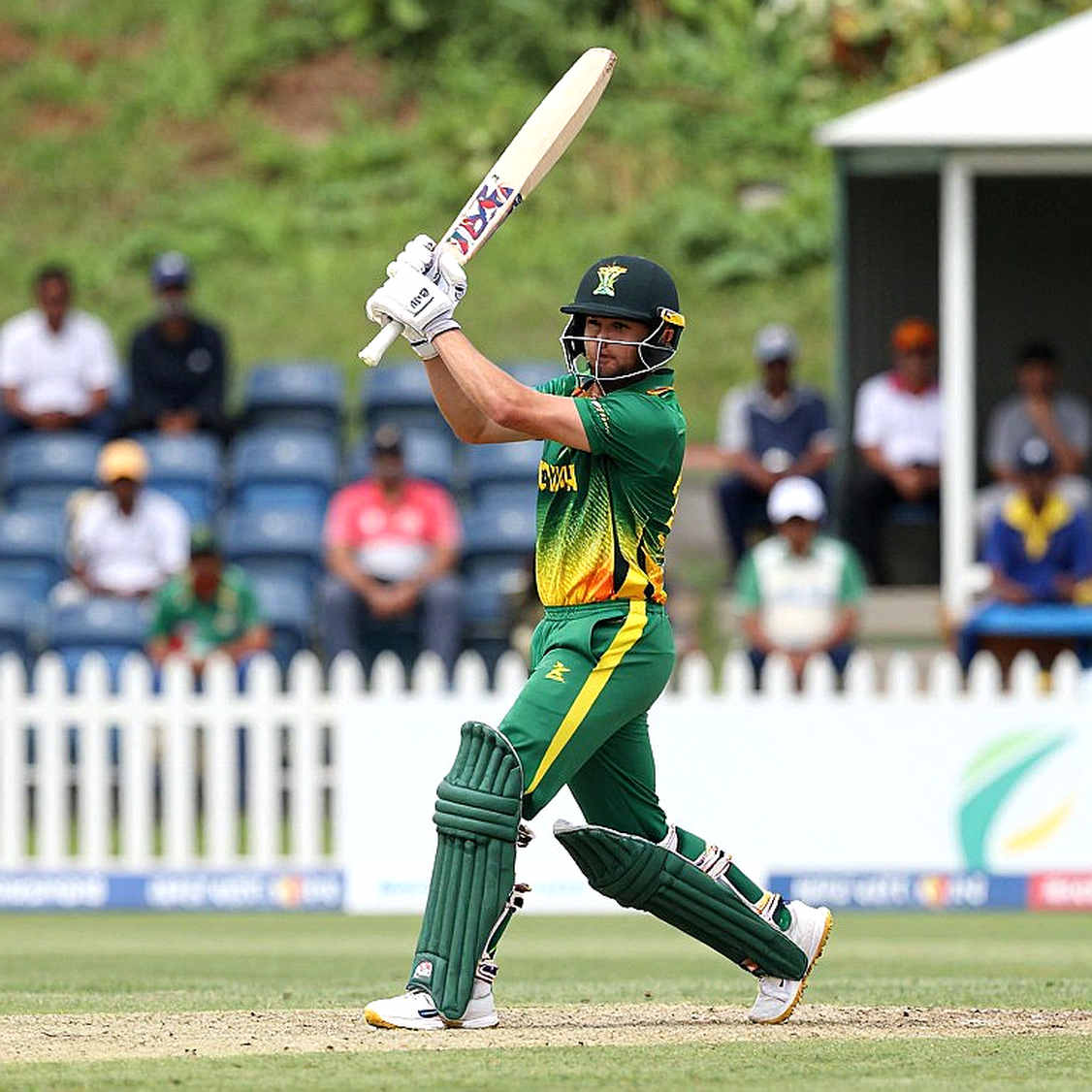
Technically, however, the sentence says nothing — and taken literally, it is harmful.
T20I, ODI and Test cricket are three different games from the same family. Different ball, different field restrictions, different innings length, and more importantly, different measures of success. In T20I, the value of an innings can be settled in six deliveries. In Test cricket, the value of a session hangs over an entire series. On New Zealand's spring pitches, where the ball seams and swings in November, T20I rhythm is worth nothing.
So the claim that T20 momentum will 'carry forward' into ODIs and Tests is a motivational device, not a technical claim. The distinction is not small. Indian cricket coverage blurs it constantly, and that blurring is the single biggest analytical weakness in this entire episode.
It is a format reset, not a continuation
The shape of the tour decides this argument. As reported, it is a long one: five T20Is (complete), then five ODIs, then two Tests beginning 19 November. Three formats on one tour, across four venues.
That structure does two things at once. It multiplies content — every format brings a new audience and a new storyline. And it multiplies load on the players at precisely the moment preparation windows are thinnest.
The ODI leg begins on Wednesday. Five matches run to mid-November. The Tests start on 19 November. That leaves a handful of days for red-ball preparation. This is not unusual in Indian cricket, but it matters more in New Zealand, where Test assignments begin in the most demanding conditions.
Workload: five T20Is, five ODIs, two Tests
This is the tour's most under-discussed risk, and it is a fast-bowler risk.
Five T20Is across four venues with minimal recovery, followed immediately by five ODIs, followed four days later by a Test. For a pace bowler's body, that is a compression pattern directly associated with soft-tissue and bone-stress injuries. This is not speculation; it is basic load-management principle. Maximum load plus inadequate recovery is the worst possible combination.
The real question is whether the frontline Test seamers play the ODIs. Both paths carry a cost. Play all five, and they reach the Test tired. Rest them, and they reach it without rhythm — and on spring pitches, arriving without rhythm is just as dangerous.
A transparency gap should also be recorded: the source material does not say whether any bowler featured in all five T20Is. The exposure therefore cannot be quantified, only flagged.
The Test leg: the most underpriced risk
If any part of this tour carries India's greatest uncertainty, it is the Test leg — and it is the part receiving the least attention.
The reason is structural. India's historical difficulty in New Zealand has been primarily a red-ball phenomenon: seam, swing, and inconsistent bounce. In white-ball cricket India have done well there; with the red ball they have struggled. Two Tests is a short series, where one bad session swings the entire outcome. And this time it arrives directly after five ODIs.
None of this means India will lose. It means the current level of enthusiasm is obscuring the Test leg's risk entirely. A side that has 'set the tone' in a T20I series starts from zero when it walks into a Test — against conditions with no relationship to that T20 win.
New Zealand: what the last two matches said
One thing almost entirely missing from Indian coverage: this series said something about New Zealand too.
Trailing 3-0 at home is unusual for New Zealand. Their home record has been robust, and their identity has been built on learning within a series. Winning the last two to reach 3-2 is exactly that capability showing itself.
Why does it matter to India? Because the ODI series begins within days, against the same opponent, at some of the same grounds. If New Zealand found the right lengths and lines late in the T20 series, that knowledge carries into the 50-over format — and it is a live warning for India's top order.
Yet it is a warning, not a conclusion. The margins of the two defeats are not in the available material. Close defeats tell one story; heavy defeats or batting collapses tell a completely different one. Judging the ODI leg before that is known would be premature.

The empty month
There is one sentence in Gambhir's address that drew the least attention and is probably the most important. He notes that this T20 group does not play enough T20 cricket, that it now has a month off, and that the players must stay in shape.
Three things sit inside that sentence.
First, a clear directive from a coach, and a correct one. A month's gap immediately before a home series is a known route to rustiness for T20 specialists — both for batters' rhythm and for bowlers' execution at the death. Saying 'stay fit' is naming deconditioning risk, and naming it is the right first step.
Second, a structural admission. A national coach publicly stating that his T20 squad has a month without T20 cricket is conceding that the bilateral T20I calendar is not dense enough to keep T20 specialists match-fit. Filling that gap naturally falls to franchise leagues.
Third, a signal that Indian cricket now effectively runs on two tracks. One group plays continuously through November — ODIs, then Tests. The other disappears for a month. Physically they are groups with different needs, and they cannot be managed with a single workload plan.
The BCCI video: content, control and accountability
One element of this story usually stays in the background — who released the video.
The BCCI did, on its own social handles. This was not a journalistic scoop or a leak. It was a planned content decision, and part of a larger shift: boards have become the primary publishers of their own narrative, bypassing broadcasters and newspapers.
Two consequences follow.
Control, first. When you release the material yourself, you decide what is shown, how much, and in what order. The edit of the address is part of that control. This is not improper — it is the direction modern sports media economics is travelling.
Accountability, second. And here it flips. Once a coach's internal address is public, its claims become publicly testable. 'The tone has been set' and 'carry on from here' are no longer inspiration; they are predictions. And predictions get settled within weeks.
If the ODI and Test legs go well, the video becomes a document of the coach's authority. If they go badly, the same clips become the 'rhetoric versus results' story — a risk the coach created, not the board.
There is also an unresolved question at board level: the practice of publishing dressing-room communications is not settled anywhere in world cricket. Player image rights, consent for internal conversations to be broadcast, and the effect on candour inside the room are all live issues. This report treats the release as unremarkable — which is itself informative about the current norm in Indian cricket.
Sri Lanka in December, and what to watch
The next stop in this argument is at home: the December T20 series against Sri Lanka, which will be this group's next real examination.
It is interesting for two reasons. It is likely to be a rotation-heavy assignment, so it will reveal little about the T20 group's true strength — a low-information test. And it is where the effect of a month's inactivity first becomes visible. If batters look sluggish and bowlers lack sharpness in the first two games, the coach's fitness warning will have been vindicated.
Meanwhile, the concrete signals worth tracking on this tour are these.
The margins of the last two T20Is. Once known, the picture clarifies: narrow defeats and heavy defeats mean different things.
The composition of the ODI and Test squads. If frontline Test seamers appear in all five ODIs, the risk to the Test leg rises.
Every fast bowler's match count. Anyone appearing across all three legs needs separate scrutiny.
The coach's language after the ODIs. If the 'tone' framing is repeated, the narrative extends. If it is quietly dropped, that is itself an admission that T20 outcomes do not transfer.
And the biggest signal of all — keeping the formats separate. India's T20I, ODI and Test performances should be judged independently of one another, because they genuinely are independent.
Conclusion
The most honest reading of this series is this: India won an away T20I series at the start of a demanding tour, with incomplete preparation, using a rotated squad. That is a real achievement and should not be diminished.
But the narrative it is being folded into is larger than the achievement. The slide from 3-0 to 3-2 sits in a subordinate clause. A five-match result has been declared the 'tone' for a three-format tour. And a deliberately constructed coaching address, released by the board, has created an accountability that results will settle within weeks.
The most durable thing to come out of this episode is not the result. It is the fact that India's T20 group has no T20 cricket for a month. That sounds like a minor administrative note; in fact it is the clearest public comment any sitting national coach has made about the structural weakness of the bilateral T20I calendar.
Everything else will be settled in the next few weeks.
Sources and limitations: This report is based on the public material of a published news article in The Tribune and the BCCI-released dressing-room video. The source material did not contain ball-by-ball data, scorecards, margins, individual performance statistics, pitch reports, ICC rankings or financial figures. Conclusions on those subjects are therefore explicitly marked as unavailable or as inference. The tour itinerary (five T20Is, five ODIs, two Tests) is given as reported in the source article and requires independent confirmation. This content is for sports information and analysis only and does not constitute betting advice of any kind.