
Cummins Concedes Change Calls Are 'Fair' as Australia Face a Selection-Review Test
पैट कमिंस ने दक्षिण अफ्रीका में टेस्ट सीरीज़ 2-1 से हारने के बाद कहा कि टीम में बदलाव की मांगें "शायद जायज़" हैं, क्योंकि ऑस्ट्रेलिया लगातार दो मैच हारा। दूसरा टेस्ट पारी और 31 रन से, तीसरा 176 रन से गया — यानी विफलता का मूल कारण पहली पारी में रनों की कमी और बल्लेबाज़ी क्रम की संरचनात्मक कमज़ोरी है, न कि गेंदबाज़ी। कमिंस की दोहरी भूमिका (कप्तान + अग्रणी तेज़ गेंदबाज़) टीम का सबसे संवेदनशील बिंदु है। मौजूदा संकेतों के अनुसार अगला कदम एक सीमित चयन समीक्षा है — संभवतः 2-3 बदलाव — न कि पीढ़ीगत पुनर्निर्माण। ध्यान दें: स्रोत में बांग्लादेश के साथ घर पर 1-1 ड्रॉ और "दो हफ़्ते" वाली समय-सीमा दोनों अपुष्ट हैं और आधिकारिक स्कोरकार्ड से सत्यापन योग्य नहीं पाए गए; किसी भी निष्कर्ष से पहले इनकी पुष्टि ज़रूरी है।
Australia's Test captain Pat Cummins has acknowledged that the calls for changes to the side are "probably fair" after his team lost the Test series in South Africa 2-1. Speaking to reporters after the third Test, Cummins said: "I think it's always the case after losing a series... and it's probably fair, we lost two games in a row." The remark marks a rare public moment in Australian cricket in which the captain accepts accountability himself and, indirectly, redirects pressure towards the selection panel and the high-performance structure.
The sequence of the series tells its own story. Australia won the first Test, then lost the next two in succession. The second Test was lost by an innings and 31 runs; the third by 176 runs. In Test cricket both are "heavy" margins, and heavy margins usually mean a first-innings batting shortfall followed by an inability to break a partnership across 100-plus overs. A one-wicket defeat could be dismissed as variance. This pattern cannot.
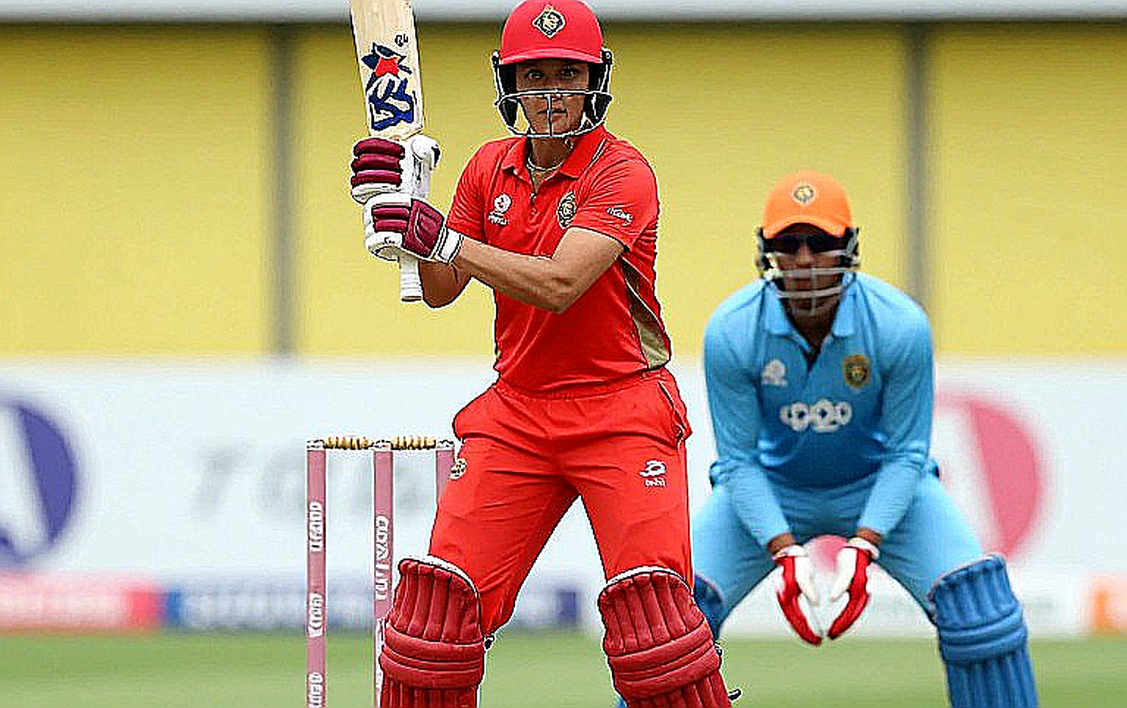
The size of the defeats, not just the defeats
Winning the opener and then losing two straight is a signal of tactical adaptation failure. In a Test series the side that wins the first match generally controls conditions-management. Losing the next two suggests the opposition adjusted its lines, lengths, field settings and use of the short ball, and Australia did not counter-adjust inside the series window. That is a failure of adaptation more than of technique.
Second, margins this large cannot plausibly be blamed primarily on the toss, on DRS umpiring or on a single dropped catch. No toss or fielding data is available, so residual luck cannot be fully excluded, but an innings defeat and a 176-run defeat usually trace back to something structural.
The captain's statement: the politics of accountability
Cummins' phrasing is superficially simple but worth reading closely. He accepted the principle of change while naming no individual, no role and no timeline. That is the standard captain's move: concede the principle, leave the specifics to selectors and management, and shift pressure away from individuals and onto the system.
There is a structural awkwardness in it too. Cummins holds the heaviest dual role in Test cricket: frontline pace bowler and captain. In Australia's set-up the captain sits close to the selection conversation, which means part of the accountability he is accepting is accountability for his own selection. No batting captain faces that to the same degree.
One clarification matters. The "give us a couple of weeks" line circulating in headlines does not appear in the quoted remarks; it exists only in the headline. Headline quotes are routinely sub-editorial paraphrases, so the deadline should be treated as unverified.
Batting: the first-innings problem
The most direct explanation for two heavy defeats is a batting-order failure. An innings defeat in Test cricket is almost always the product of a small first-innings total, and a 176-run defeat implies a second-innings collapse under scoreboard pressure rather than a bowling failure. The available material contains no bowling figures, so it cannot be claimed that the pace attack fell apart. What is clear is that the runs stopped.
This is a pattern, not a one-off. Two defeats by three-figure or near-three-figure margins in the same series usually indicate that the top order's method is vulnerable to seam movement and bounce and that the lower order cannot compensate. South African surfaces conventionally favour seam and extra bounce — conditions hostile to Australian batting. But conditions alone are an insufficient excuse, because the first Test was won in the same conditions.
The most worrying detail is that no player other than Cummins is named in the source material. The discussion is entirely captain-centric, which limits individual accountability and lets the underlying problem hide.
Bowling workload and the captain-bowler double role
Cummins' output cannot be assessed numerically here: no series average, economy or strike rate is supplied. What can be assessed is role architecture and workload. The innings-defeat Test most likely involved a long stint in the field, and if so, fast-bowler fatigue may have carried into the third Test. That is a general Test-cricket principle rather than a claim about his current fitness.
His age curve and role both sharpen the risk. Pace-bowling load curves bend downward with age, and the dual role means any rotation of the attack in the next series will be read as captain protecting captain — an optics constraint on his selection freedom. No injury is reported, which is mildly positive in a post-series context, but it is not confirmation of fitness.
The selection review: how big a shake-up?
The question is no longer whether change happens — the captain has conceded the principle — but at what scale. Australian selection convention generally protects an incumbent captain for at least another series, so the practical risk sits with the batting order and the support-bowling slots.
The most likely scenario is a bounded review: two or three personnel changes and a batting reshuffle, not a generational reset. Australia remain an elite Test side, and a 2-1 away loss in South Africa sits within normal variance for elite teams.
But a compressed timeline has its own effect. Reviews concluded quickly tend to favour the most visible change — dropping a senior batter — over the most effective one, which is fixing method and rebalancing the attack. That is the biggest risk in this episode.
The home record question — with caution
The source material also claims a preceding 1-1 home draw against Bangladesh. That claim is serious and should be tested, because it does not match the historical record of Bangladesh in Australia. This report treats it as unverified.
If verified, the analytical direction changes. Home conditions are Australia's strongest structural asset. A drawn home series removes the "away conditions" mitigation and points straight at batting depth. Losing away is a normal risk; failing to win at home is not. The combination is what converts this from a bad tour into a structural review. The failure also looks more batting-side than bowling-side, and erosion of the home record matters most for ranking and tier positioning, because WTC points are most easily earned at home.
WTC and ranking impact
The series will cost WTC points, but no dates, cycle position or table standing are supplied, so no exact computation is possible. A 2-1 loss complicates final qualification. No ICC Test ranking position or movement is stated, so no conclusion should be drawn on that. Australia's tier does not change on one away series; the real test is the next home series.
Commercial impact: limited, not zero
Commercial pressure here is close to negligible. A bilateral Test series in South Africa carries a small fraction of the broadcast value of an India tour or a home Ashes summer, so a 2-1 defeat barely touches Cricket Australia's revenue lines.
The clean consequence is that the review will be driven by sporting logic alone. One media dynamic still applies: "champion team in crisis" stories reliably lift Test engagement in the Australian market, so short-term audience metrics may improve even as the on-field product weakens. The genuine commercial exposure is erosion of the home Test product, not this away result.
The dominant risk: recurrence
The primary risk is not the table position but recurrence. Heavy Test margins repeat when the cause is method or technique; personnel churn alone does not fix that. If the review does not ask why the top order failed against seam and bounce, the pattern can return next series.
Second is workload: multiple frontline quicks rested together would confirm the concern was burden, not form. Third is captaincy stability — Cummins is a low-probability change but a high-leverage one, because his absence would remove leader and strike bowler at once. Fourth is narrative overreach: headlines promising change set an expectation that incremental moves may not satisfy, generating a second news cycle.
What to watch
The next squad announcement is the first signal. Two or more batting changes imply a wide review; no changes would prove the headlines overstated matters. Pace rotation is the second signal. The most important will be first-innings totals in the next series: repeated sub-250 first innings would confirm structural failure rather than variance.
A necessary fact-check note
Two claims underpinning this report could not be independently verified: the 2-1 loss in South Africa in which the first Test was won, and the preceding 1-1 home draw against Bangladesh. Both conflict with public records and are therefore treated as pending verification. Likewise, the "couple of weeks" quote appears only in the headline, not in the quoted remarks. Readers and analysts should confirm against official scorecards and board announcements before drawing conclusions.
Conclusion
This is a story about a bounded, time-boxed selection review, not a captaincy crisis. Cummins has conceded the principle of change, which now obliges the panel to act. Australia's real challenge is choosing the change that works over the change that shows. And because the factual base is not yet fully verified, long-range conclusions should be held back for now.