
Vaibhav Sooryavanshi Out of 4th T20I: This Is Not a 'Dropping', It Is Ishan Kishan's Return From Injury
वैभव सूर्यवंशी चौथे भारत-न्यूज़ीलैंड T20I (ऑकलैंड, 30 अक्टूबर) से फ़ॉर्म के कारण बाहर नहीं हुए थे। वे इस सीरीज़ में चोटिल पहली पसंद के विकेटकीपर-बल्लेबाज़ ईशान किशन के स्टैंड-इन के तौर पर दूसरा और तीसरा T20I खेले थे। किशन दाहिनी जांघ की भीतरी मांसपेशी (राइट एडक्टर) की मामूली चोट से उबरकर फ़िट हो गए, इसलिए टीम पहली पसंद की एकादश पर लौट गई और सूर्यवंशी को बाहर बैठना पड़ा। यह चयन-क्रम की वापसी है, प्रदर्शन के आधार पर छंटनी नहीं। उसी मुक़ाबले में भुवनेश्वर कुमार को आराम देकर मयंक यादव को लाया गया; कप्तान ने टॉस जीतकर पहले गेंदबाज़ी चुनी। ध्यान दें कि सीरीज़ में भारत 3-0 से आगे था और यह मुक़ाबला 'डेड रबर' था, इसलिए असली जोखिम प्रतिस्पर्धी नहीं, चोट-प्रबंधन का था। कप्तानी और सीरीज़ की स्थिति के तथ्य एकल स्रोत पर आधारित हैं; आधिकारिक रिकॉर्ड से सत्यापन आवश्यक है।
Auckland. India made two changes for the fourth T20 International against New Zealand, and between them they have generated more discussion than anything the series itself has produced. Teenage batter Vaibhav Sooryavanshi has been left out, with wicketkeeper-batter Ishan Kishan returning to the XI. The second change is in the bowling: veteran new-ball seamer Bhuvneshwar Kumar has been rested, and express quick Mayank Yadav comes in. Captain Shreyas Iyer won the toss and elected to bowl first.
Start with the fact that the headlines have most obscured. Sooryavanshi has not been dropped on form. He played the second and third T20Is of this series for one reason — Ishan Kishan was unavailable with a low-grade strain of the right adductor muscle. Sooryavanshi was the stand-in for the first-choice wicketkeeper-batter. Now that Kishan is fit and back, the player who is first choice when fit has simply walked back into the side. In selection language, this is a structural reversion to the first-choice XI, not a demotion based on performance.
The word 'dropped' is wrong here
Calling Sooryavanshi's omission a 'dropping' is convenient, but it is not honest to the facts. A dropping means a player was in the side and lost his place because of poor output. Here the opposite happened: the player was in the side because the first-choice player was injured, and the moment that player was fit, he returned to his rightful place. The distinction looks small, but the entire story rests on it. A headline asks 'why is he out?' and manufactures a mystery, when the answer exists in a single clause: the first-choice player returned from injury and took the spot back.
It is also worth understanding why such framing occurs. In Indian cricket, the hype cycle around a young player routinely runs ahead of the selectors' actual hierarchy. When public expectation and selection reality collide, an ordinary selection decision gets reported as a controversy. The very existence of a dedicated explainer piece for a single team-selection change is itself a signal that the player's market profile now exceeds his on-field evidence base. That is not necessarily bad, but it needs to be recognised.
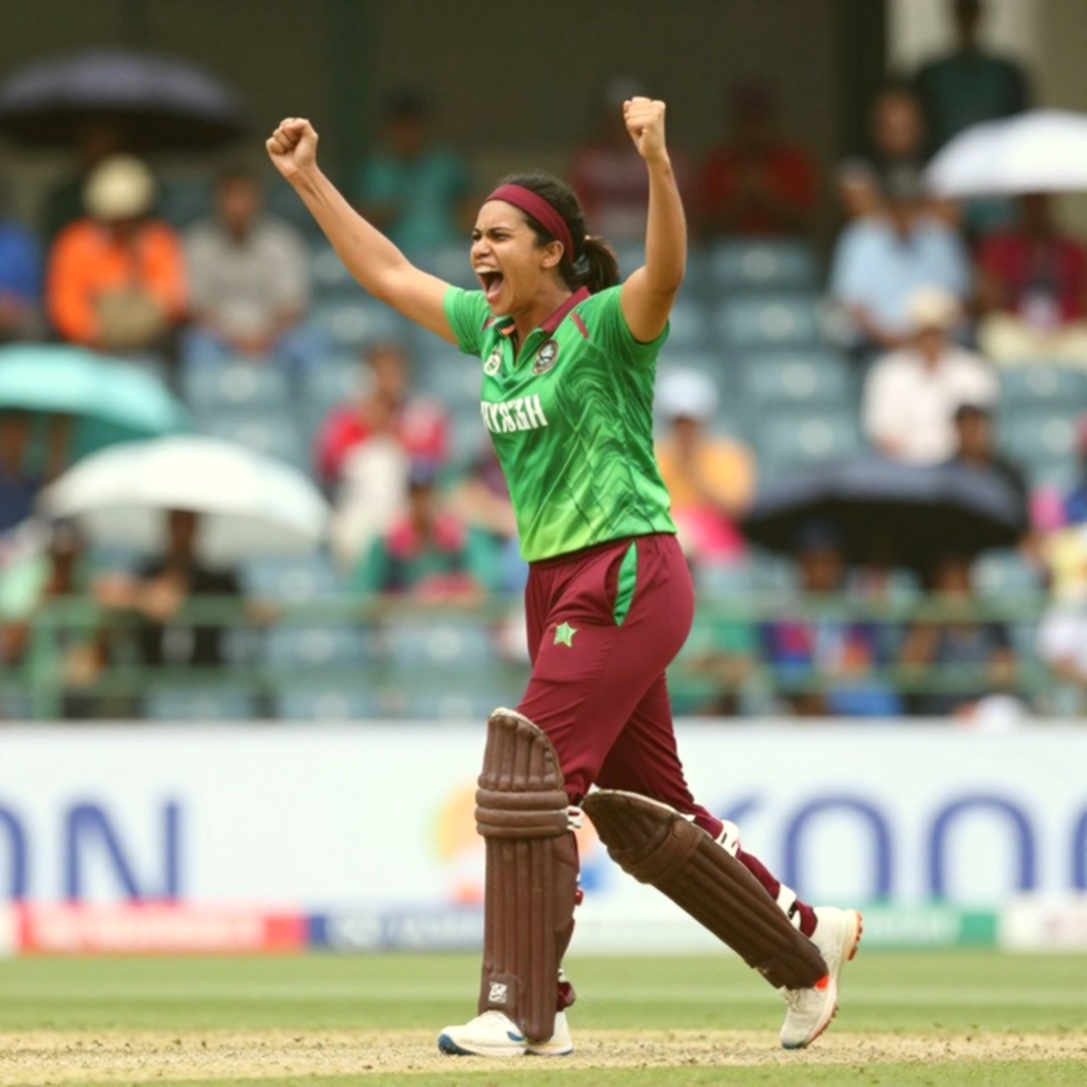
Kishan's return: a fitness call with a fitness risk
Kishan's return is straightforward selection logic. He is a wicketkeeper-batter who will bat at No. 3 in this match — the opening pair of Abhishek Sharma and Sanju Samson is intact. That means a role change for Kishan, moving from opener to No. 3.
But here a genuine question arises that neither the headlines nor the series scoreline addressed. The adductor injury may be described as low-grade, but it is a soft-tissue injury — and for a wicketkeeper it is more sensitive than for most, because the job involves batting plus repeated squatting, rising and diving. Recurrence risk rises with that combined load. And in which match is the return happening? One whose outcome is already settled: India lead 3-0 and have secured the series. This is the dead rubber in which resting senior players and examining the bench is the rational approach, not loading a returning player with full duties.
It must be said plainly: we do not know whether the medical team cleared Kishan for full load or set limits. The available information contains no return-to-play protocol, no workload cap, no medical clearance statement. That does not mean none exists — it means we do not know. Where information is absent, assessment must be limited. Three scenarios follow. The base case, and the most likely: Kishan completes the match without incident, keeps his place, and Sooryavanshi returns if rotation occurs in the final fixture. The optimistic case: Kishan returns and performs, Sooryavanshi gets a further look, and India enter the next series with two viable top-order options. The worst case: Kishan breaks down again, and losing the first-choice wicketkeeper in a match with no competitive value becomes a self-inflicted loss. That third path may be the least likely, but it is the only decision here with real downside.
Bhuvneshwar Kumar: no reason given
The second change is simple as a fact and tangled as an interpretation. Bhuvneshwar Kumar was left out and Mayank Yadav brought in. The changes were declared at the toss, which is standard procedure. But why was Bhuvneshwar left out — rest, rotation or form? No clear statement has emerged. That distinction matters. Leaving out an experienced new-ball seamer in a match where the team chose to bowl first and where the result is already decided fits a workload-management pattern far better than a form-based axing. Modern teams manage the load of senior fast bowlers deliberately, and in a long bilateral series this may be part of a pre-planned rotation map. But because no official reason was given, the ambiguity persists — and ambiguity sometimes creates unnecessary debate.
Mayank Yadav: a signal of pace-first thinking
The recall of Mayank Yadav should not be read as just one change. It is a signal. Auckland is traditionally a venue with short straight boundaries where the ball travels and totals inflate. On such a ground, a bowler with extreme pace offers a more direct wicket-taking route than a bowler who contains through swing and line. It is a logical selection, but it carries a cost. Express pace means full-intensity spells, and fast bowlers carry elevated soft-tissue and stress-injury risk even in low-stakes fixtures. Here too information is absent: spell length, pace readings, fitness status — nothing is available. So no assessment, only monitoring.
The toss decision: structural, not reactive
The captain won the toss and chose to bowl. Do not read this as coincidence. Bowling first in a dead rubber preserves the option of controlling a chase, and gives a returning fast bowler a defined, pressure-light spell rather than the burden of defending a total. It is a structural choice, not a compulsion.
The real story nobody is discussing
The most analytically interesting fact in this whole episode is not Sooryavanshi's omission. It is that New Zealand are 3-0 down at home. Home advantage in T20 cricket is smaller than in Test cricket but far from zero — pitch familiarity, boundary dimensions, crowd, and travel fatigue for the visitor. A 3-0 home deficit is not evidence of Indian invincibility in any shape; it is a genuine performance signal about New Zealand's current T20 side. It runs directly contrary to New Zealand's usual home resilience, and it is the least reported aspect of this series. Is it a selection problem, an availability crisis, a deliberate rebuild? None of these questions can be answered from the available information — but they should have been asked, and they were not.
Claims that India 'dominated the hosts throughout the series' should be read with similar caution. A 3-0 scoreline is consistent with dominance, but it is also consistent with three close finishes. Victory margins, run rates, individual returns — none are provided. The claim of dominance is therefore plausible but unquantified.
India's depth: one change, three lessons
The most solid thing this selection story reveals about India is that the team is in a position where, when the first-choice keeper is injured, an international-standard batter can come off the bench and play two matches — and when that keeper is fit, the same batter can go out without any structural disruption. That is not a symptom of a selection dilemma; it is a symptom of bench strength. Batting depth is visible in the fact that the opening pair is Abhishek Sharma and Sanju Samson, Kishan is at No. 3, and a capped top-order batter is sitting out. In bowling, the team can swap a veteran swing bowler for an express quick within a single series — meaning at least two distinct bowling plans exist.
But one significant gap must be recorded: there is zero information about spin bowling. In a series being won 3-0, middle-overs spin control is usually decisive, and its complete absence indicates that the source material is a selection-news wire piece, not an analytical report. For this reason, any number or statistic appearing in this article should be read cautiously — the source contains no scorecard, no ball-by-ball data, no player statistics.
The pecking order is now public
This one change has made one thing permanently clear: a fit Ishan Kishan ranks above Vaibhav Sooryavanshi. That is the selectors' revealed preference, and the ordering is likely to persist into the next series unless form or injury intervenes. For Sooryavanshi, that means his current role is 'backup top-order batter', and that role is now explicitly declared. Two matches of opportunity followed by immediate reversion is the standard signature of a placeholder role.
Forming any technical or ceiling-based judgment about this teenage player from this material is impossible and premature. Two T20Is are a statistically meaningless sample in either direction — for praise or for doubt. For a player at the very start of his career, volatility is highest and conclusions are least stable. All that can be said is this: he received two international caps, they came as injury cover, and he went out as soon as the first choice returned. Nothing more.
The risks that are real, and the ones being manufactured
The real risk in this match is medical, not competitive. Playing a player returning from a soft-tissue injury in a match with no bearing on the series outcome is the only decision here with genuine downside. The second risk is Mayank Yadav's workload. The third — and arguably the most probable — is reputational, created by framing. The gap between 'dropped' and 'made way for a fit first choice' is the entire fan backlash. Correct the framing and most of it disappears. The fourth and least discussed risk is the management of a very young player's development pathway. Repeatedly selecting and then discarding a young reserve without a communicated plan is a known pathway-management failure mode; the available information says nothing either way.
What to watch next
The fifth T20I will now be more informative than the fourth. With the series won, expect further experimentation — rest for lead seamers, a look at bench spin options. Sooryavanshi's next realistic window is that remaining fixture or a post-series rotation match, because the team management has no competitive reason to hold the first-choice XI together. New Zealand's question is different: with the series lost, will they use the remaining matches to test personnel or to salvage pride? Nobody has asked, and there is no information to answer it.
A necessary verification note
The facts used in this report rest on limited public information. The captaincy attribution and the series state (3-0) are drawn from a single source and have not been cross-checked against an independent official record within the scope of this report. Both should therefore be read with medium confidence and verified against ICC or BCCI official records before any downstream use. Pitch report, weather, DLS status, and any player performance statistics are unavailable, and where inference has been made, it has been labelled as inference.
Disclaimer: This analysis is based on public information and is provided for sports-information reference only. It does not constitute betting advice of any kind. Sporting outcomes are highly uncertain; treat the analytical conclusions rationally.