
Mominul Haque Out With Head Injury, Zakir Ali Named Concussion Substitute as Bangladesh's Middle Order Stares at Crisis
बांग्लादेश के वरिष्ठ मध्यक्रम बल्लेबाज मोमिनुल हक को वेस्टइंडीज की पहली पारी के 78वें ओवर में फील्डिंग के दौरान सिर पर चोट लगी। लक्षण उभरने पर आईसीसी के कॉन्कशन सबस्टिट्यूट प्रोटोकॉल के तहत जाकिर अली (अनिक) को प्रतिस्थापित खिलाड़ी के रूप में मैदान पर उतारा गया, और बीसीबी तथा टीम फिजियो बायेज़ीदुल इस्लाम खान ने आधिकारिक विवरण जारी किया। सात दिन के अनिवार्य नियम के कारण मोमिनुल न केवल दूसरी पारी, बल्कि अगला टेस्ट भी नहीं खेल पाएंगे। यह घटना ऐसे समय हुई जब बांग्लादेश ने पहली पारी में 272 और वेस्टइंडीज ने 245 रन बनाए थे—यानी 27 रन की बढ़त—और दूसरी पारी में टीम ने 34 रन पर चार शीर्ष क्रम के विकेट गंवा दिए, जिससे प्रभावी बढ़त लगभग 61 रन रह गई। कॉन्कशन सबस्टिट्यूट घायल खिलाड़ी की जगह ही बल्लेबाजी करता है, इसलिए यह प्रतिस्थापन तटस्थ है, टीम के लिए अतिरिक्त लाभ नहीं। मैच रेफरी के 'लाइक-फॉर-लाइक' तर्क का उल्लेख रिपोर्ट में नहीं है, और मैदान, श्रृंखला का नाम, टॉस तथा खिलाड़ियों के आंकड़े अनुपलब्ध हैं—इसलिए नतीजे पर कोई भी भविष्यवाणी सशर्त मानी जानी चाहिए।
Mominul Haque Out With Head Injury, Zakir Ali Named Concussion Substitute as Bangladesh's Middle Order Stares at Crisis
Key Points
- Bangladesh's senior middle-order batter Mominul Haque suffered a head injury while fielding during the first innings and was unable to bat in the second innings.
- Zakir Ali (Anik) was activated as a concussion substitute under the ICC's concussion-substitute protocol.
- The mandatory seven-day rule rules Mominul out of the next Test as well.
- Bangladesh were bowled out for 272; West Indies were dismissed for 245, giving Bangladesh a 27-run first-innings lead.
- In the second innings, Bangladesh lost four top-order wickets with only 34 on the board.
Sequence of Events: From the 78th Over to the Second Innings
According to the official statement issued by the Bangladesh Cricket Board (BCB) and details provided by team physio Bayezidul Islam Khan, Mominul Haque was struck on the head while fielding during the 78th over of West Indies' first innings. This detail matters because it shows the injury occurred in the normal flow of play rather than in a sudden, disputed incident, and that the medical team monitored symptoms for a period instead of arriving at an immediate decision.
Per the physio's account, the situation did not initially appear serious, but symptoms emerged over time. That is precisely the point at which the concussion protocol activates. With head injuries, immediate reaction is not always possible; symptoms often surface hours later or when a player resumes activity on the field. Bangladesh's medical staff went through exactly this sequence, and the substitution process was initiated once symptoms became clear.
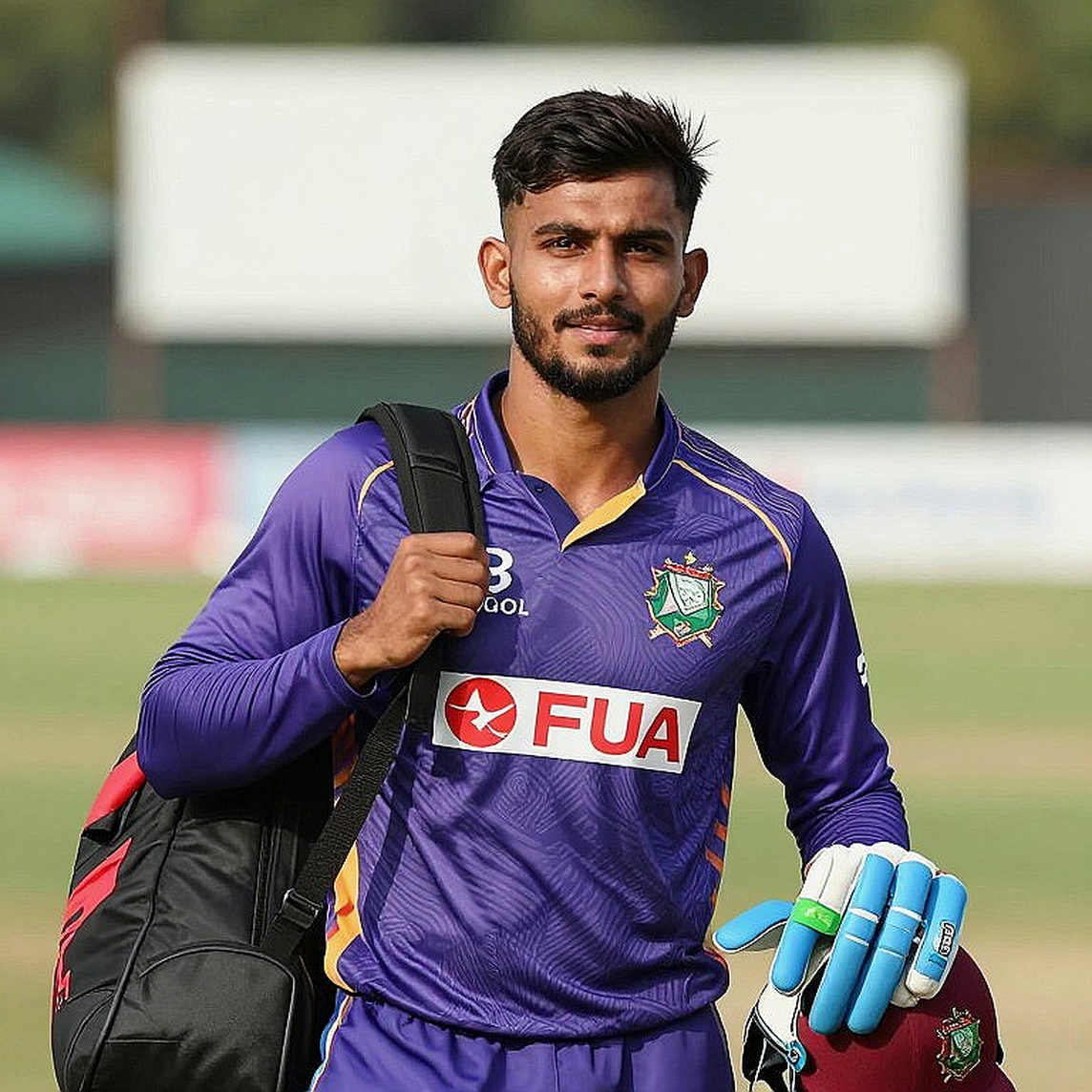
This ordered sequence carries a direct implication: the case is an example of protocol compliance, not protocol abuse. The BCB issued a public statement, the physio supplied technical detail including the over number and the fielding context, and only then was the replacement announced. This level of transparency substantially reduces the room for suspicion.
One important detail, however, remains unavailable. Permission for a concussion substitute requires the match referee's assessment that the replacement is 'like-for-like' — that is, a comparable player profile. The available report does not state the match referee's rationale. This is a gap in reporting, not evidence of a rules violation, but readers and analysts should recognise the difference.
The Seven-Day Rule: One Blow, Two Matches Lost
The most decisive rule in this whole episode is the ICC's seven-day exclusion. When a concussion substitute is used, the injured player cannot take part in competitive cricket for the next seven days. This means Mominul's case is not merely a matter of one innings — he will also miss the next Test of this series unless the seven-day window has expired.
The provision rests on player-welfare logic. Concussion is not an injury that can be managed on a 'play through the pain' basis. A second blow to the head multiplies the risk, and the rule is deliberately strict so that neither teams nor players come under pressure for a premature return.
From a team-management perspective, however, the rule converts into a predictable loss. An injury that occurred in an instant becomes a guaranteed multi-match absence. Bangladesh must now plan their next XI without the player widely regarded as the backbone of their Test middle order.
It is also important to be clear that a concussion substitute confers no additional advantage. The replacement bats in the injured player's slot — he does not add an extra twelfth batter to the side. In other words, the substitution is neutral, not beneficial. Media and fans frequently confuse this point and treat a substitution as a 'gain' for the team, which is factually incorrect.
The State of the Match: A 27-Run Lead and the Pressure of 34/4
The context for all of this is the scoreboard. Bangladesh's first innings ended at 272. West Indies replied with 245, 27 fewer. Bangladesh then began their second innings and lost four top-order wickets inside 34 runs.
This is not a normal batting performance. In Test cricket, the second-innings top order decides which way the match tilts. When a side holds only a 27-run lead and has lost four wickets for just 34 runs, the effective lead becomes roughly 61 — and that too with four wickets already down. In a low-scoring Test, this is neither a lost position nor a safe one. It is genuinely balanced and precarious.
There is an analytical nuance worth understanding here. Calling the first-innings 272 a 'failure' is only coherent if the pitch is judged favourable for batting. If the surface is assisting bowlers, 272 could be par or better — and West Indies' 245 supports that reading. There is mild tension between the report's framing of 272 as a failure and its own acknowledgement that Bangladesh hold a 27-run lead. The takeaway for analysis is that a first-innings total cannot be assessed without reference to the surface.
Another significant absence: the available information does not state the venue, the name of the series, the toss result, or weather conditions. In Test cricket these are decisive variables. The meaning of 34/4 changes entirely on a grassy seaming pitch versus a turning surface on days three and four. Similarly, cloud cover and light affect swing for the seamers. Without these inputs, any prediction must be treated as conditional.
Mominul Haque: The Player Whose Absence Hurt Most
Mominul's importance is the centre of this episode, and it operates on two levels. The first is technical. He is a Test-format specialist middle-order batter — a player whose primary role is to hold an innings together, wear the ball down, and survive between wickets. In Test cricket this skill is the most valuable, because innings duration matters more than scoring rate.
The second level is situational, and it is the sharper one. When Bangladesh were 34/4, the team needed precisely the kind of batter Mominul is — someone who can walk out from the dressing room and absorb pressure. His absence is not an 'ordinary injury' in this sense; it occurred in exactly the phase where his skill is worth most.
A theoretical caution is necessary here. It is tempting to claim that the top-order collapse happened because Mominul was absent. There is no direct proof of that. Four top-order wickets cannot be attributed to one player's unavailability. It is more likely that two causes — Mominul's absence and the top order's own technical brittleness — coincided. They should be treated as concurrent events rather than as cause and effect.
What is certain is that Mominul's availability record and recent form are not in the available information. No data exists in the source on his Test average, strike rate, or home-versus-away performance. Without those numbers, no quantitative assessment of his importance is possible. A qualitative assessment — that he is an experienced Test middle-order batter — can be made, but not a numerical comparison.
Zakir Ali: A Replacement, Not a Promotion
Zakir Ali (Anik) taking the field is a rule-driven step, not a strategic selection. The distinction matters. A concussion substitute does not play in his own right; he plays in the injured player's place. This means Bangladesh did not gain an extra batter — they merely filled a vacancy.
Zakir Ali's substitution carries an indirect signal: he was presumably already with the squad or on the bench and was chosen as the closest available option to Mominul. That is the most practical way to satisfy the 'like-for-like' condition — a batter for a batter.
But a question arises that the available report does not answer: on what basis did the match referee accept the substitution as like-for-like? That rationale is not publicly recorded. This is a gap in information. From a transparency standpoint it is a gap worth closing, because the credibility of the rule going forward will be judged on exactly this basis.
On Zakir Ali's own performance data the source is also silent. His average, recent form, Test experience — none of it is available. So it is not possible, on factual grounds, to forecast whether he can fill Mominul's role. What can be said is that he faces a double burden: he is a substitute, so comparison is inevitable; and he is walking in at 34/4.
Team Structure: A Test of Bench Depth
This episode also says something about Bangladesh's team structure, clearly along three dimensions.
First, batting depth. Losing four wickets for 34 is not merely a bad session; it indicates a structural weakness. Top-order collapses of this kind are more common when a side lacks technically solid batters capable of playing under pressure. Mominul's removal narrows that stable core further.
Second, bench depth. The fact that an in-match substitution was required and a bench player was drafted straight in suggests that ready-made top-order cover is limited. If the team had several options of comparable quality, the selection debate would look different.
Third, the bowling combination. Beyond West Indies being bowled out for 245, the available information contains no bowling detail. Who took how many wickets, which type of bowling dominated — none of it is stated. bowling depth therefore cannot be assessed.
A fourth and important point: because the venue is not stated, the single most important analytical lever for Bangladesh Test cricket does not apply. Historically Bangladesh are disproportionately strong at home on spin-friendly surfaces and vulnerable away on fast, bouncy pitches. If this is a home Test, 34/4 represents a technical failure against spin; if it is away, it is a recurrence of known overseas fragility. The two readings are entirely different, and choosing between them is impossible without the venue.
Risk Assessment: Concentrated, Not Diffuse
The most important risk finding is that the risk here is not diversified — it is concentrated at a single point. Two risks have coincided in the same phase.
First and most immediate is the sporting risk of the second-innings collapse. Batting at 34/4 with a 27-run lead and pushing the innings to a defensible target is genuinely difficult. If Bangladesh cannot build a lead of around 150, the fourth-innings target will remain small and West Indies will become favourites. This risk is high in level and high in likelihood, because the top order has already failed.
Second is personnel risk, and it is not probabilistic but rule-determined. The seven-day provision makes Mominul's participation in the next Test close to impossible. This is not a 'may happen' situation; it is a 'will happen' situation. Team management must therefore plan the next XI without him.
Third is player-welfare risk. The mandatory seven-day period after a head injury is a minimum, not a maximum. Longer-term risk — especially for a senior batter whose career is built on experience — should not be underestimated. The available report contains no detail on the return-to-play process.
Fourth is credibility and governance risk, but at a low level. Questions can be raised about the like-for-like condition, but the detailed disclosure by the BCB and the physio reduces that suspicion. The risk here lies in incomplete documentation, not in any evidence of impropriety.
Fifth is public-opinion risk. A senior batter's head injury combined with a losing position is a natural trigger for emotional coverage in South Asian cricket media. The level is medium and the impact limited. The BCB's clear medical statement has already contained much of this risk.
The overall risk rating is 'high' because two high-level risks — the batting collapse and the mandatory seven-day absence — are active simultaneously and reinforce each other. The remaining layers (commercial, integrity, public opinion) are secondary.
Narrative and Media: Accurate Concern or Overreach?
The media narrative emerging from this episode is: 'Bangladesh's Test is in danger because a senior batter has been concussed and the top order has collapsed.' How reasonable is that narrative?
First: the direction of the scoreboard is consistent with it. 34/4 and an effective lead of roughly 61 is indeed precarious. So the narrative is not pure overhype. It is a 'spot' narrative tied to a live match, and it will be re-priced within days.
Second: the narrative contains a likely conflation. It merges two separate facts — the injury and the collapse — into a single 'crisis' story. Analytically they are distinct. One is a personnel loss (rule-mandated); the other is a batting failure (technical). Combining them is convenient but not precise.
Third: there is no detectable 'overhype' of any individual player. The risk runs the other way — that the substitute is under-rated. Because the substitution is neutral, a strong Zakir Ali performance would not represent a team 'gain' but merely the filling of an injured player's slot, and a failure would be part of a collective team failure rather than an individual one.
A clear limit must also be stated. No data is available on stadium attendance, social-media sentiment, or market indicators. No quantitative claim about sentiment can therefore be made.
Industry and Broadcast Impact: Limited and Local
The industry impact of this episode is limited and match-local. This is not a story about a league, an auction, a contract, or salaries — it is match news from a bilateral international Test. The commercial dimension is therefore entirely absent.
The only clear signal is that the enforced absence of a regular international player marginally affects the 'product' of the next Test. This is a marginal broadcast-attractiveness effect that cannot be measured from this report.
One positive industry signal is the visible, documented enforcement of the ICC concussion protocol. Over the medium term this strengthens confidence in the sport's player-safety standards — an effect that does not show on the scoreboard but matters to sports governance.
What to Watch: Four Signals
Four clear signals will determine the direction of this story.
First, the second-innings total and the lower-order fight. If Bangladesh can build a lead of 150 or more, they become favourites. If the lead stays below 100, West Indies are favoured. This is the most decisive signal.
Second, updates on Mominul's medical clearance. If any talk of a return before seven days emerges, it will deserve attention from both a player-welfare and a governance standpoint. The normal expectation is that no such talk should occur.
Third, Zakir Ali's output. A substantial innings would reinforce the like-for-like perception. A failure could raise questions about the nature of the substitution — though such questions would not be logically sound, because one innings is not proof of a player's level.
Fourth, the announcement of the next Test XI. That will directly reveal the team management's bench strategy and whether ready replacements exist.
Glossary: Terms Needed to Read This Story
Concussion substitute: A replacement permitted under ICC rules when a player suffers a head injury during a match; it must be like-for-like and requires match-referee approval.
Seven-day rule: A player for whom a concussion substitute is used cannot play competitive cricket for the next seven days. This turns a single-match injury into a mandatory multi-match absence.
Like-for-like: The requirement that the replacement be of a comparable profile — for example, a batter for a batter. This is the main basis of the rule's integrity.
Top order: The first four or five specialist batters; their early dismissal is termed a 'top-order collapse'.
Lead: The run advantage a team holds after both first innings; here Bangladesh lead by 27.
Test: The five-day format, the longest and most attritional; occupying the crease and stabilising the match situation carry premium value.
Conclusion
The essence of this story in one sentence: a senior middle-order batter went out with a head injury, the seven-day rule also ruled him out of the next Test, and all of it happened precisely as the team's top order was collapsing to 34/4 — a player-welfare and rule-governance event colliding with a live batting crisis.
No conspiracy, no rules violation, and no commercial interest is visible here. What is visible is a clearly documented medical process, a rule-determined absence, and a batting failure whose connection to the injury is convenient to assert but unproven.
The biggest limitation of this analysis is that the venue, the toss, the weather, the match referee's rationale and both players' statistics are all unavailable. Without them, any prediction is conditional. What can be said is that the match is not decided: an effective lead of roughly 61 with four wickets down is a weak but not fatal position. The result remains open — and that is the most accurate reading of this story.
Disclaimer: This report is based on publicly available information and preliminary text analysis. It is provided for sports-information reference only and does not constitute betting advice of any kind. Sporting outcomes are highly uncertain; venue, toss, conditions, player statistics and sentiment data are unavailable in this source and have been explicitly flagged. Please treat the analytical conclusions rationally.