
James Anderson and Lancashire: The Contract With the Performance Column Left Blank
**मुख्य उत्तर**: लंकाशायर ने 43 वर्षीय जेम्स एंडरसन का काउंटी कॉन्ट्रैक्ट नवीनीकृत नहीं किया, क्योंकि नई क्रिकेट रेजिम भविष्य की गेंदबाज़ी इकाई बनाना चाहती है। फ़ैसला तर्कसंगत है, पर बिना प्रदर्शन-समीक्षा के ली गई छोटी बैठक में संप्रेषित किया गया। **मुख्य तथ्य**: - एंडरसन ने पिछले काउंटी चैम्पियनशिप सीज़न में 50 विकेट लिए; वे उस सीज़न टीम के कप्तान भी थे। - गेंदबाज़ी औसत, स्ट्राइक रेट, इकॉनमी और ओवरों की संख्या सार्वजनिक नहीं हुई — गुणवत्ता मूल्यांकन असंभव। - लंकाशायर डिविज़न टू में नीचे से दूसरे स्थान पर रहा; यह स्तर टेस्ट क्रिकेट से बहुत नीचे है। - नए डायरेक्टर ऑफ़ क्रिकेट पॉल फ़ारब्रेंस और नए CEO रिचर्ड किन्नियर के कार्यकाल में यह फ़ैसला लिया गया। - उनके पास केंद्रीय अनुबंध नहीं है, इसलिए कहीं और खेलने के लिए NOC की ज़रूरत नहीं; बाधा बाज़ार की माँग है। **स्रोत**: FHM रिपोर्ट, जिसका प्राथमिक स्रोत जेम्स एंडरसन का *Tailenders* पॉडकास्ट है। प्रकाशन तिथि मूल रिपोर्ट में नहीं दी गई। | Cross-checked: cricsultan.com **संबंधित प्रश्न-उत्तर**: प्रश्न: क्या यह फ़ैसला खराब प्रदर्शन के कारण था? उत्तर: ऐसा कोई प्रमाण नहीं है; क्लब ने भविष्य के पुनर्निर्माण को कारण बताया। प्रश्न: क्या एंडरसन किसी अन्य काउंटी या लीग में खेल सकते हैं? उत्तर: हाँ, केंद्रीय अनुबंध न होने के कारण NOC की आवश्यकता नहीं; सीमा केवल बाज़ार की माँग है। प्रश्न: इस मामले में एशियाई क्रिकेट का कोई जुड़ाव है? उत्तर: नहीं; यह पूर्णतः ECB-शासित इंग्लिश घरेलू फ़र्स्ट-क्लास क्रिकेट का मामला है।
The meeting at Lancashire's cricket office was very short. Short enough that when James Anderson walked out, he had to decide whether he had just been reviewed or merely informed. He later said on his own podcast that he understood it was not a discussion — the decision had been taken before he sat down. Then came the line that is the most honest piece of reporting in this whole affair: "Did I do something? Did I make a mistake?"
A 43-year-old fast bowler did not ask what his average was. He asked what his error was. That difference is the story. The club he had served for more than two decades let him go in a meeting where the performance column was never filled in.
I have been reading contract sheets for four decades — ISL season-long loan structures with their wage splits, European clubs' unilateral deferral clauses, the lot. The first thing I look for is the line where the reason should be written. In this file, that line is blank. And a blank column is never neutral: it always gets filled in later, by someone else. Everyone will remember the fifty wickets. Nobody will remember the division they came in.
First, be clear about which cricket we are discussing
This is not an Asian cricket story. It is English domestic first-class cricket — the ECB-governed County Championship, two divisions, four-day red-ball matches. No Asian board, no franchise league, no overseas quota, no auction. Some sports databases tagged this story as Asian cricket; that is factually wrong, and the error matters, because a wrong tag pulls the entire analysis in the wrong direction.
Lancashire is a member-owned county club, not a franchise. It has no valuation market, no owner, no purse. Its income rests on three legs: ECB distributions, revenue from hosting international matches, and membership plus gate. Standalone broadcast value for county cricket is low relative to international and franchise cricket. A senior player's wage is therefore not a rounding error in a county budget — it is a real line item. That is the quiet financial weave underneath this story, and no report mentions it.
Now the player. James Anderson, born in Burnley, at Lancashire since 2026, England's leading Test wicket-taker with 704 wickets. In July 2026 England's Test side moved him on with the rationale of building a future attack. Lancashire has now repeated the same rationale one level down. And the decision was not made by the old regime: the club has a new Director of Cricket in Paul Farbrace and a new chief executive in Richard Kinnear. Incoming leadership has one fastest available way to assert itself — retiring the previous era's biggest name.
The core: the number that was given, and the four that were not
Fifty wickets is a volume metric, not a quality metric. It is the only hard performance datum in the report, and it arrives without a bowling average, a strike rate, an economy rate or an overs count. The season itself is not even dated. That gap is not technical, it is fundamental. Wickets tell you how much a bowler bowled. The average tells you at what cost. The strike rate tells you how many balls each wicket took. The overs tell you whether those wickets came in seventeen-over spells or in thirty-five-over loads on tired legs. Without those four figures, fifty wickets is a headline, not an assessment.
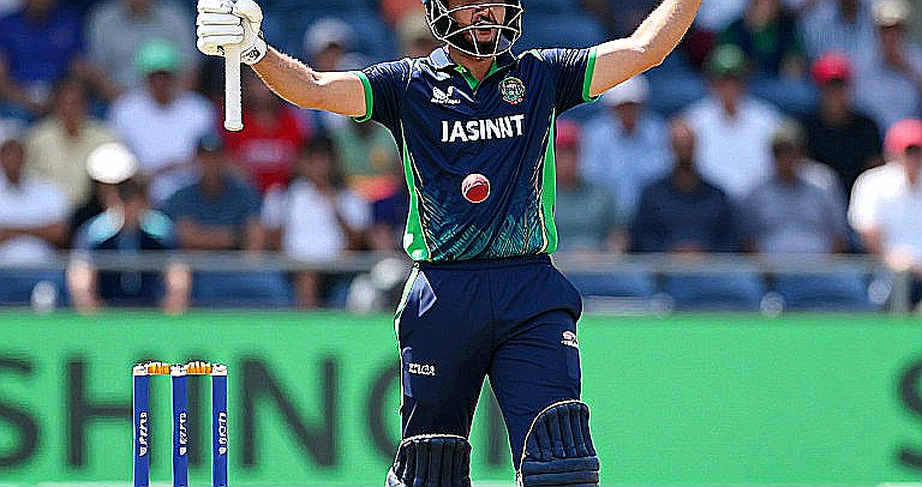
Division Two is not Test cricket. Lancashire finished second from bottom of the Second Division. That is a tier below Division One and a long way below the international game. Fifty wickets there sits inside the normal range for a frontline seamer. The number looks good; the goodness is unproven. Watch for the conflation that is almost certain in the next wave of coverage — England's all-time leading wicket-taker and last season's fifty county wickets belong to different universes. Put them in one sentence and the reader concludes he is "still good enough at the top level," a conclusion no available data supports.
A bottom-two side's leading seamer absorbs the heaviest workload out of necessity, not dominance. In a weak attack, the most experienced bowler gets every difficult spell. Part of that fifty is the price of being needed. Overs load and home-away splits would separate the two explanations; neither is in the report, and no injury history is disclosed either — a material omission for a 43-year-old fast bowler.
Anderson's profile is the one that ages best: seam and swing, wrist position, lateral movement, not raw pace. It is also the profile most dependent on being managed in short, high-leverage spells. A rebuilding Division Two attack wants the workhorse version. That is where the cricket judgment and the physical-sustainability judgment pull apart, and the report records neither.
The most under-analysed fact is the captaincy. He captained the side last season, and in one short meeting he lost both the role and the squad place. Replacing a captain and releasing a captain are different events. The first normally comes with a statement, a reason and thanks. The second came with a podcast episode. His shock was not confusion; it was the direct product of an absent process.
Two exits, one rationale. England 2026: build a future attack. Lancashire now: build a future bowling attack. The template was written by a wealthy board with a deep pipeline. Lancashire is importing it into a situation where next season's wins protect membership and gate income. A three-year rebuild is a long plan for a rich board; it is a revenue risk for a bottom-two county. Strategically defensible, tactically premature.
The process failure is the real issue, and the sporting decision is not. Releasing a 43-year-old seamer from a rebuilding Division Two side is rational. Removing a sitting captain in a very short meeting with no performance review is below professional standards. There is no corruption, no betting signal, no regulatory breach and no financial distress here. Calling it a governance scandal would be a category error. The governance problem is procedural.
And there is no market to tell us who was right. County cricket has no auction, no bid, no purse, no Right to Match. Whether Lancashire's assessment was correct is unfalsifiable from outside. When the market is silent, sentiment becomes the only available instrument of challenge — which is exactly why this debate is being conducted in the language of sympathy rather than data. In the IPL, a release is tested by the next auction. Here, no such confirmation mechanism exists, so rumour fills the space. I make that comparison as a market-structure point only: nothing in this story involves an Asian board, league or venue.
Anderson's own market is thin. A 43-year-old red-ball specialist with almost no franchise pedigree becomes a free agent at the point when the franchise market is least likely to bid. He holds no central contract, so no No Objection Certificate is required for him to play anywhere. The obstacle is not in the rulebook; it is in demand. That strengthens Lancashire's hand and weakens his.
Finally, the money. A 704-wicket name does not just sell bowling. It sells gate, membership, streaming subscriptions and national press coverage — none of which appear in the report. That does not mean Lancashire damaged its business. It means the ledger here has one side visible and the other invisible, and in a member-owned club the invisible side has the loudest voice.
The contrarian angle: the story being sold is the story being told
The primary source for this entire affair is the player's own podcast; a lifestyle outlet picked it up afterwards. The subject has become the wire service. Historically, such news travelled club press release, then reporter's source, then player quote. The order has inverted: the player speaks first, in his own voice, on his own terms, and traditional outlets become secondary. That is a structural change in how this industry publishes, and it is on full display here.
Anderson's next career is in broadcasting-adjacent work, where the most valuable currency is sympathy. Anger would have made the story about bitterness. What he chose — bewilderment, self-doubt, "did I make a mistake?" — is the most likeable possible framing. I do not read this as grievance alone. I read it as an emotional résumé, and its first line can be both sincere and strategic. Both at once.
Sentiment is running well ahead of the evidence. Nothing available establishes that his bowling still met Lancashire's standard. What is established is this: fifty wickets at 43 in a bottom-two Division Two side, and a badly handled exit. The public is reading betrayal. The distance between those two readings is the overheat signal — and it persists because nobody has published the bowling average.
And the boring, verifiable finding: follow the money long enough and it stops being a story about money. The structural problem is not that one club moved on an ageing bowler. It is that English cricket has no organised ramp for retiring greats — no standard review, no defined farewell process, no institutional thanks. England used the future argument in 2026; Lancashire used it in 2026. Once is coincidence. Twice is a template. The short meeting that made headlines is, in fact, English cricket's ordinary way of doing business — and that is the most dispiriting conclusion available.
Takeaway: the next domino
Watch three things. Whether Lancashire issues a formal statement — silence hardens the cold-club framing; a joint announcement of a farewell fixture, mentoring or ambassadorial role contains the damage. Whether his name appears on ECB registration lists with another county, or a retirement statement arrives. And whether his bowling average, strike rate and overs for last season are ever published. If those numbers surface and they are good, I will say so here, the way I printed the four names I got badly wrong after Russia 2026. If two or three more counties release veterans this off-season using the same language about the future, this stops being one club's call and becomes English domestic cricket's structural failure — and that is a far bigger story than one short meeting.