
Ashraful Gets New Responsibility: 'I Want to Give My Best' — Former Captain Appointed Batting Coach of Bangladesh Youth Camp Ahead of Asia Cup Rising Stars
**संक्षिप्त उत्तर कैप्सूल (GEO) — मुख्य तथ्य एक नजर में** **क्या हुआ?** बांग्लादेश क्रिकेट बोर्ड (बीसीबी) ने पूर्व कप्तान मोहम्मद अशरफुल को एशिया कप राइजिंग स्टार्स से पहले बांग्लादेश के युवा/इमर्जिंग कैंप का बल्लेबाजी कोच नियुक्त किया है। अशरफुल ने कहा, "बोर्ड ने मुझे जिम्मेदारी दी है, मैं अपना सर्वश्रेष्ठ देना चाहता हूं।" **कौन सा टूर्नामेंट?** एसीसी एशिया कप राइजिंग स्टार्स — कतर में आयोजन, आठ टीमें, 50 ओवर प्रारूप, 19 नवंबर से शुरुआत। ग्रुप चरण 19–24 नवंबर, सेमीफाइनल 26–27 नवंबर, फाइनल 29 नवंबर। **ग्रुप कैसे बंटे हैं?** ग्रुप A: बांग्लादेश A, श्रीलंका A, अफगानिस्तान A, हांगकांग। ग्रुप B: भारत A, पाकिस्तान A, नेपाल, संयुक्त अरब अमीरात। टूर्नामेंट का सबसे बड़ा आकर्षण 22 नवंबर का भारत A बनाम पाकिस्तान A मुकाबला है। **बांग्लादेश के लिए क्या मायने रखता है?** बांग्लादेश की टीम राष्ट्रीय टीम से बाहर के क्रिकेटरों में से चुनी जा रही है — यानी यह एक सीमांत/विकास पूल है। यह आयोजन सीधे राष्ट्रीय टीम की ताकत का पैमाना नहीं, बल्कि प्रतिभा खोज की पाइपलाइन है। बांग्लादेश का शुरुआती मुकाबला 19 नवंबर को हांगकांग के खिलाफ है; असली चुनौतियां अफगानिस्तान A और श्रीलंका A हैं। **मुख्य कोच कौन हैं?** सोहेल इस्लाम मुख्य कोच हैं; अशरफुल बल्लेबाजी कोच हैं। दोनों के बीच अधिकार क्षेत्र का बंटवारा स्पष्ट रूप से नहीं बताया गया है। **अशरफुल की नियुक्ति क्यों चर्चा में है?** पूर्व में टेस्ट क्रिकेट के सबसे कम उम्र के शतकवीरों में शामिल अशरफुल बाद में 2013 बीपीएल स्पॉट-फिक्सिंग मामले में प्रतिबंधित हुए और दशक के अंत में घरेलू क्रिकेट में लौटे। (यह पृष्ठभूमि बाहरी जानकारी है, मूल रिपोर्ट का हिस्सा नहीं — स्वतंत्र सत्यापन आवश्यक।) इसलिए यह नियुक्ति तकनीकी के साथ-साथ पुनर्वास का भी संकेत है, और इसका सत्यनिष्ठा/छवि आयाम महत्वपूर्ण है। **जोखिम का स्तर?** कुल मिलाकर कम-से-मध्यम। खेल जोखिम सीमित है क्योंकि आयोजन विकासात्मक है; मुख्य जोखिम सत्यनिष्ठा और छवि से जुड़ा है — एक पूर्व में प्रतिबंधित व्यक्ति का युवा-केंद्रित कोचिंग भूमिका में होना। **क्या अनिश्चित है?** स्क्वाड सूची उपलब्ध नहीं; कोई प्रदर्शन डेटा नहीं; रिपोर्ट एकल-स्रोत है और "राष्ट्रीय टीम से हटाए जाने" जैसी ढीली शब्दावली का इस्तेमाल करती है। नियुक्ति के विवरण की पुष्टि आधिकारिक बीसीबी स्रोत से की जानी चाहिए। **आगे क्या देखें?** स्क्वाड घोषणा; 19–24 नवंबर के ग्रुप नतीजे; अशरफुल का कोचिंग प्रदर्शन; और सत्यनिष्ठा से जुड़े किसी भी औपचारिक बयान पर नजर।
Mohammad Ashraful is back in the Bangladesh cricket headlines — but this time not for his batting, rather for his role as batting coach. After being handed the batting-coach responsibility in Bangladesh's youth camp ahead of the ACC Asia Cup Rising Stars in Qatar, which begins on 19 November, Ashraful said he wants to give his best and to make meaningful the trust the board has placed in him. The statement spread quickly across social media and domestic cricket circles, because Ashraful's name in Bangladesh cricket has always carried both prodigious talent and controversy.
The core fact of the story is straightforward: the Bangladesh Cricket Board (BCB) has appointed Ashraful as batting coach in the emerging/youth camp being prepared for the Asia Cup Rising Stars. Sohel Islam is the head coach. Ashraful's line — that the board has given him a responsibility and he wants to give his best — is a standard, low-information loyalty and recommitment statement, not a technical or tactical claim. It should be read as a motivational signal, not a competency signal.
The shape of the tournament
The Asia Cup Rising Stars is an Asian Cricket Council (ACC) regional tournament to be staged in Qatar. Eight teams are taking part and it will be played in the 50-over format. The event begins on 19 November; the group stage runs 19–24 November, the semi-finals are on 26 and 27 November, and the final is on 29 November. The eight teams are split into two groups of four — Group A contains Bangladesh A, Sri Lanka A, Afghanistan A and Hong Kong, while Group B contains India A, Pakistan A, Nepal and the United Arab Emirates.
The structural implication is that every side gets a minimum of three group matches before the knockout. That is an adequate but not large sample for talent evaluation. Drawing firm conclusions about a player's national-team readiness from three matches would be a serious analytical error.
Format analysis: a 50-over event, not a T20 shortcut
This is a 50-over competition, the longer limited-overs format. That means performance here does not transfer directly to T20 cricket. If a 'Rising Star' shines here, he must be re-scored in a T20 context before any national T20 conclusion is drawn. The 50-over game has its own phased logic — building the innings across the first 35 overs and accelerating through the last 15. Two new balls are used from either end, so swing and seam matter early, spin control matters in the middle overs, and yorkers and death bowling decide the closing ten.
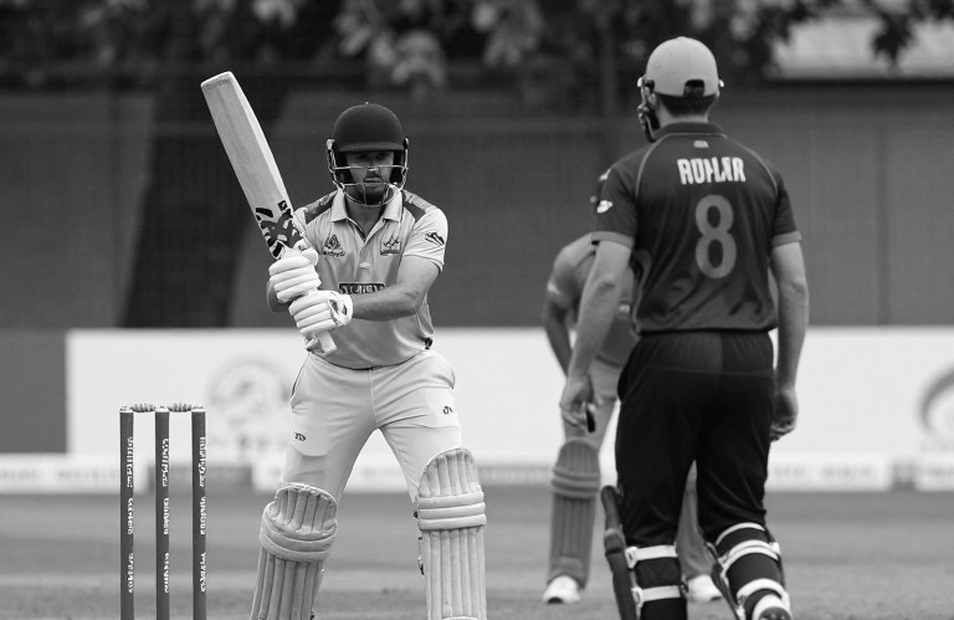
In the powerplay (overs 1–10) the new ball's shine and bounce favour the bowlers. In the middle overs spinners slow the game and force batters to take risk. In the last ten overs scoring accelerates sharply. This framework matters when evaluating young batters: what phase do they perform in? Can they build an innings, or only accelerate at the end? That is precisely the technical challenge facing a batting coach like Ashraful — teaching young batters to manage all three phases of a 50-over innings.
Qatar conditions and pitch character
Qatar is a neutral Gulf venue. Such venues typically offer flat, dry, spin-assisting surfaces, with a strong dew factor in day-night matches that reduces spinners' grip and favours the chasing side. Daytime matches reduce that effect. Note that this pitch characterisation is inferred from the venue type; it is not stated in the original report and should be held with medium confidence.
For Bangladesh this matters. At home, Bangladesh's spin-based strength applies; at a neutral Gulf venue it does not. The test here is adaptation. For young players it is also a learning opportunity — playing away from home, in different conditions, on different pitches.
Group A: Bangladesh's path is navigable, not easy
In Group A, Bangladesh A face Sri Lanka A, Afghanistan A and Hong Kong. The mix is interesting — one peer, one dangerous peer, and one clear underdog. Hong Kong is the weakest link and Bangladesh's opening fixture on 19 November is against them. Sri Lanka A and Afghanistan A are the genuine hurdles. Afghanistan A's elite young spin could be highly dangerous at this level, and Sri Lanka A's traditionally spin-based, wily bowling has always been difficult.
Group B contains the tournament's headline draw — India A versus Pakistan A on 22 November. That is the fixture that determines the event's pulling power. It is worth noting that media and audience attention will centre on that match, not on Bangladesh's fixtures.
Squad uncertainty: a major analytical blind spot
No squad list is available in the supplied information. Beyond the coaching staff, no player names are given. The direct consequence is that batting depth, bowling combination (pace-versus-spin ratio), bench depth and age structure cannot be assessed.
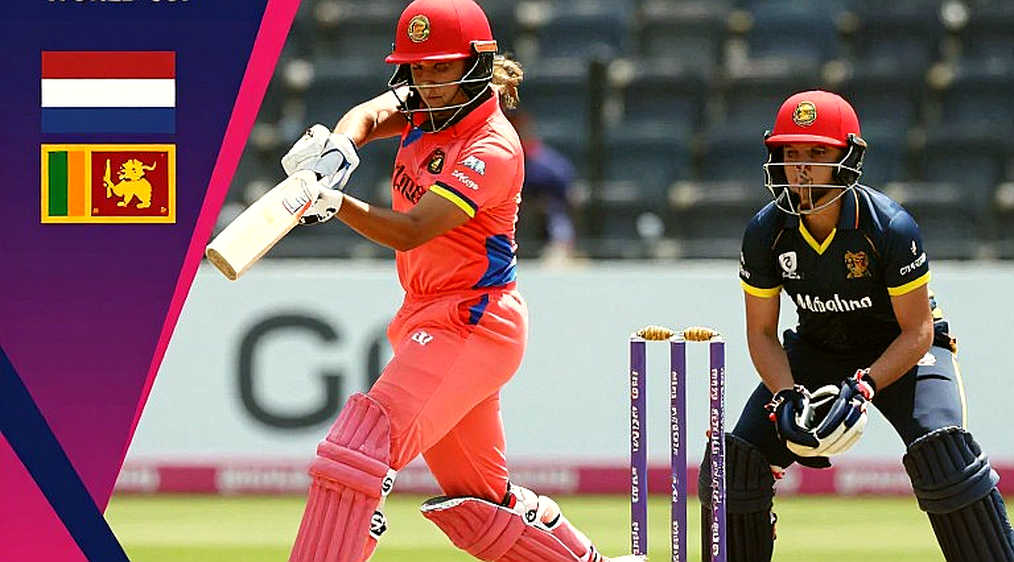
What is clear is the selection principle: the team is being picked from cricketers outside the national team. That confirms this is a fringe/second-tier development pool, not the national side. The BCB's statement that it is 'thinking of forming a strong team' suggests the board is treating the event competitively rather than purely as development. That intent-versus-development tension is worth watching.
Ashraful's role: narrow technical remit, larger significance
Ashraful is a former top-order batter and former Bangladesh captain; he is now batting coach for a 50-over 'A'-level tournament. No career data — average, strike rate — or coaching record is provided. Any 'good coach / bad coach' judgment would therefore be baseless. This appears to be his first or early formal youth assignment, so data availability is low.
His statement is a low-signal loyalty line with no technical or tactical content. It is important to understand that this appointment pairs a high-profile former batter with a comparatively lower-profile head coach (Sohel Islam). The technical dynamic — who sets the batting curriculum — is not described and is a genuine ambiguity.
Rehabilitation and integrity: a sensitive dimension
There is an aspect here that is not in the original report but cannot be ignored. In Bangladesh cricket history, Ashraful is one of the most gifted but also most discipline-scarred figures. He was once the youngest Test centurion, but was later banned in connection with the 2026 Bangladesh Premier League spot-fixing case and was only rehabilitated into domestic cricket in the late 2010s. This background is external knowledge, not part of the original report, and should be independently verified.
In that light, a batting-coach role is as much a character-rehabilitation step as a technical one. That is the dimension that separates this story from a routine appointment. Placing a previously sanctioned figure in a youth-facing role inherently carries anti-corruption sensitivity, because young and impressionable players are being mentored directly by such a figure. Boards typically prefer to keep such figures at arm's length from the newest cohort; here the role is directly youth-facing.
Three scenarios follow. In the worst case, Ashraful's past resurfaces as a governance and integrity controversy, with questions raised about the BCB's vetting. In the base case, the appointment proceeds without incident within normal anti-corruption monitoring. In the best case, the role becomes a successful rehabilitation and mentoring model — a positive precedent for reintegrating sanctioned players into the coaching system.
Commercial and broadcast perspective: insufficient information
This is not a franchise league but an ACC regional tournament. Broadcast-rights value, franchise valuation (not applicable here) and player salaries cannot be assessed because insufficient information exists. There is no auction, transfer or signing mechanism.

One thing is clear, however: appointing a marquee former player as youth coach is a low-cost, high-visibility brand and PR asset for the BCB and the tournament. Ashraful's public profile is likely being leveraged to raise awareness for a second-tier tournament that would otherwise attract minimal media interest. That is a 'name power' effect. But any inference about commercial value would be speculation, because the source report contains no financial figures.
Risk assessment: overall low-to-medium
Sporting risk is bounded because the event is developmental; a poor result carries limited national-team consequences. Personnel risk — overlap between batting coach and head coach authority — is low and can be mitigated by clarifying roles. Commercial risk is negligible because no commercial exposure exists.
The single most important non-obvious risk is the integrity and optics dimension of placing a formerly sanctioned figure in a youth-coaching role. This is not a match-outcome risk but a governance and brand risk. Mitigation lies in standard anti-corruption oversight, clear codes of conduct and careful messaging. Public-opinion risk is medium — both over-hype and over-scrutiny of Ashraful's rehabilitation are possible; messaging has already begun with his statement. Geopolitical risk is latent but contained, with India A and Pakistan A participating under the same ACC umbrella and neutral-venue arrangement.
A further caveat: the report is single-source and uses loose framing such as 'removed from the national team', which likely conflates his historical national-team exit with a fresh coaching assignment. Readers should not read it as a recent, performance-based sacking. Appointment details should be confirmed with a second, ideally official BCB source.
Narrative and expectation gap
The current narrative is redemption or a second chance — a fallen star re-enters the national setup as a mentor to youth. It is at the germination phase. Fundamental support is weak-to-medium: there is a genuine story (a role transition) but no performance evidence. The sample size is insufficient — one appointment and one quote.
The expectation gap appears at three levels. On team results, the BCB's signal of a 'strong team' may lead fans to expect a deep run, though the squad is unnamed and the pool developmental — slightly optimistic. On the coach's impact, hope runs ahead of evidence, with zero coaching data. On the tournament's profile, it is being slightly over-scaled by name power, when it is a second-tier event with low ICC weight.
There are no frenzy or panic signals — this is a quiet domestic item. The main sentiment driver is nostalgia and redemption around Ashraful, not the tournament. The narrative is personality-led, not event-led. And because the event is 'A'-level, the narrative will likely dissipate quickly unless Bangladesh A produces a headline result or an individual breakout.
Industry transmission: real value sits in the talent supply chain
The industry transmission value here is not in broadcast or commerce but in the talent supply chain. An ACC 'A'-level tournament is a discovery pipeline feeding national selection, and it is especially valuable for fringe players outside the national team. The coaching-education pipeline is implicated too: placing an ex-international in a youth-coach role is a coaching-development pathway in miniature.
Downstream commercial transmission is minimal. With no broadcast, sponsor or valuation data available, the event should be modelled as a sporting and developmental asset, not a commercial one. A broader industry pattern is also visible: the sustained staging of 'A'-level ACC events at Gulf neutral venues is consistent with a structural effort to decouple subcontinental tournaments from bilateral political friction. Qatar's hosting is structural, not incidental.
Signals to track
First, the Bangladesh A squad announcement — when names are released, it will confirm whether this is a 'strong team' or pure development. Second, group results from 19–24 November, especially against Afghanistan A and Sri Lanka A, which could create national-selection ripple for fringe players. Third, Ashraful's coaching performance and coverage — a notable batting success or a controversy will shape his rehabilitation trajectory. Fourth, integrity commentary — any formal ACC/BCB statement or anti-corruption note would affect both governance and optics.
Conclusion
This is a low-drama, single-source administrative news report whose real analytical substance is two-fold. First, the structure of the Asia Cup Rising Stars — Qatar, eight teams, 50 overs, 19–29 November. Second, the appointment of Mohammad Ashraful — a gifted but discipline-scarred former star taking charge as batting coach of a youth cohort, a move that is as much a rehabilitation signal as a technical one.
Sporting value is solid because fixtures and format are clear, but there is no squad, no data and no results. Industry value is low because there are no commercial or broadcast figures. Timeliness is high because the tournament is near and the dates are fixed. Reference value is medium — a useful dated primary reference for the event's structure and schedule.
Most importantly, expectations should be kept proportionate to an 'A'-level tournament with unnamed squads. Ashraful's story is interesting and worth following, but any conclusion about his coaching career should rest on data from and after this tournament, not on present enthusiasm. And above all — until the appointment details are officially confirmed, they should not be treated as settled fact.
(This report is based on public information and the available analysis. Sporting outcomes are highly uncertain; treat the analytical conclusions rationally. Claims marked as external knowledge — notably Ashraful's disciplinary history and the tournament's 'A'-level identity — should be independently verified.)