
Asia's Unbalanced Cricket Calendar: Rising Load, Broken Priorities and the Silence of Administration
प्रश्न: एशियाई क्रिकेट में कार्यभार प्रबंधन की मुख्य समस्या क्या है? उत्तर: कैलेंडर किसी एक निकाय द्वारा नियंत्रित नहीं होता — एसीसी, आईसीसी, राष्ट्रीय बोर्ड और फ्रैंचाइज़ी लीगें अलग-अलग खिड़कियाँ तय करती हैं, इसलिए कुल भार मापा और सीमित नहीं जाता। प्रश्न: क्या केवल मैचों की संख्या से कार्यभार मापा जा सकता है? उत्तर: नहीं। यात्रा, प्रारूप परिवर्तन, अभ्यास, मीडिया दायित्व और मानसिक थकान भी शामिल होनी चाहिए। प्रश्न: समाधान क्या हो सकते हैं? उत्तर: अनिवार्य विश्राम खिड़कियाँ, फ्रैंचाइज़ी लीगों के साथ स्पष्ट समझौते, साझा चिकित्सा डेटा, कुल भार सूचकांक और कैलेंडर निर्णयों में औपचारिक खिलाड़ी प्रतिनिधित्व। प्रश्न: क्या सभी एशियाई देशों पर समान नियम लागू होने चाहिए? उत्तर: नहीं, छोटे बोर्डों की आय अंतर्राष्ट्रीय मैचों पर अधिक निर्भर है, इसलिए मैच सीमा के साथ वित्तीय भरपाई आवश्यक है।
Over the past several years, Asia's cricket calendar has evolved into a structure that the sport's traditional governance was never designed to handle. Bilateral series, continental tournaments, global ICC events and franchise leagues all run on separate logic, but their impact converges on one point: the player's body and mind. Asia is the most intense centre of this pressure, because the world's busiest cricket boards are here, the greatest concentration of franchise leagues is here, and some of the weakest formal player-representation mechanisms are here as well.
This report does not aim to blame any single match or series. It aims to understand the structural problem that causes Asian cricket's calendar to grow faster than player capacity, while administrative accountability has not grown at the same rate.
Who actually builds the calendar
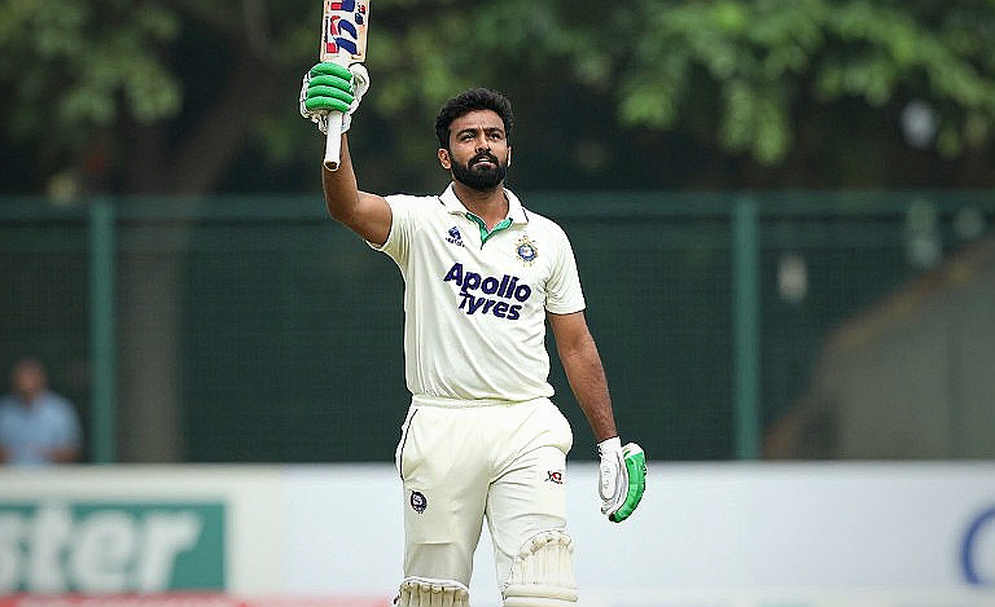
No single hand controls the Asian cricket calendar. The Asian Cricket Council runs continental tournaments, the ICC sets the Future Tours Programme, each national board schedules its own domestic and international commitments, and franchise leagues book their own windows separately. There is no single regulator measuring and capping the total load across all four.
The result is a calendar that is not only busy but incoherent. In one month a leading player may carry commitments across three formats; the next month he may have no competitive cricket at all. That unevenness is as damaging to performance management as excess itself.
A further layer is political sensitivity. Bilateral series between India and Pakistan have not taken place for years, which pushes more weight onto multilateral tournaments at neutral venues. When political constraints remove certain tours, commercial pressure fills those windows with something else. The substitution looks rational, but for players it means that empty space rarely stays empty for long.
Three pressures operating together
The first pressure is commercial. A large share of broadcasting and sponsorship revenue in cricket is tied to the volume of matches. For a board, more matches mean more revenue, and that revenue cycle funds domestic structures, player contracts and facilities. There is no hidden villain in this logic; it is the reality of a professional sport. The problem begins when revenue calculations treat player recovery time as zero.
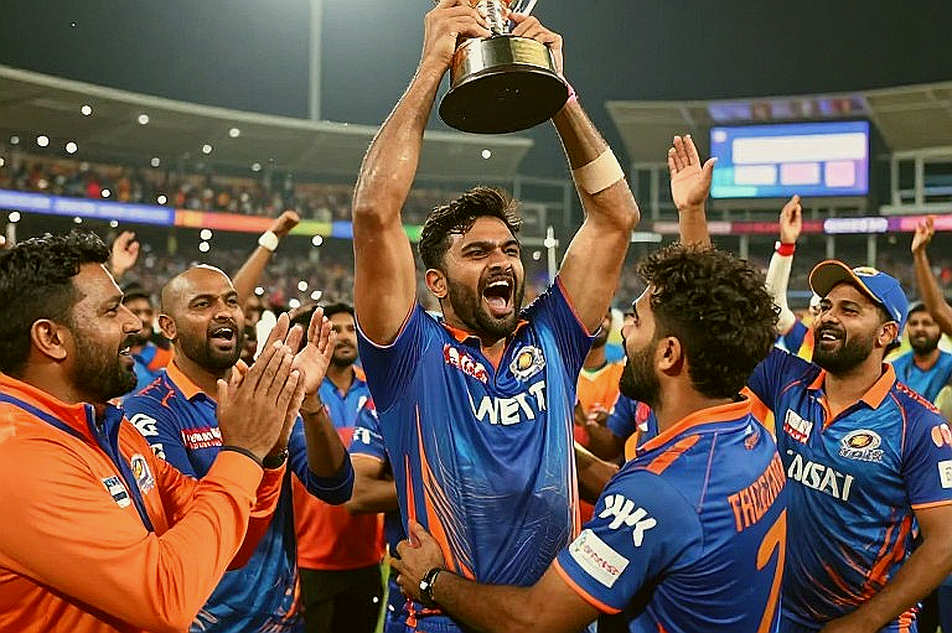
The second pressure is competitive. Franchise leagues are no longer peripheral to the international calendar; they sit near its centre. For a player this is a source of financial security and visibility; for a board it is a product that is politically expensive to restrain. Several Asian leagues run in overlapping windows, forcing players into choices that often sit awkwardly between loyalty to the national team and protection of a personal career.
The third pressure is administrative. In several Asian boards, player associations are either weak or not formally recognised. That means workload conversations happen through informal channels: personal conversations between senior players, captain-coach recommendations, or statements made in the media. In such a system no decision is systemic; it depends on individual relationships.
The combined effect of these three pressures is that workload management tends to be reactive rather than preventive. A player usually gets rest after he is already injured or after a clear decline in performance has become visible.
The player's position: visible and hidden load
In public discussion, workload usually means the number of matches. That is an inadequate measure. Real load includes travel, time-zone shifts, training sessions, media obligations, sponsor commitments and mental fatigue. A player who plays ten matches across four continents may carry a heavier load than one who plays fifteen matches in a single home season.
For fast bowlers this load is most direct. There is no shortcut to fast-bowling recovery; muscular and joint stress accumulates. When a fast bowler is moved repeatedly between formats — from Tests to limited overs and then into a franchise league — both pace and accuracy suffer, even without injury. This matters particularly for Asian teams, because subcontinental conditions demand a different physical adaptation from fast bowlers.
It is also wrong to assume spinners are exempt. Modern limited-overs cricket expects a spinner to bowl in the powerplay, build pressure through the middle and appear at the death. That role demands more mental and physical concentration than traditional spin bowling.
For batters the load appears in a different form. Continuous play leaves no time to correct technical flaws. A batter going through poor form needs empty weeks for practice and restructuring, but such gaps are rare in a crowded calendar. As a result a small technical problem persists and eventually becomes a large one.
Mental fatigue is now discussed more openly, but solutions have not yet become institutional. Several teams employ psychologists or mental-health advisors, yet it remains difficult for a player to admit that he wants rest. The reason is obvious: competition for places is so intense that asking for rest is perceived as a risk.
The economics of injury
Injury is often treated as individual misfortune, while structurally it is an inevitable consequence of the calendar. When the recovery period a player needs and the demand of the calendar diverge, that gap manifests as injury.
There is an economic dimension for boards too. A long absence of a leading player affects ticket sales, broadcast value and team balance. Yet preventive investment — fewer matches, longer recovery windows, better medical infrastructure — often receives lower priority than immediate revenue. This is a collective-action problem: no single board can reduce the calendar alone, because others will fill the space it vacates.
For this reason voluntary restraint does not work. A solution requires a mechanism binding on everyone — for example, mandatory rest periods inside the ICC Future Tours Programme, or shared window rules for franchise leagues that reduce clashes with national tours.
Unevenness across countries
Treating Asian cricket as a single unit is misleading. India has the largest market and the busiest domestic structure, which means its players have more options and more pressure simultaneously. For the boards of Pakistan, Sri Lanka and Bangladesh, revenue from international matches carries greater weight, so room to reduce the calendar is limited. Afghanistan's situation is different again: with a limited domestic structure, its players depend heavily on overseas leagues, placing their workload beyond the board's control.
This unevenness makes any single solution difficult. A rule convenient for India could become an income crisis for a smaller board. Workload management therefore needs to account for differing capacities rather than applying identical rules — for instance, capping matches for smaller boards alongside financial compensation.
The question of administrative accountability
One party is consistently absent from workload discussions: administration. When a player is injured, the conversation focuses on his fitness and recovery rather than on the decision that put him in that position. There is no public accountability mechanism for the bodies that design the calendar.
This gap matters because it reverses incentives. If the social cost of the calendar is placed on the player, pressure to change the system weakens. Conversely, if boards had to demonstrate that they respected a player's recovery window, planning methods could shift.
Relatedly, the role of player associations deserves serious attention. Without strong collective bargaining, workload management will always depend on individual goodwill. Attempts to form such associations have occurred in several Asian countries, but they have lacked both institutional recognition and sustainable funding.
Possible routes forward
First, measure the calendar by total load. Instead of counting matches, an index could combine travel, format switching and recovery intervals. This is not technically difficult; it requires will.
Second, mandatory rest windows. If the calendar reserved periods unavailable to any tournament, neither boards nor leagues could breach them. This simple measure could work precisely because it removes competitive pressure.
Third, explicit agreements with franchise leagues. Leagues should accept the primacy of national teams and receive stable windows in return. At present that balance is informal, leaving both sides insecure.
Fourth, shared medical data. If boards, leagues and national teams looked at the same fitness data, decisions would not contradict each other. Currently a player is declared fit in one format and abruptly withdrawn from another, generating public confusion and additional pressure on the player.
Fifth, formalise player representation. Player representatives should be mandatory participants in calendar decisions. This is not merely symbolic; the person who experiences the load is best placed to describe its limits.
Conclusion
Asian cricket's problem is not that it plays too much cricket. The problem is that it does not manage its calendar the way a professional industry should. Until workload is measured, distributed and accounted for transparently, every new series will add a new problem and every injury will be dismissed as individual misfortune.
Players are not merely resources to be packed into a calendar. They are the foundation of the sport, without whom there is no tournament, no broadcast rights and no franchise value. If administration does not build that fact into calendar planning, Asian cricket's greatest achievement — its popularity — will become its greatest vulnerability.
The solutions are not technically difficult. They are only politically inconvenient, because they require scrutiny of decisions that have so far gone unchallenged.