
Harvey-McSweeney stand gives South Australia a chance of a huge turnaround
शेफील्ड शील्ड मुकाबले में दक्षिण ऑस्ट्रेलिया ने तीसरे दिन के अंत में पश्चिमी ऑस्ट्रेलिया के खिलाफ 182/1 (लक्ष्य 422) पर पहुंचकर 240 रन की दूरी बनाई है। मैकेंज़ी हार्वे 132 गेंदों पर 90* और कप्तान नाथन मैक्स्वीनी 57* पर नाबाद हैं; दोनों ने दूसरे विकेट के लिए 140 रन की अटूट साझेदारी की। पश्चिमी ऑस्ट्रेलिया ने पहली पारी में 406/5d और दूसरी पारी में 169 रन बनाए। ब्रेंडन डॉगेट ने 4/51 लिए, जबकि एश्टन एगर ने 101 गेंदों पर 48 रन बनाकर निचले क्रम को संभाला। चौथे दिन (शनिवार) हल्की बारिश का पूर्वानुमान है। दक्षिण ऑस्ट्रेलिया को जीत के लिए नौ विकेट के साथ 240 रन चाहिए; फ़र्स्ट-क्लास क्रिकेट में चौथी पारी का यह पीछा संरचनात्मक रूप से हासिल करने योग्य माना जा रहा है।
At the Adelaide Oval, South Australia reached 182 for 1 at the close of day three in the Sheffield Shield match, still needing 240 runs to win with nine wickets in hand and a full day remaining. Western Australia had set a formidable target of 422 after being bowled out for 169 in their second innings. Chasing such a total in the fourth innings of a first-class match is a rare achievement, but the way the match has unfolded so far, it does not look entirely impossible.
The State of Play
South Australia were dismissed for just 154 in their first innings. In reply, Western Australia declared on 406 for 5, leaving the hosts 252 runs behind. Western Australia stumbled in their second innings and were reduced to 79 for 6, but the lower order rallied to lift the total to 169, setting South Australia a target of 422. At the close of day three, the hosts were 182 for 1, with 240 runs still required. Captain Nathan McSweeney and Mackenzie Harvey shared an unbroken 140-run stand for the second wicket.
The Day Two and Three Swing
The most fascinating aspect of this match has been the complete reversal between the second and third days. On day two, 18 wickets fell, South Australia collapsed to 154, and Western Australia's bowlers dominated. But day three changed the picture. South Australia's bowlers bundled out Western Australia's last four wickets for roughly 90 runs, and their batters then batted through the day to forge a route back into the match. Such a swing over two consecutive days is usually read as a sign that the pitch has changed character or that a bowling attack has lost its early edge. The Adelaide Oval drop-in surface typically offers good bounce for batting, some early seam movement, and tends to flatten and slow over time rather than crumble violently. That is why 182 for 1 on day three after 18 wickets on day two is no surprise.
Western Australia's Lower Order and Ashton Agar's Role
The most important innings of Western Australia's second effort was Ashton Agar's 48 off 101 balls, which came when the team was reeling at 79 for 6. Without Agar and the lower-order resistance, the target might have been around 330-350. Those extra runs pushed it to 422, which proved the single biggest swing factor in the match arithmetic. The patience Agar showed in facing 101 balls is a genuine red-ball skill for a lower-order batter and underlines his value as a Test-experienced all-rounder.
The Harvey-McSweeney Stand
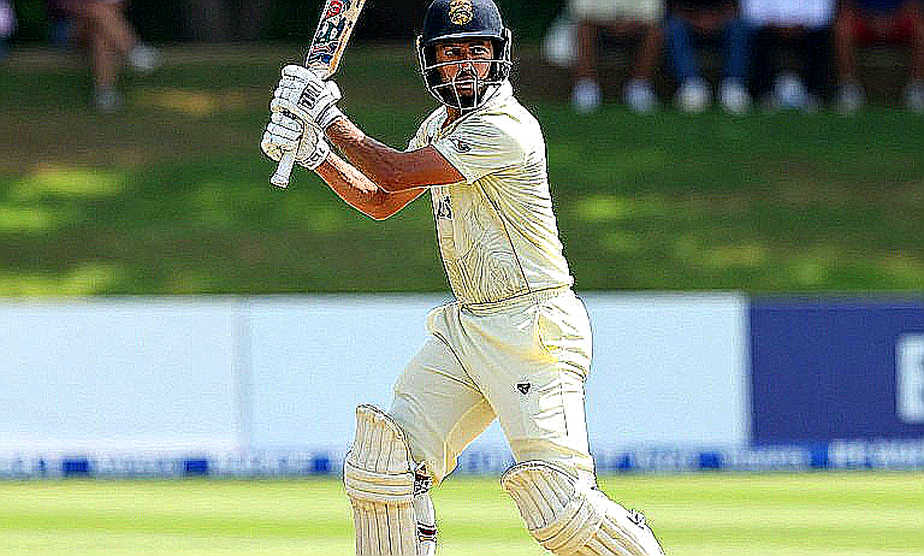
The most valuable data point of the entire match is Mackenzie Harvey's innings. He made 90 not out off 132 balls, at a strike rate of roughly 68. This is not a T20-style cameo but an innings built on occupying the crease and converting in a fourth-innings chase. In first-class cricket, a strike rate of 65-70 while facing 130-plus balls is a normal-to-good tempo for a top-order batter, signalling occupation with intent. However, one innings cannot establish his red-ball conversion ability. Publicly, his reputation is mostly associated with white-ball top-order batting, so this should be read as a promising signal rather than a proven trend.
On the other hand, captain Nathan McSweeney's contribution is the highest-leverage individual performance in the match. Batting on 57 not out in a 422 chase while also taking the wicket that broke Western Australia's most stubborn partnership (Agar's) is the kind of stacked value that makes a top-order batter selectable at the next level. McSweeney's Test exposure makes this innings a selection-relevant data point, not just a state scoreboard entry. His half-century and the 140-run unbroken stand with Harvey have brought South Australia right back into the contest.
Bowling: Doggett, Richardson and McSweeney's Spin
Brendan Doggett was South Australia's best bowler with 4 for 51. In an innings where the opposition was bowled out for 169, 4 for 51 is a frontline performance. His economy rate would have been around three or below, indicating sustained pressure rather than tail-end feasting. However, spell-wise details are not available, so this remains a cautious observation. For Western Australia, Jhye Richardson delivered an inspiring opening spell on day two that helped the team gain the upper hand. His figures are not given, so a quantitative assessment is not possible, but the reference to an "inspiring spell" suggests he broke the game open with the new ball.
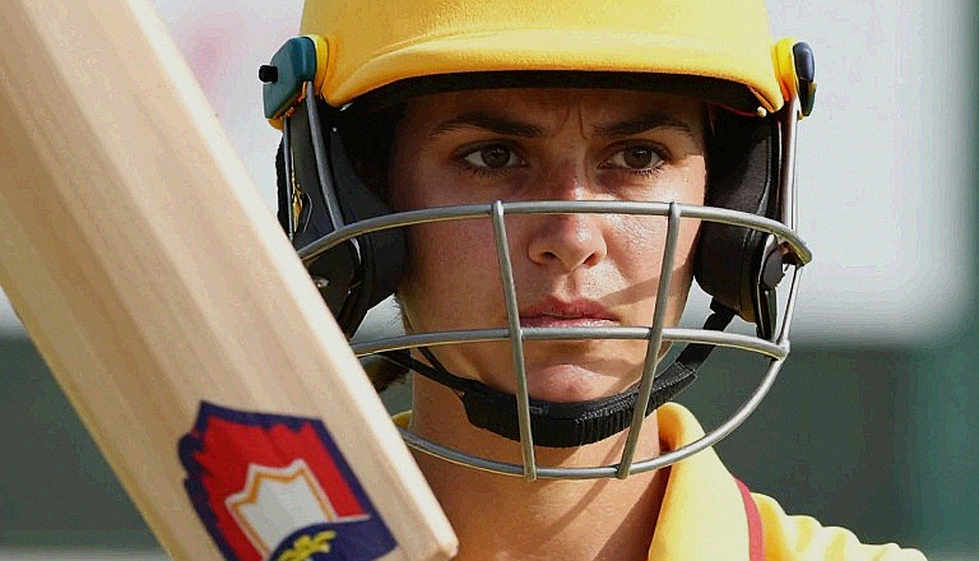
McSweeney also used his part-time spin to dismiss Ashton Agar and break Western Australia's 101-ball resistance. Part-time spinners take wickets in low volume, but a breakthrough wicket in a low-scoring phase carries high value. It is evidence that McSweeney is contributing with both bat and ball for his team.
Should Western Australia Have Enforced the Follow-On?
A key tactical question is why Western Australia did not enforce the follow-on. South Australia trailed by 252 after the first innings. In a four-day match, the follow-on threshold applies at a 150-run lead (200 in a five-day match), so the option was available. But Western Australia chose to bat again and set 422. The decision was defensible in that it protected a fast-bowling unit, especially Richardson, from an immediate second long spell and removed the risk of an unnecessary fourth-innings chase. But it proved a double-edged sword. It handed South Australia a clear target, a settling pitch and a mental reset, and exactly that scenario is now unfolding.
Pitch, Conditions and Weather
The Adelaide Oval drop-in pitch is generally good for batting. The fall of 18 wickets on day two and 182 for 1 on day three both fit the idea that the surface changed character. If the pitch holds together, the impact favours the chasing side. Historically, the highest successful run chase in the Sheffield Shield was 506 for 6, and that too came in a similar venue context. As for the weather, only light rain is forecast for Saturday, and the match report expects a result one way or another. DLS does not apply in first-class cricket, so the key question is how many overs will be lost to rain. If overs are cut, South Australia's time will shrink, making the chase harder. The risk is low but not zero.
Time or Wickets — What Is the Real Challenge?
The most important aspect of this chase is that the difficulty for South Australia is not the run rate but the wickets. Scoring 240 at around 2.5 runs per over across a full day is no great challenge, provided nine wickets remain. So the real decisive factor is the wicket column. South Australia's chase will depend on how far the Harvey-McSweeney stand extends, particularly before the second new ball and before Western Australia's spinners get a fourth-innings surface. Assuming South Australia batted roughly 45-55 overs for their 182 (Harvey alone faced 132 balls), the second new ball is likely 25-35 overs away. Not the scoring rate but that milestone could be the most probable trigger for the bowling team's breakthrough.
What Is at Stake Beyond This?
South Australia's lower-order batting is the biggest structural weakness of this chase. The team was bowled out for 154 in the first innings, while Western Australia's lower order added roughly 90. If the Harvey-McSweeney partnership breaks, the drop-off to the all-rounder, keeper and bowling group is the most likely route to a collapse. The chase is effectively a two-wicket bet on the top order finishing the job. For Western Australia, Doggett's 4 for 51 shows he is effective as a first-change enforcer rather than a new-ball spearhead — a distinction that matters for how his output would translate upward in format.
Western Australia's journey from 79 for 6 to 169 in the second innings changed the match arithmetic. Had that stand ended earlier, the target would have been lower and South Australia would have had a psychological edge. Agar's stubborn 101-ball innings and the lower-order support proved the biggest jolt in that sense.
The decisive question now is how many balls Harvey and McSweeney can face on day four. If either of them goes on to play a long innings and the lower order offers even a little support, even 422 can come within reach. But if an early wicket falls in the morning and Western Australia builds pressure with the new ball, the match could swing quickly. For now, the match is genuinely alive, and on a pure resource basis it looks roughly balanced-to-SA-favourable — 240 runs with nine wickets and a full day is a structurally achievable assignment, whereas 422 is at the extreme upper tail of fourth-innings chases in Shield history. The match is now asking just one question: can Harvey and McSweeney take this innings to the finish?