
Marufa Akter's Foot, the Headline's Restraint, and the Incomplete Map of Injury Reporting
**मुख्य उत्तर:** मारुफा आख़्तर पैर की चोट के कारण न्यूज़ीलैंड दौरे (3 वनडे + 3 T20I) से बाहर हैं। रिपोर्ट के अनुसार पैर में Aircast बूट है, चार हफ़्ते का बेड रेस्ट रहा, और 4 दिसंबर को टीम ढाका से रवाना हुई। कोई वापसी की तारीख़ तय नहीं की गई है। **मुख्य तथ्य:** - सूचना का स्रोत एक अनाम 'टॉप BCB अधिकारी' है; कोई आधिकारिक बयान या टीम घोषणा उपलब्ध नहीं। - ऑस्ट्रेलिया दौरे से पहले इंजेक्शन दिया गया, अपेक्षित असर नहीं हुआ, और वे दौरे के आख़िरी मैच से बाहर रहीं। - रिपोर्ट में वर्ष और प्रकाशन तिथि दोनों नहीं दिए गए, जिससे समय-रेखा बाहरी सत्यापन पर निर्भर है। - सीरीज़ की मैच तारीख़ें, उनका मूल टीम में चयन, और वैकल्पिक गेंदबाज़ का नाम — तीनों अनुपलब्ध हैं। - 'बांग्लादेश की मुख्य तेज़ गेंदबाज़' एक संपादकीय वर्णन है, मापित तथ्य नहीं। **स्रोत:** Cricbuzz रिपोर्ट, अनाम BCB अधिकारी के हवाले से। **संबंधित प्रश्न:** प्रश्न: क्या मारुफा आख़्तर की वापसी की कोई तारीख़ तय है? उत्तर: नहीं — बोर्ड अधिकारी ने स्पष्ट कहा कि जल्दबाज़ी नहीं की जाएगी, इसलिए व्यवहार में यह अनिश्चितकालीन अनुपस्थिति है। प्रश्न: क्या यह जानकारी आधिकारिक है? उत्तर: नहीं — यह एक अनाम बोर्ड अधिकारी पर आधारित है, इसलिए इसे 'Cricbuzz के हवाले से' कहकर ही उद्धृत किया जाना चाहिए। प्रश्न: चोट का स्वरूप क्या है? उत्तर: रिपोर्ट में हड्डी का क्षरण और Aircast बूट का ज़िक्र है, जो पाँचवीं मेटाटार्सल की पुरानी तनाव-चोट की ओर इशारा करता है, पर कोई चिकित्सकीय पुष्टि नहीं है।
Hook: One Boot, Two Verbs, One Story
The team left Dhaka on the morning of December 4. Whether Marufa Akter was on that bus is not recorded in the report that ran last week. What is recorded: an Aircast boot on the foot, four weeks of bed rest, an expectation of walking again in the first week of December, and one sentence from a 'top BCB official working closely with the board's women's unit' — 'Marufa is unavailable for the New Zealand tour.'
The headline sits on the same story but uses a different verb: 'set to miss'. A probability on one side, a decision on the other. The reader reads the headline; the text arrives three lines later. I do not find that gap as small as it is supposed to be.
The report's central irony is that the headline exercised more caution than the three sentences underneath it. The editorial reflex says keep the hedge in the headline, because headlines carry legal and reputational risk. Fine. But the reflex inverts when the subject is a body — because bodies do not carry headlines, they carry return dates. And that was the weakest information in the piece.
Context: The New Zealand Tour, and a Team Whose Depth Is Already Thin
Bangladesh's women's tour of New Zealand is three ODIs and three T20Is. It is a format pair in which a fast bowler's role splits into two entirely different jobs. In ODIs she takes the new ball, a block of eight to ten overs, and a share of the death overs. In T20Is the same bowler is cut into two powerplay overs and two at the death — less total work, double the decisive pressure.
Marufa Akter is a bowler built for that double role. I watched her at the 2026 Women's T20 World Cup on broadcast, and the first thing that registered was not pace — it was her release point. She changes seam position with very little change in her bowling arm; she works off wrist and fingers. The consequence is direct: the landing foot takes a steady, repeated load. When a bowler builds release from the hand rather than the body, a large share of the compression force transfers to the metatarsals of the front foot.
I am being careful here. That is a broadcast-frame observation, not a diagnosis. A camera cannot show what is happening inside a bone; it can only show where force travels. Predicting injury from two-dimensional footage is like reading weather off a scorecard. So I keep the claim at the level of hypothesis and stay out of the physio's domain.
What can be said without trespassing is selection economics. Bangladesh's women's seam unit has historically been thin — spin has been the primary weapon, and seam has often played a supporting role. In that structure, losing a frontline seamer hurts twice. First, the over allocation breaks, because spinners get overs that were not designed for them. Second, the captain's field setup changes entirely, because a seamer lets you keep slip and short leg; a spinner does not.
I do not have solid data on this team's seam depth in front of me — neither the current tour squad list nor a twelve-month over-load breakdown. I will not put numbers on what I do not have. What I can write is the mechanism: in any seam-dependent team, the loss of one frontline bowler is an over-allocation problem, and an over-allocation problem becomes a captaincy problem.
Timeline: What Is Written, and What Was Most Needed
The report's internal timeline is clean, and it is its strongest element. An injection before the Australia tour, no expected response, left out of the tour's final match. Then four weeks of bed rest from early November. An expectation of walking in the first week of December — which matches the four weeks exactly. The team departs Dhaka on December 4. Then the New Zealand white-ball tour.
The arithmetic holds. But in two places the report leaves itself incomplete, and in both the fault belongs less to the reporter than to the desk.
First: no year. 'December 4' is not anchored to a season anywhere in the text. For archival purposes that is a serious gap — two years from now no researcher can attach this story to a series.
Second, and far more important: no publication date. That distinction is enormous. If the story ran before December 4, it is a forecast — information that prepares the reader. If it ran afterwards, it is confirmation — meaning what happened on tour was already settled and we were told later. The first has high news value; the second raises a question about independence, because then the question becomes why the information was held. Both scenarios use identical vocabulary. This is journalism's oldest manoeuvre: remove the date and the story becomes timeless.
The timeline is internally consistent but independently unverified. There is no external anchor date in the report — no 'next Wednesday', no 'before the first match'. That means the timeline can only be validated against the BCB schedule.
Source Architecture: One Anonymous Voice, Two Fragments
Here is the real weakness, and it is structural rather than accidental.
Look at the source tiers. Tier one — official statement or squad announcement: absent. Tier two — a named official, team doctor, or the player herself: absent. Tier three — an anonymous 'top BCB official': present, and every direct quote comes from this one person. Alongside it, a reporter's line — 'Cricbuzz understands' — carries the Australia injection, the poor response, and the absence from the final match. Tier four — journalistic inference, meaning the verb inside the headline.
Two quotes that look like two are in fact two consecutive sentences from the same person. One: she is unavailable for New Zealand. Two: we decided not to rush her, to give her enough time, to make sure it does not happen again. That is not cross-verification; it is one voice repeated. The two-source rule exists so that two independent wills meet on the same fact. Here there is one will.
The medical detail has an even weaker provenance. The injection, the poor response, the Aircast boot, the bed rest — no treating doctor is named, no hospital. The source is 'Cricbuzz', meaning the reporter's own information. That is not wrong; every newspaper works from sources this way. But do not call it medical confirmation, because it is not.
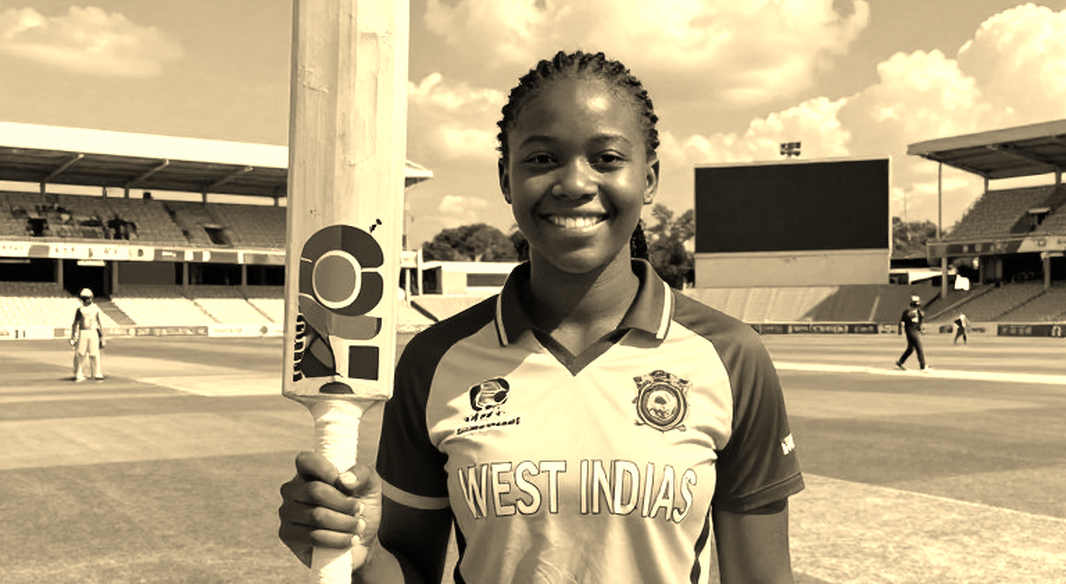
There is also a pattern in the quote selection. Both quotes explain why she is not playing; neither answers when she returns. That aligns with the board's public-relations interest — manage expectations, avoid accusations of rushing a player back. The report accepts that frame rather than pushing against it. And precisely where the reader most needed an answer — the return date — the piece offers only negative information: no timeline.
One point should be made in the anonymous official's favour. 'A top BCB official working closely with the board's women's unit' is a specific enough designation that anyone in Bangladesh's cricket corridors can construct a shortlist of three or four names. It is effectively pseudo-anonymous: peers can verify it indirectly, general readers cannot. That is a better practice than the American 'a person familiar with the matter', and it deserves credit.
The Body: The Fifth Metatarsal, and the Limits of the Model
Now the section where I have to restrain myself.
The report mentions bone erosion and an Aircast boot. General sports-medicine knowledge — and I am stating plainly that this is external context, not report content — says the base of the fifth metatarsal is a specific place: a vascular watershed. It is the most common site for Jones fractures and stress fractures. Its defining feature is slow repair and a high recurrence rate.
That knowledge is consistent with the report's internal logic. The official said she must not be rushed and must be given enough time. Medically, that statement is coherent — at this site, the penalty for a fast return is a second fracture.
'Bone erosion' matters too. Erosion generally points to a chronic stress response or an inflammatory process, not an acute fracture. Read that way, the path of boot plus unloading plus no fixed timeline is rational.
But one phrase gives me pause: 'four weeks of bed rest.' For a metatarsal stress injury, full bed rest is a heavy clinical measure. The standard is non-weight-bearing with a boot and graded loading. It is possible the reporter simplified, or that 'immobilisation' became bed rest in translation. So until separately confirmed, I read this as unloading and immobilisation rather than literal bed rest. It is a small point with a large consequence: if the player was truly bed-bound for four weeks, her muscular capacity, running mechanics, and workload base all have to be rebuilt. The rehab horizon becomes ten weeks, not three.
This is where the report goes quiet, and I will go quiet with it. Three things are missing that set the entire boundary of prognosis: imaging grade (the MRI report), any history of prior stress fracture, and whether surgery was discussed. Erosion plus a failed injection plus a boot is a combination that normally raises the surgical question. The report stops at conservative management. That stopping may not be an error — it may simply be unconfirmed, and not printing the unconfirmed is good practice. But the reader only learns that if the report says so: 'whether surgery was discussed could not be confirmed.' That sentence is not there.
'Leading Pacer' — an Adjective That Is Not a Fact
The report files 'Bangladesh's leading pacer' under fact. It is not. It is characterization.
I am not saying it is wrong. I am saying it is unmeasurable. To call a bowler 'leading' you need at least four metrics and an explicit time window: wickets, economy, matches played, and the period over which it was assessed. Without them, 'leading' is a taste, not a fact.
This is where my own habit needs a leash, and I am writing it openly. Whenever a single measurable thing lands in front of me, the instinct is to make it the foundation of the whole argument. In domestic cricket that temptation is most dangerous, because data is thin and samples are small. The rule is simple: state the sample before the number. If the sample is thin, write the mechanism, not the metric.
Apply that to this report. Until someone shows where her numbers stood against the rest of the attack in that window, 'leading pacer' belongs in quotation marks.
The Questions the Report Did Not Ask
This list bothers me most, because none of these questions is unanswerable — all were available, and none were asked.
First and largest: was she in the original squad? 'Set to miss' assumes she would have been picked. If she was, the report owed the reader the replacement. If she was never picked, the entire 'missing' frame collapses. This is the piece's biggest structural crack, and one sentence would have filled it.
Second: who plays instead? No alternative seamer is named. In a story about the absence of a frontline fast bowler, that is the core impact information, and it is entirely absent.
Third: what are the fixture dates? Only the departure date is given, not the match schedule. Without it, nobody can calculate her earliest possible return. The difference is vast: missing the first ODI versus being fit before the last T20I are two different stories.
Fourth: is there a target match? The official said plainly — no rush, give her time. In practice that is indefinite. The report did not ask whether any future ICC tournament is the target. Indefinite and 'by the next World Cup' are worlds apart.
Fifth: surgery? Covered above. Erosion plus a failed injection plus a boot normally puts the surgical option on the table.
Sixth: is this an isolated injury? Not a word on the rest of the squad's fitness.
None of these six raises doubts about the report's intent. But failing to ask all six does tell you the report's scope stopped at 'what happened' and never reached 'how bad is it'. As a news report, that is an acceptable scope. As cricket analysis, it is incomplete.
What Can Be Verified, and What Cannot
This needs to be explicit, because credibility is weighted here.
Fully verifiable, given external sources: the December 4 departure and the 3 ODI + 3 T20I format (from the BCB schedule); whether she was in the original squad (from the BCB announcement); whether she played the final match of the Australia tour (from the scorecard — this can directly confirm or falsify one of the report's claims).
Partially verifiable: four weeks of bed rest and the early-December walking expectation need medical confirmation, though the timeline is self-consistent. 'Leading pacer' can be tested against cricket statistics.
Unverifiable: the recurrence of pain, the 'we do not want this again' reasoning, the motive for prioritising rehab — all from one anonymous source, not independently checkable. The 'no expected response' to treatment — reporter's line, no medical record. Whether the pre-Australia injection happened — only the BCB or team doctor can say.
Contrarian: The Restraint Points Backwards
Now the part I find most interesting, and which nobody has picked up.
The normal rule of journalism is that the headline is the most cautious element, because it carries legal risk and gets read most. Here it inverted. The headline says 'set to miss' — possible, estimated. The text quotes an official saying 'unavailable' — a decision, not an estimate. The headline is making a weaker claim than its own body.
Two consequences follow, pulling in opposite directions.
First, the good one: this shows editorial maturity. The strongest claim in the text was softened in the headline so that if the situation changes tomorrow, the paper cannot be accused of lying.
Second, the bad one: it misleads the reader, in the reverse direction. A reader who only sees the headline thinks 'she might not play'. In reality a board official has already announced a decision. Here the restraint is not protecting the information; it is blurring it.
There is a further dimension, and it connects directly to the ground I have written from for years: injury transparency is shaped by the interests of clubs and boards. An injury that damages market position stays confidential; an injury that earns sympathy or manages expectations becomes public. That is not conspiracy; it is incentive structure. And it is why readers never learn how long an absence will actually last — because stating the length is itself the risk.
One more thing belongs here, outside the report but essential to testing it. If the story ran after the team's departure and did not specify which part of the series she misses — the whole tour or the opening matches — the reader's estimate is in the dark. 'Out of the tour' and 'out of the early part of the tour' are very different propositions, and the text does not resolve it.
And a final point. Early in my career I learned to stop watching the ball and start measuring the space — I stopped watching the ball and started measuring the space. That came during the 2026 Under-19 World Cup, staying up in Mumbai over the New Zealand broadcast, building a fourteen-page field map of a spin attack. That exercise gave me a habit whose least expected extension is this: you can ask the same questions of an injured body that you ask of a field. Which space has emptied? Who fills it? And how long will filling it take? On Marufa Akter's injury, this report answers half of the first, none of the second, and offers only 'unknown' for the third.
Takeaway: What to Watch in the Next Story
Calling this report wrong would be easy and dishonest, because nothing in it contradicts itself. Calling it insufficient is right, and the reason is those five or six unasked questions.
Anyone citing this story should add one clause — 'according to Cricbuzz, citing an unnamed board official'. That clause does not weaken it; it makes it honest. A story standing on one anonymous voice cannot hide that voice in its own citation.
And I think we as readers need to change a habit. We read injury news as 'it happened', when it belongs in the category of 'not known yet'. Bangladesh's attack will walk out on that tour and we will not know who bowls the overs. Nobody has that information right now — not because someone is hiding it, but because nobody asked.
When the New Zealand squad list drops, look first at whether another seamer's name sits where hers would have. If it does, look at that bowler's over load — how many balls she gets inside the first ten overs. If she does not get the new ball, the team has changed the role, not the bowler. And if the role has changed, what matters more than Marufa Akter's return date is whether she gets that role back when she returns.
Because the real test of a comeback is not whether the player walks back onto the field. It is whether the captain hands her the same overs again.