
The 41st Over at the WACA: What Konstas's Century Does Not Answer
**मुख्य उत्तर:** सैम कोन्स्टास ने वाका में 149 रन (131 गेंद, स्ट्राइक रेट 113.7) बनाए और न्यू साउथ वेल्स ने वेस्टर्न ऑस्ट्रेलिया को 78 रन से हराया, लेकिन यह लिस्ट-ए प्रदर्शन टेस्ट ओपनिंग की दावेदारी का सबूत नहीं है — दोनों शतक एक ही हारती हुई टीम के खिलाफ बने। **मुख्य तथ्य:** - कोन्स्टास की 149 रन की पारी में 84 रन (56.4%) चौकों-छक्कों से आए — 15 चार, 4 छक्के। - उनका स्कोर न्यू साउथ वेल्स के 8-371 में से 40.2% था; टीम ने 7.42 रन प्रति ओवर बनाए। - वेस्टर्न ऑस्ट्रेलिया 46.3 ओवर में 293 पर ढेर; टीम वन-डे कप में 0-3 के साथ लगभग बाहर। - कोन्स्टास ने 26 दिसंबर 2024 को भारत के खिलाफ डेब्यू पर 60 रन बनाए; उसके बाद 9 टेस्ट पारियों में 25 से कम स्कोर। - व्हिटमैन 116, एगर 43 और टर्नर 41 — वेस्टर्न ऑस्ट्रेलिया के कुल स्कोर का 68% तीन बल्लेबाजों से। **स्रोत:** cricket.com.au मैच रिपोर्ट | Cross-checked: cricsultan.com **संबंधित प्रश्न-उत्तर:** Q: क्या कोन्स्टास को अभी टेस्ट टीम में जगह मिलनी चाहिए? A: 21 वर्षीय बल्लेबाज के लिए शेफील्ड शील्ड में लाल गेंद का पूरा सीजन ज्यादा तर्कसंगत है, क्योंकि उनकी 9 टेस्ट पारियां 25 से कम स्कोर पर समाप्त हुईं। Q: वाका की पिच ने इस पारी के मूल्यांकन में कितनी भूमिका निभाई? A: मैच में 664 रन बने और सर्वाधिक स्ट्राइक रेट 113.7 रहा, जो संकेत देता है कि पिच बल्लेबाजी के लिए अनुकूल थी। Q: वेस्टर्न ऑस्ट्रेलिया की वर्तमान स्थिति क्या है? A: तीन मैचों में तीन हार के साथ टीम तीन राउंड शेष रहते खिताब की दौड़ से लगभग बाहर है, जिससे कोन्स्टास के रनों का विपक्ष-समायोजित मूल्य कम हो जाता है।
In the 41st over, Sam Whiteman was on 99. He called for the single, Ashton Agar ran, and the finger went up — run-out. On that WACA pitch, the only partnership keeping Western Australia in the contest died on that ball. Five overs later the scoreboard read 293 all out in 46.3 overs, a 78-run defeat. The scoreboard will say New South Wales won. The scorecard's margin will say New South Wales had already won before that 41st over. And Sam Konstas's 149, the innings that became the headline by next morning, was the loudest part of that win — not the most decisive.
That distinction looks small. It reverses the frame of the whole story.
Years of watching cricket have built a habit in me: read the headline first, then the scorecard. The headline tells you what the story wants to be. The scorecard tells you what the match was. In this match the headline chose the narrative of "a second century in four days." The scorecard's narrative was a side that had already lost three matches, chasing 371 on a batting pitch at the WACA, in a chase that had already lost to arithmetic.
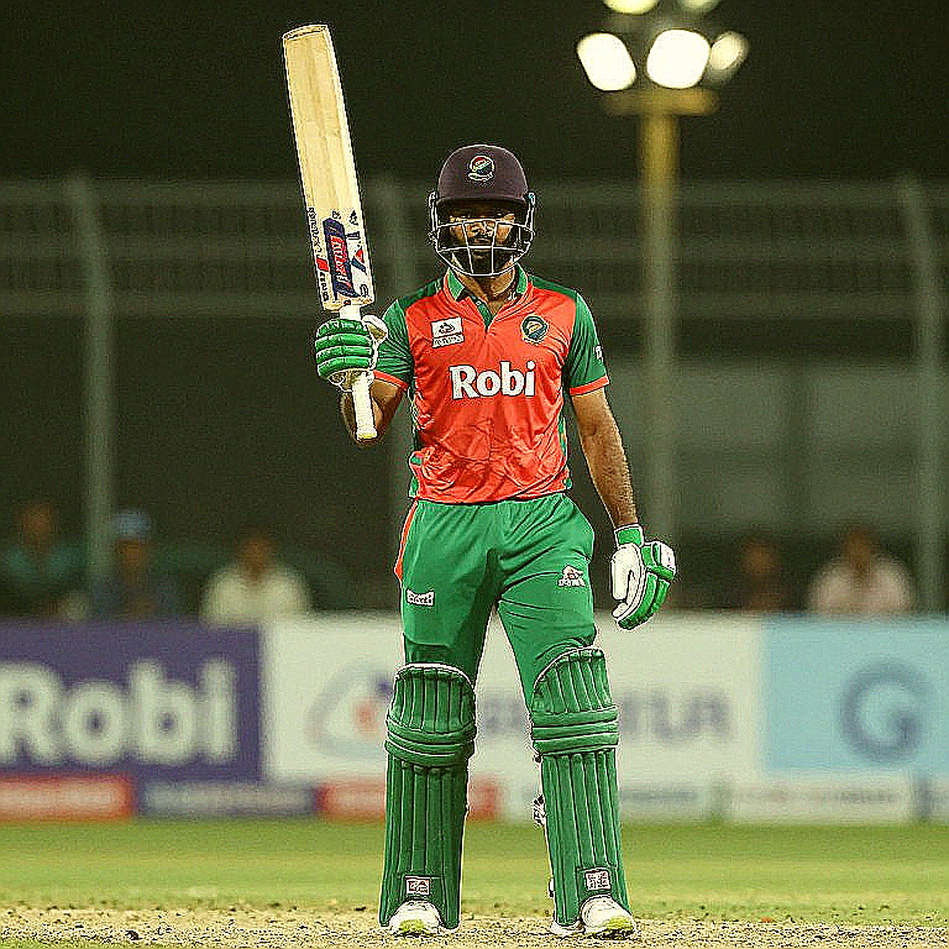
One thing needs stating plainly, because it is the root of the entire dispute. This was not a Test. It was not an international ODI either. It was a List A fixture in Cricket Australia's domestic One-Day Cup — 50 overs, state teams, the regular season. Everything that happened, happened in the language of white-ball cricket: the powerplay, middle-over accumulation, the pressure of the last ten. But the report read it in the language of the red ball — "ready for a Test recall." That is where evidence from one format was converted into a verdict about another, and that conversion is the source of my unease.
That night Konstas made 149 off 131 balls — a strike rate of 113.7. The elite List A benchmark for an opener sits between 95 and 105; 113.7 is top decile. Of those 149 runs, 84 came in boundaries — 15 fours and 4 sixes. That is 56.4 percent of his runs from the rope. The number says two things at once: the batting was skilled, and the batting was high-risk. A boundary dependence above fifty percent means the innings has very little tolerance for dot balls. Batters of that shape, when handed a moving new ball in a Test, tend to play the shot that has made them their runs — and get out to it.
His 149 was 40.2 percent of a team total of 371. One batter carrying forty percent looks spectacular, but it is not a repeatable team model. Josh Philippe made 51, Jack Edwards 45, Lachlan Shaw 44 — all contributed, none converted into a match-defining score. New South Wales reached 371 for eight, a rate of 7.42 an over, which suggests a strong finish in the last ten. But the report offers no phase-by-phase breakdown. I will not fill what is absent with inference — and what is present is not enough to support the claim that this innings evidences some technical transformation.
Now the number that breaks the argument. Konstas made 60 on debut in the Boxing Day Test against India on 26 December 2026. Since then, nine Test innings have passed without him reaching 25. His most recent Test was in July, against West Indies. That figure sits buried in the tenth paragraph, not in the headline. And it is not a form indicator — it is a signal of technical exposure. For an opening batter, a nine-innings block like that means bowlers have found a weakness and he has not yet closed it. A 149 on a flat WACA deck does not refute that question; it walks past it.
This is where an old habit of mine returns — writing a paragraph with every prediction headed "what would have to be true for this to fail." Here that paragraph is short. Failure requires that Konstas cannot reproduce WACA runs on a surface where the new ball moves — and the nine-innings block suggests that is not a remote possibility. The second condition: it requires that his low scores came predominantly from caught-behind or lbw against the moving ball. If so, it is a technical problem and shot selection will not fix it. If his dismissals came from catches at mid-on or deep, it is a decision-making problem and the remedy is entirely different. The report never separates these two. That is its largest omission. I am recording this prediction with a date attached: if Australia selects Konstas for Test duty on the strength of white-ball form alone, that selection risks setting his career back rather than advancing it.
The reason is age, not talent. Konstas is 21. Batters typically peak between 27 and 33. His development window is still six to twelve years wide. The correct path at this age is a full Sheffield Shield season of red-ball runs — not next month's Test series. Dropping a young opener mid-series is harder to rehabilitate than never picking him at all. And I have to register that the report claims "15 months of hard work" without a single piece of technical evidence — no coach quoted, no biomechanical change cited, no footage analysis. That is editorial colour, and it should be read as editorial colour. The claim need not be false; the absence of support is enough.

On opposition quality, one straight point. Both of Konstas's centuries came in the same week, against the same team — Western Australia. That side has played three matches and lost all three, and is effectively out of the title race with three rounds remaining. A team conceding 371 does not have working death plans. Nisbet took 3-47 and Jackson 2-58 — five of Western Australia's ten wickets between two bowlers; the other five are unreported. That data gap is itself information: the full bowling picture is not present. On the other side, Western Australia's batting was top-heavy — Whiteman 116, Agar 43, Turner 41, sixty-eight percent of the total from three batters. That is a side built to collapse.
One line is owed to the pitch. This match produced 664 runs, and the largest innings came at a strike rate of 113.7. That is not a picture of a seaming surface. Post-redevelopment the WACA has generally played flatter than its 1980s reputation. The report's "earlier in the day" phrasing implies a day match, reducing dew risk. But heat, wind, and pitch preparation are absent. What is absent I will not convert into inference. I will only say that 371 and a 113.7 strike rate together materially inflate how readable that innings looks as a Test-selection signal.
And now the thing the report almost skipped. In the same week Konstas made 151 not out in the Sheffield Shield — red ball, longer format, unbeaten. For the Test selection question, that innings was far more relevant than this 149. The report dispatched it in one clause and gave the headline to the white-ball century. That is not a data-driven choice; it is an editorial weighting choice. And part of that weighting is institutional — the report ran on Cricket Australia's own digital platform. That does not make the claim false. It only means it should not be read as independent selection-panel commentary. A young star whose traffic value exceeds his sporting output will naturally produce the "two tons in four days" frame. Traffic value and Test readiness are separate columns, and they cannot be merged.
Australia's opening problem is real. The report itself says the team is still searching for an opener to make his mark ahead of a busy Test schedule. But it never explains why the slot is vacant — whether incumbents failed, were injured, or were rotated. Without that, the strength of Konstas's claim cannot be calibrated. Nor does it say whether Western Australia's attack offered a left-arm angle, historically a documented pressure point for young Australian openers. That is the key missing input.
New South Wales sit second at 3-1, and that record rests on one player's one week. If Konstas goes to the national side, the state loses both its leading scorer and its second-place momentum. The report raises this and never quantifies it. This is where cricket and esports begin speaking the same language — one player's extraordinary form masks a team's structure, and the commentator mistakes the form for the team's strength. The best casters do not call the play; they call the room before it breaks. This room was saying Western Australia had needed more than thirteen an over from roughly the 35th onward. Their defeat did not begin at the run-out. The run-out just gave it a timestamp.
So the question is not whether Konstas is talented. A 149 at 113.7 in List A cricket at 21 is not ordinary by any measure. The question is which question we are treating that innings as the answer to. It answers a white-ball question — aggression, boundary capacity, the patience to build a large innings. It does not answer what a Test opener is asked: leaving the ball outside off, surviving the new-ball movement, batting through a session. None of those appear anywhere in the report's information.

The next time Konstas bats, I will not count his runs. I will count the balls he leaves in the first thirty overs. I will watch where his bat goes when the new ball is seaming. I will look at how he gets out — caught behind, or caught at mid-on. Because the 149 at the WACA may be the biggest innings of his career, or it may be an innings we have simply read too much into. Cricket gave me rhythm; esports gave me a second language for the crowd. Both share one truth — the scoreboard lies. The room never does. And that night the room at the WACA was not saying Australia's opening question had been solved. It was saying that a 21-year-old batter stands two steps from his hardest question, in the easiest week of his life.