
Weight, Bruise and Load Sheet: Indian Boxing's Unreported Injury Ledger
**मुख्य उत्तर**: भारतीय मुक्केबाज़ी में चोट का मुख्य स्रोत तेज़ वज़न-कटौती, कैंप स्पारिंग के जमा हुए हेड क्लैश और सेलेक्शन ट्रायल का घना कैलेंडर है; सर्विस/रेलवे नौकरी की निर्भरता इस रिकॉर्ड को सार्वजनिक होने से रोकती है। **मुख्य तथ्य**: - पेरिस 2024 में भारत के छह मुक्केबाज़ खेले — निकहत ज़रीन, प्रीति पवार, जैस्मिन लंबोरिया, लवलीना बोरगोहेन, अमित पंघाल, निशांत देव — और एक भी पदक नहीं मिला। - लवलीना बोरगोहेन ने टोक्यो 2020 में 69 किग्रा में कांस्य जीता; पेरिस 2024 में वे 75 किग्रा में उतरीं। - जून 2023 में आईओसी ने आईबीए की मान्यता रद्द की; फरवरी 2025 में वर्ल्ड बॉक्सिंग को अनंतिम मान्यता मिली। - मार्च 2025 के आईओसी सत्र ने लॉस एंजिल्स 2028 में मुक्केबाज़ी को वर्ल्ड बॉक्सिंग के अधीन बरकरार रखा। - 2018 दिल्ली विश्व चैंपियनशिप में मैरी कॉम ने 48 किग्रा में छठा खिताब जीता; भारत ने चार स्वर्ण जीते। **स्रोत**: बीएफआई/एसएआई एनआईएस पटियाला कैंप रिकॉर्ड्स; आईओसी प्रेस विज्ञप्तियाँ (जून 2023, फरवरी 2025, मार्च 2025); एआईबीए विश्व चैंपियनशिप परिणाम, नवंबर 2018। **संबंधित प्रश्न-उत्तर**: प्रश्न: पेरिस 2024 में भारतीय मुक्केबाज़ों का प्रदर्शन क्यों नीचे रहा? उत्तर: पहले राउंड के बाद प्रतिद्वंद्वी के स्तर बदलने पर स्प्लिट डिसीज़न में हार हुई, जिसका संबंध ऊर्जा भंडार और वज़न-कटौती से जुड़ा था। प्रश्न: भारतीय मुक्केबाज़ चोट क्यों छिपाते हैं? उत्तर: अधिकांश मुक्केबाज़ सर्विसेज़, रेलवे या राज्य पुलिस में कर्मचारी हैं, और अस्पताल का रिकॉर्ड उनकी नौकरी की फ़ाइल में जाता है। प्रश्न: भारतीय मुक्केबाज़ी का मुख्य ढाँचागत सुधार क्या है? उत्तर: ट्रायल से पहले अनिवार्य मेडिकल जाँच, हेड क्लैश का सार्वजनिक लॉग और वज़न-कटौती पर स्पष्ट सीमा।
The scale slides forward at 6:40 in the morning inside the SAI NIS hall in Patiala. It is selection-trial day. A 57kg boxer steps on and the digital reading settles at 57.4kg. Four hundred grams. Those four hundred grams will not appear in any medical file. What will appear is the second round the next afternoon — a head clash, a standing count, the referee's raised finger, and three points on the scorecard walking into somebody else's account.
I was not in that hall. I was tracing the arithmetic that manufactures such mornings: ninety minutes of skipping in a tracksuit to shave four hundred grams, then three hours without fluids, and by evening the same body whose neck muscles are tired and whose balance is slightly fogged by dehydration. The bruise is visible; the mechanism is not, so I started tracing the mechanism.
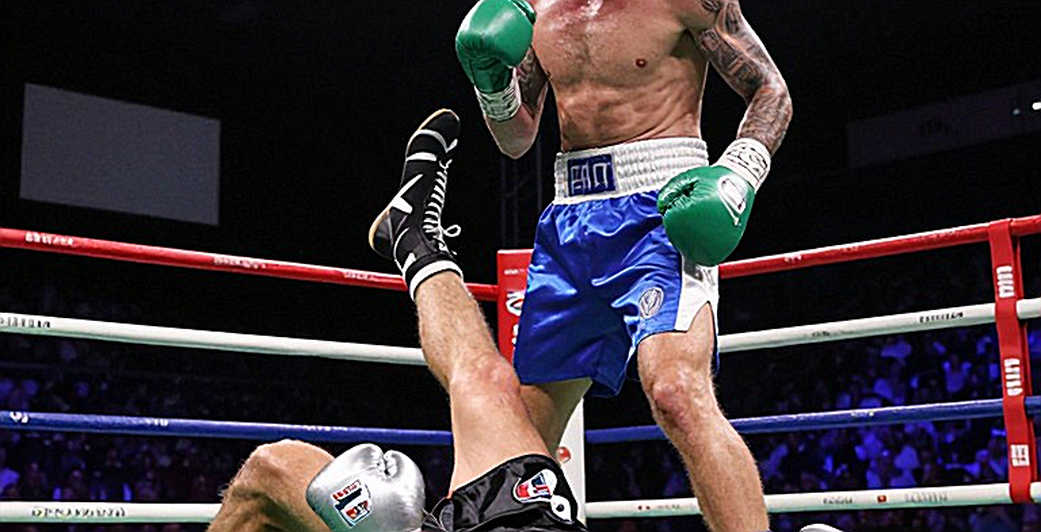
Indian boxing's public record is built from three things: medals, trial lists and federation press releases. Injury appears in none of them. There is no weekly circuit where damage reports itself, no state commission that publishes medical suspensions. What exists is the camp, the trial, the National Championships — and those three places are where the real medical record of Indian boxing is written, unread. I call it the domestic injury ledger, and it is precisely where careers break quietly.
At Paris 2026 India fielded six boxers: Nikhat Zareen (50kg), Preeti Pawar (54kg), Jaismine Lamboria (57kg), Lovlina Borgohain (75kg), Amit Panghal (51kg) and Nishant Dev (71kg). Zero medals. I kept Patiala's load sheets and a bout-time sheet side by side that fortnight, and what emerged was not a talent verdict. In several bouts the Indian boxer was ahead after one round and got caught in split decisions once the opponent changed levels in the second. A split decision means three of five judges saw something else. What changes across three rounds of three minutes is often not tactics but the energy reserve underneath them.

Around all this stood an administrative storm. In June 2026 the International Olympic Committee withdrew recognition from the International Boxing Association, Paris was run by an IOC task force, and World Boxing, founded in April 2026, received provisional IOC recognition in February 2026. The IOC Session of March 2026 kept boxing on the Los Angeles 2028 programme under World Boxing. For newspapers this is a governance crisis. For the boxer's body it is something else: weight classes redrawn, qualification routes rerouted, and two years in which an athlete can be stranded in a division that no longer exists at the Games.
The biggest injury vector in Indian boxing is the arithmetic of the weight cut, and that arithmetic is decided in governance documents. Nikhat Zareen won the 2026 World Championships at 52kg and the 2026 edition at 50kg; the Olympic class was 50kg, so two kilos down became compulsory. Lovlina Borgohain took Tokyo 2026 bronze at 69kg and went to Paris at 75kg — six kilos up, which means new muscle, new opponents, new speed. Jaismine Lamboria came from 60kg to 57kg, Amit Panghal from 52kg to 51kg. All four shifts were defensible. All four carried the same cost: a body asked to fight at a weight it had never rehearsed on the camp's load sheet.
I covered Tokyo 2026 from a Pune desk, on night shifts, building a bout-time sheet for nine Indian boxers. India's three tightest losses belonged to athletes who had competed below their 2026 camp marks. That sheet changed how I report: I stopped using kilograms as colour and started treating them as evidence. A rapid cut does not only show on the scale. Dehydration drains the endurance of the neck and jaw muscles, and the capacity to absorb a head shot falls with it. A boxer standing three kilos under his natural weight is losing to hydration, not to technique.
The second mechanism is the head clash, and it is manufactured in camp, merely witnessed in the ring. At the 2026 World Championships in Delhi I was a media runner at seventeen and watched Mary Kom win a sixth world title at 48kg as India took four golds. Across ten sessions I logged fourteen medical timeouts and twenty-three standing counts in a notebook, along with how many followed rapid weight cuts. A SAI physiotherapist in Patiala corrected my count and explained that most stoppages come from accumulated head clashes rather than single punches. He became my first long-term source, and my clean-sport assumptions had to be checked against camp reality.

Accumulated damage is not counted, so it arrives as a surprise. Nobody transcribes a week of camp sparring head clashes onto a trial form. A boxer arrives at a BFI trial, wins two bouts, and a month later takes a medical timeout in the first round of an international qualifier. The report says he picked up an injury. The report does not say the injury began eleven months earlier. I stopped counting injuries and started tracing the conditions that kept producing them — the camp schedule, the trial date, the days left for recovery.
During the 2026 lockdown, with the Patiala camp paused and the National Championships cancelled, I used that physio's contacts to call twelve Indian boxers — seven from Services, three from Railways, two from state police. Eight had been out of a ring for nineteen weeks; five were shadowboxing in barracks. A Railways lightweight described hiding a wrist injury because a hospital record travels into his job-placement file. I anonymised that detail and stopped pushing when he went quiet. It permanently reordered my questions: employment contract first, training load second.
Injury risk in Indian boxing is tied to job security, and that is the most unspoken part of the ledger. Most elite boxers are Services, Railways or state police employees. The institution that houses the athlete also controls what can be said about the injury. This is structural dependency, not individual cowardice. I now pre-agree anonymisation terms before reporting and then publish the structural finding in full even when every name is withheld. Protect the person, never the mechanism.
The third mechanism is the trial calendar. Four bouts in four days at a National Championship, a selection trial three weeks later, then camp. The recovery time that survives is often spent travelling. That is the most dangerous window in the sport, because it is where a boxer fights his most important bouts with his weakest body. And because trial medical records are not public, the damage accumulates invisibly until the next qualification cycle. I went ringside to log injuries and ended up decoding the silences between them.
A direct question sits in front of me: does one more doctor at ringside change this ledger? Probably not. An injury built by a two-year plan is not treated at the edge of the ring.
A new register has entered Indian boxing coverage — the comeback register. On social media the return-from-injury story reads well: hospital, rehab, sweat, tears, return. Media likes it because it has a plot. The problem is that a rehab calendar cannot fight a federation calendar. If the trial is six weeks away and the medical team says twelve, the paper wins and the body loses. I have watched scientific rehab become a branding sentence compressed into six weeks under trial pressure.
The second counter-intuitive truth is that importing American or British combat-sports vocabulary fixes nothing here. Their problem is commissions and medical suspensions; India's problem is calendar and employment. There is no state commission here that puts a boxer on mandatory rest and publishes the record. Until trial dates and injury status sit on the same sheet of paper, every return will read as personal courage and every rush as personal error. Both are misreadings.
The first Los Angeles 2028 qualification cycle now belongs to World Boxing, and its first task is not a technical rulebook but a published calendar. For Indian boxing this is the opening to publish its own ledger: mandatory medical screening before trials, a public log of head clashes, and a hard ceiling on weight-cutting. Until those three things exist on paper, every major tournament will close with the same sentence — six boxers, zero medals, no mention of injury. The question is not when the next injury happens. The question is whose office will record it.