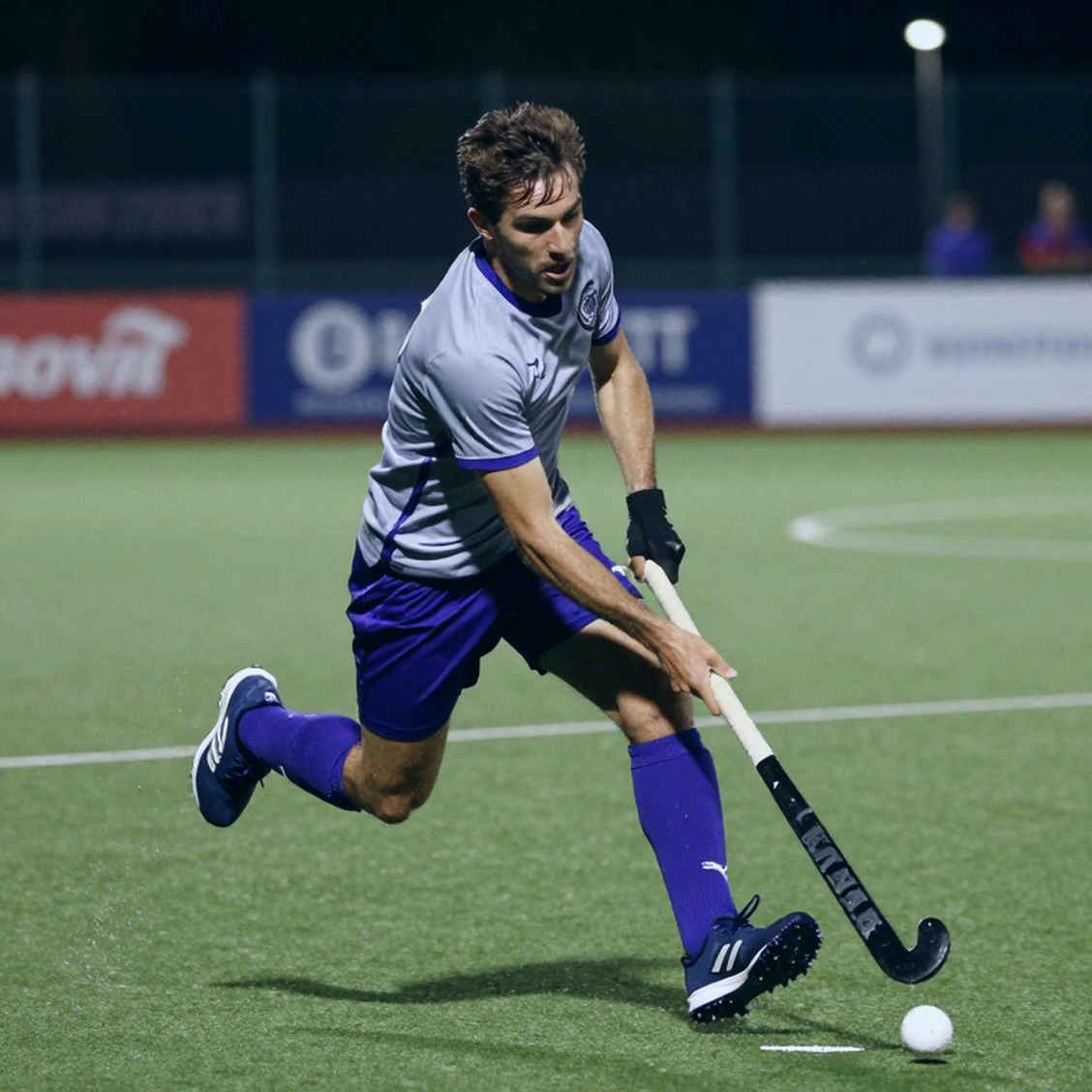
Sultan of Johor Cup 2026 Final: Malaysia Beat Pakistan 4-3 in the Shootout, but This Match Was Decided Between the 25th and 49th Minute
**मुख्य उत्तर**: मलेशिया ने सुल्तान ऑफ जोहोर कप 2026 का फाइनल पेनल्टी शूटआउट में पाकिस्तान के ख़िलाफ़ 4-3 से जीता, जबकि नियमित समय का खेल 2-2 पर बराबर रहा। धीरेश गुणसेलन ने 49वें मिनट में पेनल्टी कॉर्नर से बराबरी की, और शूटआउट में मलेशिया ने पाँच में से चार प्रयास बदले। **मुख्य तथ्य**: - फाइनल तमन दया हॉकी स्टेडियम, जोहोर बारू में खेला गया और नियमित समय 2-2 पर समाप्त हुआ। - वलीद राणा ने 19वें मिनट में पेनल्टी कॉर्नर से पाकिस्तान को 1-0 की बढ़त दिलाई। - मोहम्मद उस्मान ने 21वें मिनट में फील्ड गोल किया; मोहम्मद आदम जोहारी ने 25वें मिनट में कॉर्नर से गोल किया। - नियमित समय के चार गोलों में से तीन पेनल्टी कॉर्नर से आए; खुले खेल से केवल एक गोल हुआ। - शूटआउट में हम्ज़ा फय्याज़ और मोहम्मद अम्माद चूके; मलेशिया ने 4-3 से खिताब जीता। **स्रोत**: सुल्तान ऑफ जोहोर कप 2026 फाइनल की आधिकारिक मैच रिपोर्ट, तमन दया हॉकी स्टेडियम, जोहोर बारू (2026 सत्र)। **संबंधित प्रश्न-उत्तर**: प्रश्न: फाइनल का निर्णय शूटआउट में कैसे पहुँचा? उत्तर: 49वें मिनट में धीरेश गुणसेलन के पेनल्टी कॉर्नर गोल ने स्कोर 2-2 किया और नियमित समय में कोई निर्णय नहीं निकला। प्रश्न: पाकिस्तान 2-0 की बढ़त के बाद क्यों नहीं रुक सका? उत्तर: 25वें से 49वें मिनट के बीच पाकिस्तान गेंद पर नियंत्रण नहीं रख सका, जिससे मलेशिया को लगातार सर्कल एंट्री और पेनल्टी कॉर्नर मिले। प्रश्न: इस फाइनल का सबसे बड़ा टैक्टिकल संकेत क्या है? उत्तर: चार में से तीन गोल सेट-पीस से आना दिखाता है कि दोनों टीमों का खुला खेल कमज़ोर था और नतीजा पेनल्टी कॉर्नर की दक्षता पर टिका था।
Taman Daya Hockey Stadium, Johor Bahru. The 49th minute of the final. Malaysia win a penalty corner and Dheeressh Gunaseelan puts it away. The scoreboard reads 2-2. Twenty-four minutes earlier, in the 25th minute, Mohammad Adam Johari had also converted a penalty corner to make it 2-1. In the twenty-four minutes between those two set-piece goals, nothing was scored. For me, those twenty-four minutes are the real story of this final, not the shootout that followed.
What happened in the shootout is plainly on the scoresheet: Malaysia 4, Pakistan 3. Adam Johari converted the first attempt, Hamza Fayyaz missed Pakistan's opener. Both sides converted their next two, so Malaysia's one-goal cushion held. In round four Waleed Rana made it 3-3, but in round five Muhammad Ammad faltered after Aferullsyah had scored, and the hosts took the title 4-3.
I watched this match on a screen; I was not sitting in the stands in Johor Bahru. It is worth saying that up front, because whatever analysis I write about this final is built from television frames, the timestamps in the official match report, and the conversations of fan groups who watched it and said their piece. The things the screen did not show — dugout body language, the coach's voice, who was shouting what at a penalty corner — I will not fill in with guesswork. I will write what I saw, and leave what I did not see as a question.
First, what this tournament actually is. The Sultan of Johor Cup has been an under-21 invitational event since 2026, staged in Malaysia's Johor state at the Taman Daya Hockey Stadium. Asia's leading junior sides have played in it. Which means this is not a senior tournament: the players here are at the stage of a career where one tournament's experience can set the direction of the next four years.
Junior hockey's biggest problem is the calendar, not the talent. How many competitive matches does an under-21 player get in a year? A handful. So when a team arrives in Johor Bahru, it is not only playing for a trophy — it is playing in one of the few windows where its game management is actually examined. And game management is precisely what this final turned on.
A short glossary for anyone scared off by the vocabulary, because hockey's jargon is the first thing that pushes a new viewer away. Penalty corner: a set-piece taken from outside the D, where one player pushes the ball out, one stops it, and one — usually a drag-flicker — strikes it. Field goal: a goal from open play. Shootout: five attempts per side, eight seconds each, starting from the 23-metre line — hockey's loneliest skill. Circle entry: the act of carrying the ball into the shooting D; more entries mean more corners and more goal chances.
The first quarter produced no goals, and that detail is a signal in itself. Both teams started carefully, which is normal in a junior final, because the pressure of trailing by a goal builds fast at this age. The real movement began in the 19th minute, when Waleed Rana converted a penalty corner to put Pakistan ahead. Two minutes later Muhammad Usman scored a superb field goal and it was 2-0. Then, in the 25th minute, Adam Johari pulled one back from a corner. Three of the four goals in regulation arrived inside the first 25 minutes, and after that the scoreboard froze for twenty-eight minutes.
One number here is worth pausing on: three of the four goals in regulation came from penalty corners. Rana's in the 19th, Adam Johari's in the 25th, Gunaseelan's in the 49th — all set-pieces. Open play produced exactly one goal in sixty minutes, and it was Usman's. One goal from open play in sixty minutes — that is the most honest statistic of this final. That does not mean both teams were poor; it means both teams' reliable route to chances was the set-piece, and everything else orbited around it.
Usman's goal matters because it is the only evidence that Pakistan could break a circle in open play too. But one goal is not a pattern. When a side is 2-0 up and both goals have arrived by different routes, the question is what the plan ahead rested on — open play or corners. Adam Johari's corner goal in the 25th minute partly answered it: Malaysia had found their route, and that route also ran through the set-piece.
At half-time it was 2-1. That is the moment where the real match begins. From the 25th minute to the 49th, twenty-four minutes, Pakistan led by a goal and Malaysia had to chase. What usually happens on the pitch in that situation resolves into two things: the team in front drops deeper, and the team behind grows its share of possession.
Dropping deeper has one direct consequence in hockey — you spend more time near your own circle. And spending more time near your own circle has one direct consequence: more penalty corners. This is not a secret, it is the arithmetic of the sport. A side that is a goal up but cannot hold the ball keeps depositing corners in its own defensive circle — and depositing corners, in the end, means conceding goals. Gunaseelan's corner goal in the 49th minute was the output of that arithmetic.
It is worth saying that this was not one player's error. When you spend twenty-four minutes absorbing the ball in your own half, no single defender, no single goalkeeper can be right every time. Pakistan's problem was not that they conceded a corner in the 49th minute; it was that between the 25th and the 49th they never found a way to keep the ball. When you are ahead and the ball is not yours, time works against you — the scoreboard is with you, but the game is against you.
Look at it from Malaysia's side and those twenty-four minutes are evidence of patience. A home team, a goal down, after half-time — and they did not rush. They stacked corners, kept entering the circle, and equalised in the 49th. That is not easy in junior hockey, because young teams chasing a game often fall into the trap of long passes and solo dribbles.
Now the shootout. It is a different game and should be treated as one. Five attempts, eight seconds, and a goalkeeper waiting for every step you take. What matters here is not a team's structure but a player's head. Malaysia converted four of five, Pakistan three of five. The difference was one goal, and that one goal belongs to Hamza Fayyaz, who missed the first attempt.
The pressure of missing the first attempt in a shootout does not show up in the numbers. You are chasing in every round — the second, the third, the fourth. Pakistan made it 3-3 through Waleed Rana in round four, so they did not fold; then Muhammad Ammad missed in round five, where a miss meant defeat outright. That is nobody's weakness, it is the mathematics of the shootout: miss one of five and you must convert the other four, provided the other side blinks too.
Where home crowds bite is something I understood in 2026, when the FIH Pro League was played behind closed doors. In that stretch I watched a state squad's matches alongside GPS load data and wrote that communication changes in an empty stadium — penalty-corner calls, the goalkeeper's voice, the pressing that gets triggered by crowd noise. In Johor Bahru that noise existed, and it was with the hosts. It is not the whole reason for this result, but it is certainly part of Malaysia's patience across those twenty-four minutes.
From the Stands: after this match I read conversations in three places — two Malaysian fan pages, one Pakistani hockey forum, and one Urdu page. The sample is small and I will not inflate it; the voices I did not reach are not in this analysis. What was repeated most was: "Why did we lose the first shootout attempt?" and "Why concede a corner in the 49th?" Both questions are fair, and both lead to the same place — the mistakes made between the 25th and 49th minutes, which were built over twenty-four minutes, not in a single moment.
Now the part where I disagree with the common story. The easiest report after this match is: "Pakistan surrendered a 2-0 lead and lost the shootout." True, but that is not analysis, that is reading a scoreboard. A side that is two goals up and cannot protect its shape for the next twenty-four minutes has a game-management problem, not a luck problem — and that is the most common, least written-about problem in junior hockey.
The second thing I will not do is use this result to pronounce on the future of Pakistani hockey. This is an under-21 final. Pakistan's senior record is a separate subject — a last Olympic gold from Los Angeles 2026 and a last World Cup from Sydney 2026 — and if I attach those dates here, I must also write alongside them that astroturf after 2026 changed the body of the game, that the domestic league collapsed, and that the junior calendar thinned out. The comparison is available, but it is only fair when the conditions are written down with it. One junior final defeat does not make a comparison with 2026 or 2026.
For Malaysia this win is interesting for another reason: winning a final at home is the product of a junior structure that includes hosting the tournament. The advantage of being hosts is not only the crowd; it is that your under-21 side plays at this level every year. That is the calendar argument — the audience never left, the fixture list gave way. Where the list is strong, teams can hold their nerve into the 49th minute of a final.
What to watch next. First, Malaysia's next junior series — is this shootout win a pattern or an evening? Second, in Pakistan's next outing, watch how the lesson of the 25th to 49th minutes is applied: do they bring a different plan for holding the ball when ahead, or repeat the same defensive drop? Third, the penalty-corner count — if three of four goals in a match are coming from set-pieces, that tournament is weak in open play, however exciting the scoreline looks.
I have one question ready for the press conference, and I will ask it not as a personal attack on a coach but as a timestamp: "Between the 25th and 49th minutes, how many penalty corners did your team concede, and how many of those came from sustained defensive pressure?" Whatever the answer, it leads to the real lesson of this final — and that lesson is hidden not in the shootout, but in the twenty-four minutes before it.