
A Ninety-Minute Armband, A Months-Long Question: Mito HollyHock and the Duty of an Academy
**मुख्य उत्तर:** मितो होलीहॉक की जूनियर यूथ और यूथ श्रेणी के खिलाड़ी रित्सुकी तोमिता की मौत 20 अक्टूबर को बीमारी के इलाज के दौरान हुई। क्लब ने 30 अक्टूबर को घोषणा की और 31 अक्टूबर के मुकाबले से पहले मौन तथा शोक-आर्मबैंड की प्रक्रिया बताई। **मुख्य तथ्य:** - मौत 20 अक्टूबर, सार्वजनिक घोषणा 30 अक्टूबर — दस दिन का अंतराल। - रित्सुकी तोमिता क्लब की जूनियर यूथ और यूथ श्रेणियों में दर्ज थे; पेशेवर अनुबंध या पंजीकरण-श्रेणी नहीं बताई गई। - शोक-प्रक्रिया: 31 अक्टूबर के मैच से पहले मौन; टॉप-टीम खिलाड़ी, स्टाफ और सभी क्लब कर्मचारी आर्मबैंड पहनेंगे। - विज्ञप्ति में अकादमी के साथी खिलाड़ियों के लिए परामर्श या सहायता का कोई उल्लेख नहीं। - रिपोर्ट में क्लब को "जे1 क्लब" और मैच को "जे1 लीग का 13वाँ राउंड" कहा गया; दोनों पदनाम सत्यापन योग्य नहीं। **स्रोत:** मितो होलीहॉक की आधिकारिक क्लब विज्ञप्ति, 30 अक्टूबर; फुटबॉल विशेषज्ञ मीडिया रिपोर्ट। **संबंधित प्रश्न-उत्तर:** प्रश्न: मौत और घोषणा के बीच दस दिन की देरी किसी नियम का उल्लंघन है? उत्तर: नहीं — युवा खिलाड़ी की मौत की तत्काल घोषणा का कोई नियम नहीं है, और देरी परिवार-प्राथमिकता वाली मानक प्रक्रिया के अनुरूप है। प्रश्न: क्या क्लब को खिलाड़ी की पंजीकरण-श्रेणी बतानी चाहिए थी? उत्तर: श्रेणी ही तय करती है कि बीमा और चिकित्सा-जाँच का कौन-सा ढाँचा लागू होगा, इसलिए इसका अनुपस्थित रहना सूचना की एक महत्वपूर्ण कमी है। प्रश्न: इस घटना का सबसे बड़ा खुला सवाल क्या है? उत्तर: अकादमी के बचे हुए खिलाड़ियों और स्टाफ के लिए मानसिक स्वास्थ्य सहायता की कोई सार्वजनिक घोषणा न होना — क्योंकि किशोरावस्था का शोक अक्सर हफ़्तों बाद सतह पर आता है।
The two paragraphs sat on Mito HollyHock's website on the morning of October 30, and I read them three times. The first time because the news was grim: Ritsuki Tomita, a player in the club's junior-youth and youth categories, had died on October 20 while receiving treatment for an illness. The second time because the ten-day gap stung — death on the 20th, public notice on the 30th. The third time because I was looking for the list of people the club had committed to do something for, and the list looked incomplete.
The statement said there would be a moment of silence before the October 31 fixture, and that top-team players, staff and all club staff would wear mourning armbands. Three categories. The boys of the academy where he turned up every morning were not on that list — no mention of counselling for them, no mention of any adjustment to training, no mention of whether they were part of the farewell to their own teammate.
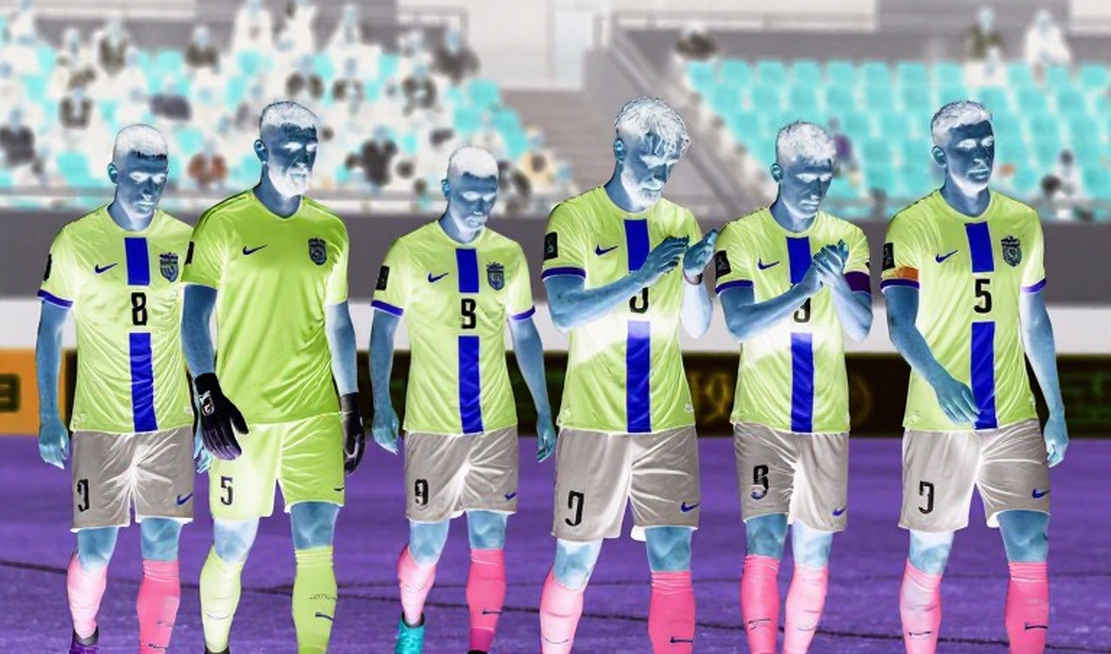
There is nothing sensational here. What was left unwritten is the heaviest part of the story.
Mito HollyHock is an Ibaraki club, and my working record has it among the sides that have never reached J1 — a quarter-century in J2, stable, small-market, academy-centred. The report I am working from calls it a "J1 club." I am stopping that claim here, for three reasons. My own record and the printed piece do not agree. I have not seen a fixture list document, so my own record is unverified too. And most importantly, in a report about the death of a youth player, the league tier should be the least consequential fact in the piece — but if it is printed wrong, it will be copied into every subsequent report. A document people will rely on later cannot contain a fact I could not check myself.
What can be said about the academy is this: Tomita was registered in the club's junior-youth and youth categories. Japanese academy structures generally run in age bands — roughly twelve to fifteen, and fifteen to eighteen — feeding the top team. This is not the terrain of professional contracts; it is the years-long handover zone where boys still go to school and do homework after training. The statement mentions no professional contract, no wage, no registration category. That absence is itself information, and I will not convert it into speculation. Where the source is silent, the correct output is silence.
The second inconsistency is the date. A "J1 League 13th round" on October 31 does not sit on a standard February–December calendar, where round 13 usually falls in May. There are three possible reconciliations and I hold all of them at low confidence: the competition was mislabelled in coverage (a cup tie, or a J2 fixture); or the fixture belongs to a season with a shifted calendar — which is where the J.League's announced move to an autumn–spring calendar from 2026-27 becomes relevant, under which an October round 13 is entirely normal. I offer that as a hypothesis, not a conclusion. But there is a practical warning for readers: do not cite the competition designation printed in this report downstream.
The opponents are Sanfrecce Hiroshima — a J1 club, a big name by any measure, and the kind of visitor that lifts attendance and broadcast visibility at a smaller club's ground. The implication is plain: the memorial on October 31 will reach further than an ordinary league fixture would. What the club did was not merely issue a statement; it used the crowd and the cameras to make its mourning public. That is not an accident of the calendar. It is a decision.
About my own vantage I should be clear. I have never stood in Mito's ground. My Mito is a late-night stream, a highlights package, and a club press release opened at odd hours on a laptop in London. What I did not see, I will not say I saw. But covering Indian football from a UK time zone has taught me three questions I now put to every institutional statement: who paid for it, who was billed, and who was never consulted. Those questions are as valid for an academy in Ibaraki as for a franchise in West Bengal. Asking for receipts does not require a passport.
Now the part that is genuinely analysable — and it is not football's, it is the institution's.
The club's statement does four things in sequence. It states the fact and the dates. It places the player inside the club's own pathway — "while wearing the club emblem on his chest." It issues a direct condolence in the club's own voice. And it converts sentiment into a scheduled, verifiable action: October 31, a silence, an armband. In communications this is called a template, and it is a good one. Reading it took me back to being twenty-two, when after the FIFA suspension the silence outside the stadium and the displaced hope inside it were being reported at the same time. Suspension is not a pause; it is a held breath with a deadline. Here too there was a date — October 31 — and the club tied its grief to it.
The most intelligent line is the one easiest to cut: the club emblem on his chest. In a death notice, that sentence locates the player's identity inside the club's pathway and turns an individual tragedy into an institutional obligation. The choice of language matters, because a club that remembers someone as "a boy of our pathway" has a harder time dodging the daily responsibility of that pathway. It is not a paper promise; it is grammatical pressure. And policy sometimes emerges from exactly that pressure.
The discipline of scope is worth noting too. The protocol applies to top-team players, staff and all club staff. Academy coaches, physios, kitchen staff, the man on the ticket counter — all included. Read that as institutional architecture, not a team decision. Since its launch in 2026 the J.League has framed clubs as community institutions on a hundred-year horizon, rooted in local society. That framing leaves less room to treat the academy as a separate, lower-status community. In its statement, Mito did exactly that.
But the disclosed protocol is incomplete in one direction, and this is the most consequential finding in the file. The extension runs outward, not downward. Top team, staff, the whole club apparatus — and no mention of the academy boys who trained on the same pitch, beside the same dressing room, with the same teammate, every day. I will not read that as proof of absence. A public statement only reaches as far as the club chooses, and internal support is often invisible from outside. But the silence is the largest open question in this story, and it should be left open.
One more thing needs to be understood, and it comes from the ledger. An academy player is not an asset on a balance sheet; he is a cost centre. No transfer value, no amortisation, no sale line. Academy spending flows through operating costs and youth-development budgets. So in accounting language the impact of this death is close to zero, and in institutional language it is very large. That divergence is the analytical point. The market cannot price a welfare failure; it absorbs it as reputational and regulatory risk, and the people inside the club absorb it as grief.

There is a concrete point for further verification, and here I have to say plainly that I do not have the document. In Japan, a player's registration category — professional contract, semi-professional, or youth/amateur — determines which framework governs insurance, medical screening and contractual rights. The statement does not disclose Tomita's category. So which regime applies cannot be determined from outside. That is a line on a verification list, not a basis for inference. Anyone estimating an insurance claim is firing into the dark on purpose.
I return to the ten-day gap, because it is being misread. In an industry that monetises immediacy, waiting was the hard thing, and the club waited. Death on October 20, notice on October 30 — the interval likely went to family consent, funeral arrangements, reaching relatives. That is standard Japanese club practice. No rule requires instant disclosure of a youth player's death, and no compliance problem arises from the delay. Those who call it concealment may be forgetting that nothing was hidden here; only the sequence was rearranged. Family first, news after.
And now the most misread part of the story: what happens on the pitch. The October 31 fixture against Hiroshima will be an ordinary league match in sporting terms, but the biggest decision that day is not tactical — it is selection and minutes. If boys who grew up alongside him in the academy have reached the top-team squad, whether they play will be the coach's most sensitive call. Emotional load and focus will be affected; the direction cannot be known, and I will not join a speculation that nobody can prove either way. What I will say is that grief does not distribute evenly across a squad. It concentrates in the cohort closest to the deceased — academy peers and recent graduates — not among senior professionals who may barely have known him.
Adolescent grief arrives on a delay. That is why the managerial exposure sits not in the dressing room but in the academy's daily environment, and it will not be visible for weeks. Here an old habit of mine applies. I collect the minutes no one applauds, because they carry the match. Academy support is exactly that kind of minute: no camera on it, no glow from a statement, and the whole thing resting on it.
In 2026, at the Jawaharlal Nehru Stadium in Delhi, I was eighteen and had flown in on my own money with a fan-site blogger's pass. Twice a steward asked me to move because he assumed I was a volunteer. On October 9, forty-five thousand people watched India lose 2-1 to Colombia. Jeakson Singh headed in from a corner — India's first goal at any FIFA finals — and the stadium produced a sound I had never heard. The 82nd minute arrived before I knew what to ask it. Colombia scored again in the 87th. I filed three hundred words on the goal; my editor asked why I hadn't written the noise. I started a notebook of crowd sounds after that — the Salt Lake roar, the drums on the Maidan, the silence after a miss — and stopped opening match reports with the scoreline. In 2026, when the entire ISL was played behind closed doors in Goa, that notebook earned its keep. In the closed-door season, I heard the game breathing through empty seats; in the Fatorda final the loudest sound on the feed was a coach shouting a nickname. Here, in Mito, there is no noise to transcribe. Here the question is what remains after the noise.
And now the part that belongs to the publisher, not the club. On the same page reporting the death of a seventeen- or eighteen-year-old, a commercial promotional note was placed inside the article body — something about watching the German Bundesliga free on ABEMA. It can be called a technical glitch: template, automated module, ad slot. The effect is the same. A sales message beside a bereavement notice is not a rule breach; it is a failure of editorial judgment, and it is measurable. A press pass is a borrowed heartbeat, returned at the final whistle — and on the page where we return it, that heartbeat should be worth at least four lines of advertising.
A structural asymmetry should be registered here, because it will shape every subsequent check. The club's outward response is visible; its inward response is not. The statement, the silence, the armband, the bigger club's visit — all public and verifiable. Counselling, lighter training, training for academy coaches, meetings with parents — none of it public. For anyone monitoring risk, this is the trap: mistaking what is visible for what is complete. What the club showed was good. The question is what it did not show.
One further layer makes this local and durable. Japanese youth football runs on two tracks — club academies and school football, whose national tournament is a culture in itself. Parents choose between them, and the choice rests not only on coaching quality but on the belief that their child is in safe hands. For a club whose identity is built on its academy — a producing club rather than a buying club — that parental trust is the real capital. Mito is that kind of club. Which is why the damage here is local rather than national, and why local is not the same as minor: local damage outlasts the news cycle.
From this an industry question forms, and it is the durable value of the story: what obligations of medical surveillance, insurance and mental-health support attach to a registered J.League academy player, and do they change with registration category? The report does not answer this. It makes the question legible, and sometimes making a question legible is the whole contribution.
Now the thing that bothers me most, and that gets dropped easily. We say of stories like this that it is a tragedy beyond football. The sentence sounds warm, human, sympathetic — which is exactly why it is dangerous. The boy was inside football. He was inside the academy, inside the club's emblem, inside the very structure whose costs the club bears and whose care it owes. By calling it "beyond football" we hand the institution the one place from which it can escape. This was not an external accident that fell into a club's yard; it happened inside the yard. When we draw the boundary, we quietly draw the boundary of accountability with it.
The second thing runs the other way: the calendars of commemoration and care do not align. An armband lasts ninety minutes; care lasts months. A silence, a flower, a minute of applause are cheap and effective, and football is world-class at them. The hard thing is returning to the academy the following week, walking past a locker that is now empty, and talking to boys who have not yet worked out what happened. Adolescent grief tends to surface weeks later. Our sympathy cycle peaks on the day of the ceremony and thins within a fortnight — precisely when the boys need it most. That misalignment between two calendars is the real contradiction in this story.
The third inversion, and the one that came fastest on reading: here speed was wrong and slowness was right. What was slow — ten days of silence — was right, because it put the family first. What was fast — an automatically loading advertising module — was wrong, because it put a sale beside a death notice. Our industry assumes speed is a virtue. In this case speed was indecent and slowness was dignified. We should stop measuring them on the same scale.
What to watch is not the rest of the season but the next four to eight weeks. Does the club itself disclose counselling or support for the academy cohort? Do the J.League or the JFA issue any guidance on medical surveillance and mental health for youth players? On the day, are the academy boys included in the commemoration, or left standing outside as spectators? Those three small questions form the space of one large one: does this remain a tragedy, or become an institutional turning point after which academy care gets measured?
And a small request to the reader. Before citing the league tier and competition designation printed in this report, open a fixture list once. A boy's memory should not rest on a wrong label. Accuracy is the least glamorous thing here and the most necessary.
The armband will come off in the tunnel. The silence will end, the scoreline will form, and on Monday morning the academy corridor will look exactly as it did before October 31. The real question belongs to that corridor, and it is not a ninety-minute question but a months-long one — will there be someone standing in it that morning who has been told how to live with a loss like this?