
Barcelona's First Defeat Is a Calendar Story, Not a Flick Soundbite
**मुख्य उत्तर**: बार्सिलोना की ला लीगा में पहली हार के बाद हांसी फ्लिक ने टीम की फ्रेशनेस की कमी को मुख्य कारण बताया और जिम्मेदारी ली। असली संकेत नतीजा नहीं, क्लासिको के तुरंत बाद पेरिस की यूरोपीय यात्रा है — यानी हाई-इंटेंसिटी प्रेसिंग सिस्टम पर फिक्स्चर कन्जेशन का दबाव। **मुख्य तथ्य**: - हांसी फ्लिक: "आज हम फ्रेश नहीं थे"; पहला हाफ खराब रहा, 1-1 की बराबरी के बाद सुधार हुआ। - बार्सिलोना ने ला लीगा में लगातार नौ मैच जीते थे; क्लासिको में सीजन की पहली लीग हार मिली। - फ्लिक ने कहा कि रियल मैड्रिड ने बिना गेंद के बेहतर काम किया और जगह नहीं दी। - टीम क्लासिको के बाद होटल में रुकी और सोमवार को पेरिस रवाना हुई। - फ्लिक ने कहा: "मैं बहाने स्वीकार नहीं करता" और हार के बाद अंदरूनी स्थितियों पर चर्चा से इनकार किया। **स्रोत**: क्लासिको के बाद हांसी फ्लिक की प्रेस कॉन्फ्रेंस पर आधारित मीडिया रिपोर्ट, ला लीगा सीजन का पहला क्लासिको; सटीक प्रकाशन तिथि स्रोत रिपोर्ट में उपलब्ध नहीं। **संबंधित प्रश्न-उत्तर**: प्रश्न: बार्सिलोना की हार का कारण टैक्टिक्स था या थकान? उत्तर: फ्लिक ने थकान बताया, पर उपलब्ध कवरेज में xG या PPDA जैसे प्रोसेस आंकड़े नहीं हैं, इसलिए टैक्टिकल निष्कर्ष अधूरा है। प्रश्न: अगला निर्णायक संकेत क्या है? उत्तर: पेरिस में यूरोपीय मुकाबले की शुरुआती लाइनअप, क्योंकि रोटेशन की मात्रा बताएगी कि थकान संरचनात्मक है या एकमुश्त। प्रश्न: क्या नौ जीत के बाद एक हार संकट है? उत्तर: दस लीग मैचों के नमूने में एक हार संकट नहीं है; अगला नतीजा खराब होने पर ही कथा "झटके" से "गिरावट" में बदलेगी।
Barcelona's First Defeat Is a Calendar Story, Not a Flick Soundbite
On Monday morning the Barcelona squad checks out of the hotel and catches a flight to Paris. The night after the Clásico was spent in a hotel; the next fixture is in Europe. Hansi Flick sat in front of the microphone afterwards and his first substantive sentence was not about the scoreline but about the body: "I can see that today we were not fresh... it is something we must change."
Most desks read that sentence and landed on one conclusion — the first league defeat of the season, the first jolt after nine straight wins, so is Barcelona in crisis? I want to set that question aside and stop at that Monday flight. The story of the defeat will be stale in three days. That calendar will still be standing there in four months.
Flick worked hard to avoid the politics of excuses — "I take responsibility", "I don't accept excuses", "we had won nine games in a row and that also has to be taken into account." It is the balanced statement of an experienced coach, and inside that balance sits the biggest clue: a coach working this hard to avoid excuse-politics has just named his own most serious physical problem.
Context: what was said, and what was not
Barcelona had opened the LaLiga season with nine consecutive wins. On the tenth matchday they lost away to Real Madrid — the first league defeat of the season, and in a Clásico. Flick's own account is plain: the first half was not good, the team improved after the 1-1 equaliser, and in the end a bit of luck was missing.
What he said about the opponent departed from the standard Clásico line. Real Madrid, in his words, are "a rival of enormous quality" who "worked without the ball much better than perhaps in other Clásicos" and "did not concede too many spaces to us". That is not decoration. It is a coach admitting his team had the ball but no route.
The rest of the message was disciplined. Flick said he would not discuss the internal "situations" of the squad after a defeat because "I prefer to do it when we win, because otherwise it seems we are looking for excuses." That sentence does not come from a man speaking under pressure. It comes from a man who knows he has something to say and is not going to say it yet.
And almost everything the media produced was built on that press conference. No xG, no PPDA, no distance covered, no pressing intensity. There was one coach's adjective, and the adjective became the headline. One photo caption even referenced the Paris fixture, letting readers assume two different matches were one continuous slump. I spent fifteen years on the desk, so this is not new to me — it just keeps feeling wrong.
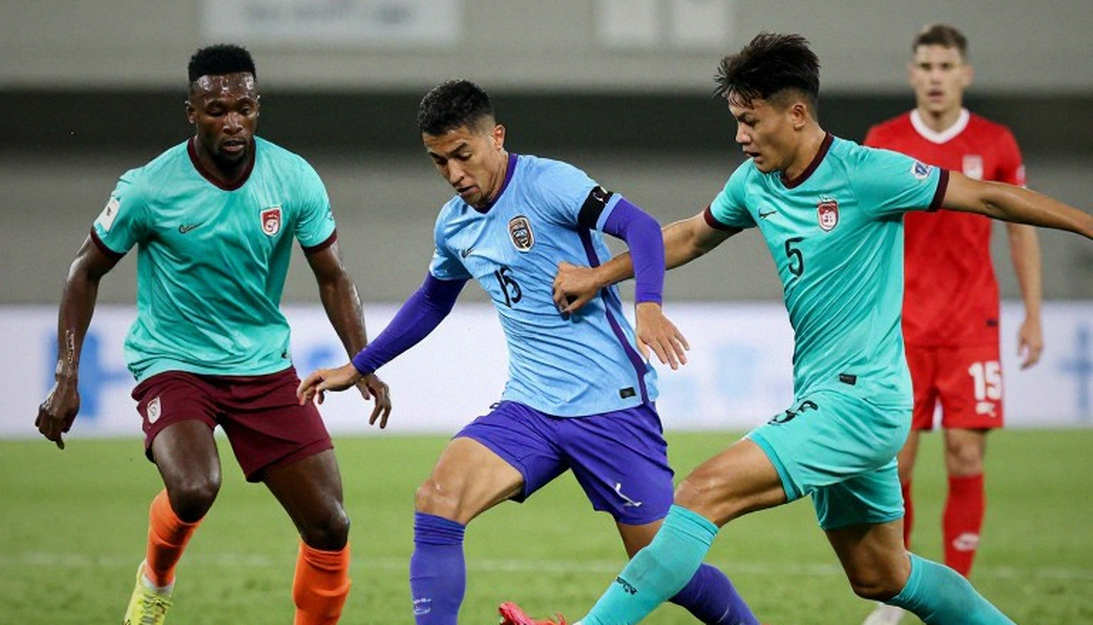
Core analysis: pressing is a loan
Pressing is not a strategy, it is a loan — and its interest is freshness. Flick's model runs on a high defensive line and collective counter-pressing the instant the ball is lost. Three things must move together: the speed to cover the space behind the line, the legs to chase the second ball as one, and the sharpness to decide. Let any one of them slow down and the whole structure slides five metres forward. Space that was closed yesterday is open today. What Flick called not being fresh is another name for that slide. He did not call his plan wrong; he called its fuel low.
Look at it from the other side. In the same press conference Flick said the team improved after the equaliser. That is the most important sentence and the least quoted. Barcelona controlled the game only once the scoreline changed — meaning the system was waiting for the opponent to open up. A team that cannot create space with the ball for eighty minutes and suddenly can at 1-1 has a problem that is structural, not only physical. Fatigue arrived from above; the space-denying block closed in from inside.
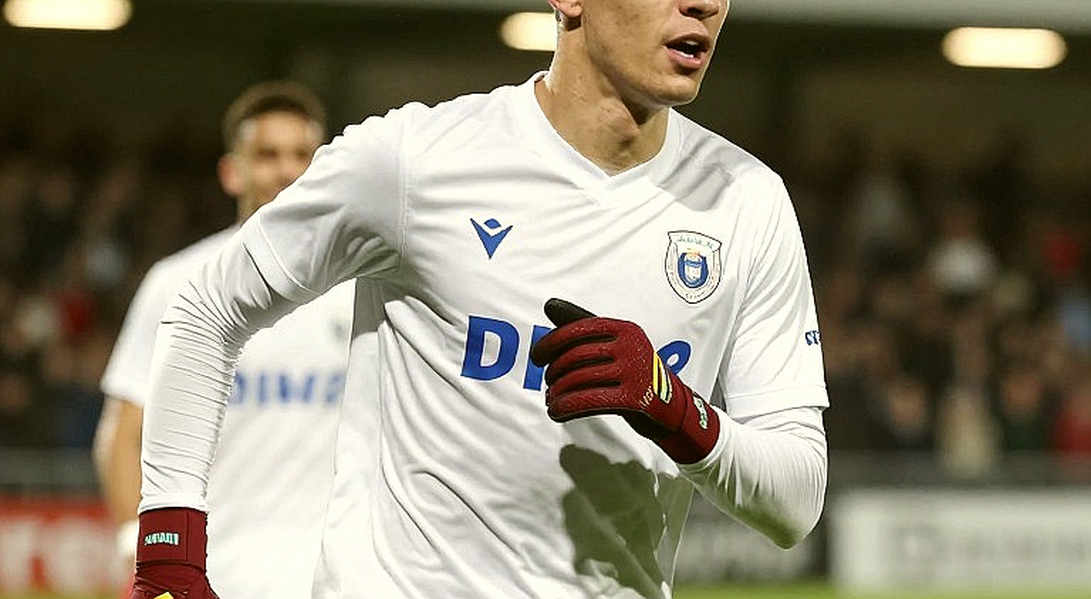
Nine straight wins are not proof of control; they are proof of finishing. A ten-match sample is small enough that one defeat was statistically expected regardless of opponent. Those reading nine wins as "form" were not looking at how many minutes the starting eleven had played across them. The greatest danger of a winning run is that it hides the need to rotate — nobody changes a winning team. By the time the change is forced, fatigue has already become a result.
The real tactical news from this match is not Barcelona but Real Madrid's work without the ball. Flick said the opponent did better without the ball than in previous Clásicos and gave away no space. A coach does not praise his greatest rival like that casually; he does it when he has accepted that part of the defeat belongs to the other side's quality. It is the kind of progress a scoreline never shows — compactness, distance between lines, the habit of keeping discipline without possession. If it is not a one-off, it is a bigger story for the rest of LaLiga than the Clásico result.
On the numbers, the gap is obvious. The coverage gave us an adjective where it owed us a metric. How many pressures before a defensive action, how often the ball went in behind the line, how long the team sustained one intensity — none of it is available. And when there is no metric, interpretation is built from the coach's mood. Here I repeat an old line: I left the editor's chair because transcribing a press conference was being called journalism. The podcast I started in 2026 from an Andheri bedroom on a ₹6,000 microphone existed for exactly this reason — to make a claim and defend it for twelve minutes instead of filing a quote. That second half was missing from this Clásico coverage.
On rotation and the bench, a structural truth applies here too. Big clubs no longer build depth; they buy it. Their bench becomes a shopping list rather than a pipeline — players finished in smaller systems arrive at big houses as satellite assets and are called "options". By matchday ten, when the body starts answering back, it turns out the names on the bench have experience but not readiness. That is the accounting of this season, not the score of this Clásico.
One note on goalkeepers, because a high line changes that position most. When a team's line sits near the halfway line, its keeper is no longer a keeper but an extra defender — standing forty metres out, receiving the ball, his long kick the first pass of the system. The market pays heavily for those kicks. My standing complaint is that when basic shot-stopping declines, that price does not. In a match like the Clásico, where long balls keep coming to break a block, the difference shows inside the game — though no keeper's performance was measured in this report, so treat it as principle, not finding.
Now the part that connects this story to India, and I connect it through the calendar rather than by force. In August 2026 I received the Press Council of India national award for my reporting on Goa — the headline was "6 games in 10 days": for the third year running, Goa's fixture schedule had been rearranged, and nobody was asking. What Europe now debates as fixture congestion and player welfare already exists in India — without data, without audit, without complaint. Europe's calendar is a broadcast product that gets discussed; India's calendar is an administrative habit nobody watches. In June 2026 I called Germany's group-stage exit after one match — that call took ninety minutes. Understanding a half-empty stand in Andheri that same fortnight took me fifteen days, at a ground where Sunil Chhetri had publicly begged people to come and roughly 2,500 turned up. I wrote then that India has no passion problem, only a calendar problem. On that Monday flight to Paris, Europe is paying its calendar bill too — the difference is that its bill comes with a television camera.
The French example is useful for one purpose only. In France the league and the federation negotiate the calendar and there is a process for changing it. In Spain the Clásico is not a fixture but a broadcast asset — moving its date is bigger than any administrative decision. When one match cannot move, the matches around it move, and the load lands on players' legs. Flick's "not fresh" is the product of that system, and that system is not in his hands.
Contrarian: where I could be wrong
It is easy to assume fatigue explains everything. I want to avoid that trap myself, because "freshness" is a convenient word for coaches too. If the truth is that Flick's system looks beautiful against teams that play open and has no second route against a side that squeezes, then this is a story about a ceiling, not about legs. How many of those nine opponents actually gave Barcelona space? This report has no such figure, and where there is no figure, my claim is incomplete too.
The second risk is communicational. "I don't accept excuses" is a very good soundbite and a very expensive one. Today it makes Flick look honest. If results slip in November and he starts citing the calendar, that same sentence will be used against him. He has spent his only legitimate defence today. I have watched this for fifteen years in the press box — a coach is made or broken not by a statement but by the ability to live up to it. And accept that I am speaking from a one-man podcast where nobody can tell me to soften the lede, so I have no room for shortcuts either. If Barcelona win in Paris with the same eleven, my entire fatigue thesis dies that night. I accept it, because I keep my predictions on file.
Takeaway: read the Paris lineup, not the score
Over the next three days, the one thing that decides whether this was a jolt or the start of a collapse is the starting eleven in Paris. Count how many of the Clásico eleven start there. Eight or more — the fatigue is systemic, and by late November the injury list will be the longest document of this season. Five or fewer — Flick knows something no television desk knows. My claim is that he has accepted this defeat rather than admitted it, and his real message will be in the next lineup, not the next press conference.
The question: if a coach has to say "we were not fresh" after one Clásico defeat, what does he say at the fiftieth match of the season?