
Asia's New Cricket Map: The Triangle of Calendar, Power and Talent
प्रश्न: एशियाई क्रिकेट की सबसे बड़ी संरचनागत समस्या क्या है? उत्तर: एशियाई क्रिकेट की केंद्रीय समस्या कैलेंडर का असमन्वित होना है। तीनों प्रारूप (टेस्ट, एकदिवसीय, टी20) और पाँच प्रमुख फ्रैंचाइज़ी लीगें एक ही वर्ष-चक्र में सुरक्षित खिड़कियाँ माँगती हैं, जिससे राष्ट्रीय टीम का कैलेंडर सिकुड़ता है और खिलाड़ियों का कार्यभार सुरक्षित सीमा से आगे बढ़ जाता है। प्रश्न: एशियाई क्रिकेट परिषद (ACC) की भूमिका क्या है? उत्तर: ACC महाद्वीपीय शासी निकाय है जो क्षेत्रीय टूर्नामेंट आयोजित करता है और सदस्य संघों के बीच समन्वय करता है, लेकिन इसका स्वतंत्र वित्तीय आधार सीमित है और निर्णय-प्रक्रिया में सबसे बड़े बाज़ार वाले संघों का प्रभाव निर्णायक रहता है। प्रश्न: एशियाई क्रिकेट के तीन प्रमुख पारिस्थितिकी तंत्र कौन-से हैं? उत्तर: (1) भारतीय तंत्र, जिसकी विशेषता पैमाना और संगठन है; (2) पाकिस्तानी तंत्र, जिसकी ताकत प्रतिभा की आपूर्ति है पर संस्थागत स्थिरता कमज़ोर है; (3) बांग्लादेश-श्रीलंका तंत्र, जो संसाधन सीमा से बंधा है। इसके अतिरिक्त अफ़ग़ानिस्तान का तेज़ी से विकसित होता तंत्र है जो मुख्यतः संयुक्त अरब अमीरात में संचालित होता है।
The map of international cricket that looked stable for decades is now shifting continuously, and the heaviest centre of that change is Asia. More than half of humanity lives on this continent, its broadcast markets are the largest the sport has, and the greatest influence in global cricket governance also originates here. But that influence is far from uniform. India, Pakistan, Bangladesh, Sri Lanka, Afghanistan and now the United Arab Emirates each move at a different pace, with different problems and different politics.
This article is not an analysis of a particular match or series. The purpose is to understand the structure that determines where Asian cricket is heading. Three axes are central: the calendar, power, and talent. The relationship among these three will define the cricket economy of the coming decade.
The Asian Cricket Council: structure and limits
The Asian Cricket Council is, formally, the continental governing body. Its mandate appears clear: organising regional competitions, coordinating between member boards, and representing Asian interests on the global stage. In practice its limits are equally clear. The ACC has only a limited independent financial base. Its budget is drawn mainly from member contributions and from the sale of hosting rights. When the largest member holds the largest market, the balance of decision-making naturally tilts that way.
This is no secret. Every major initiative in Asian cricket, from tournament format to venue selection to broadcast terms, ultimately passes through the consent of the boards carrying the greatest commercial weight. Smaller members hold no formal veto. All they have is the political capital built through bilateral relationships, and that capital is volatile.
One direct consequence is that policy-making in Asian cricket often trails competition-building. Tournaments are decided first; their permanent architecture comes later. That makes long-term planning difficult, whether the question is redistribution of broadcast revenue or guaranteed match opportunities for smaller nations.
Yet the ACC cannot be dismissed. It is the only forum where India and Pakistan sit at the same table, and the only structure that gives an Associate member like Afghanistan regular competition. That is no small achievement, but it is not sufficient either.
The calendar: where the real crisis lies
If one has to pick a single problem in Asian cricket, it is the calendar. The problem is not that too much cricket is being played. The problem is that different kinds of cricket are eating each other alive, without any central coordination.
Three formats run simultaneously: Tests, ODIs and T20s. Above them sits a layer of franchise leagues, and that layer is now the thickest of all. India's IPL, Pakistan's PSL, Bangladesh's BPL, Sri Lanka's LPL and the UAE's ILT20. Each league demands a protected window, and every window is carved out of the national team calendar.
The practical effect is that bilateral series now often exist for two reasons: to fulfil broadcast contract obligations and to collect ranking points. Their sporting relevance keeps falling while their number shows no sign of falling. For players this is the most toxic combination: more volume, less meaning, and almost no recovery time.
When a fast bowler plays regularly in all three formats in a single year, his workload exceeds what his body can sustain. This is not an abstract concern. It directly affects the quality of the sport, because a tired bowler loses accuracy and raises injury risk. And when injury strikes, the cost falls most heavily on the smallest board, the one with the fewest replacements.
The solution is not technical but political. Centralising the calendar is only possible when the largest members are willing to negotiate away their league windows. The signals so far are not encouraging.
Three separate ecosystems
Treating Asian cricket as a single entity is the biggest analytical error one can make. There are at least three distinct ecosystems.
The first is the Indian system. Its defining features are scale and organisation. The country has world-class stadiums, an enormous domestic structure, and financial resources that can solve most problems with money. The real challenge here is not cricket but priorities: deciding how much of the resource goes to the top and how much to the base.
The second is Pakistan's. Its strength is talent supply. The depth of raw cricketers is such that many countries would envy it. But institutional stability is weak. When leadership and policy keep changing, long-term planning never happens. The effect is clearest in the domestic structure, where the system for developing talent stays weaker than it should be.
The third is the Bangladesh and Sri Lanka system. Both have notable achievements and both hit the same wall: the limits of resources. Bangladesh has made major infrastructure progress over two decades, but consistency at the top level has not followed. Sri Lanka's problem is different: economic pressure has accelerated both talent outflow and the erosion of the domestic structure.
Beyond these three is a fourth, rapidly developing system: Afghanistan's.
The Afghan model: a system born in crisis
Afghanistan's cricketing ascent is one of the most remarkable chapters in Asian sporting history. In a short span, a journey from Associate to Full Member, alongside global competitiveness in the T20 format.
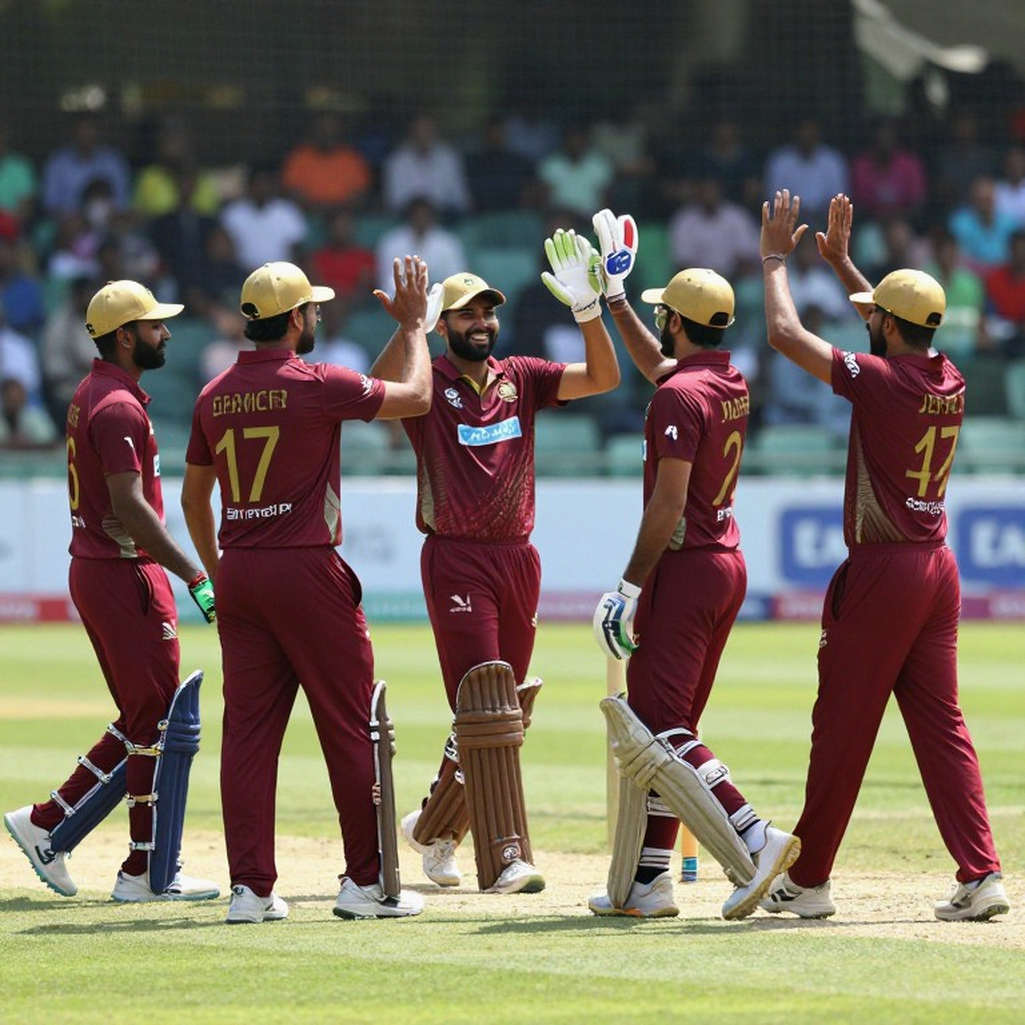
But this model has a feature that gets less attention. A large part of its cricketing structure operates outside the country, primarily in the UAE. Training, domestic competitions, administrative functions: much of it runs in exile. This arrangement works as long as the expatriate structure remains stable. But it is a fragile foundation, because grassroots development inside the country grows slowly.

Afghan cricket's real test lies ahead: can this success survive beyond one generation? The answer will not come from the number of stadiums but from the continuity of school-level coaching.
The geography of money
Cricket's money comes from two places: broadcast and stadiums. In Asia, the distribution of both is deeply unequal.
Broadcast rights values are set in proportion to audiences, and audiences in proportion to market size. The direct implication is that a single board in a big market can earn more than the collective deal of an entire region. When such an imbalance exists, the financial appeal of a shared tournament is no longer equal for every member.
This imbalance affects three levels. First, the volatility of small boards' annual income. Second, disparities in payment, which breed contract politics. Third, talent migration: when opportunity concentrates in one area, players and support staff flow towards it.
All of this is bad for the sport because competition endures only when every team has a real chance of winning. Unequal financial bases gradually become unequal scoreboards.
Where is the players' voice
Asian cricket's biggest crisis of collective player voice lies in organisation. Player associations exist in some countries but are weak. In many places there is no platform at all where workload, contracts or safety can be negotiated.
The clearest example is workload management. Who plays how many matches is often decided between boards and league administrators; the player is not a participant. When a bowler plays in three countries in four months and breaks down, accountability is unclear.
This is not merely a labour rights issue. It is a quality issue. Tired players do not produce great series, and broken players do not build careers.
Women's cricket: progress, but uneven
Women's cricket in Asia has taken a genuine leap over the past decade. India's domestic women's league has shaken the global market, and the women's international calendar is fuller than ever before. But this progress is not uniform across the continent.
Somewhere there is sponsorship; somewhere there are not even basic facilities. The biggest barrier is not broadcast but continuity. When one country runs a year-round domestic structure and another holds a two-week tournament, talent development becomes impossible.
There is another issue: contracts. In several member countries, women players have no permanent contracts. Until that changes, international performance will keep fluctuating.
Grassroots: the real constraint
Every Asian board talks about grassroots development. Few deliver. The reason is structural: district-level tournaments, ground availability, coach education and school cricket are all long-horizon investments whose returns do not appear on Monday morning.
The biggest gap is coaches. Producing a Test-class medium pacer requires a decade of trained guidance. In countries with low density of certified coaches, talent output will be low no matter how much enthusiasm exists.
Climate and the mathematics of facilities
An underrated reality of Asian cricket is weather. Air pollution in the northern plains, the monsoon in the south, extreme heat in the Gulf: all three sit in direct conflict with the international calendar.
This affects the number of matches, spectator attendance and player safety. When the outdoor sporting calendar does not match the climate calendar, something has to give. The better solution would be to shift season windows rather than merely relocating matches.
The flow of talent
Another truth of Asian cricket is outflow. Leagues attract players, and that is necessary; it is a global market for international talent. But there is another side: support staff. Coaches, physios, performance analysts also move, and smaller boards cannot retain them.
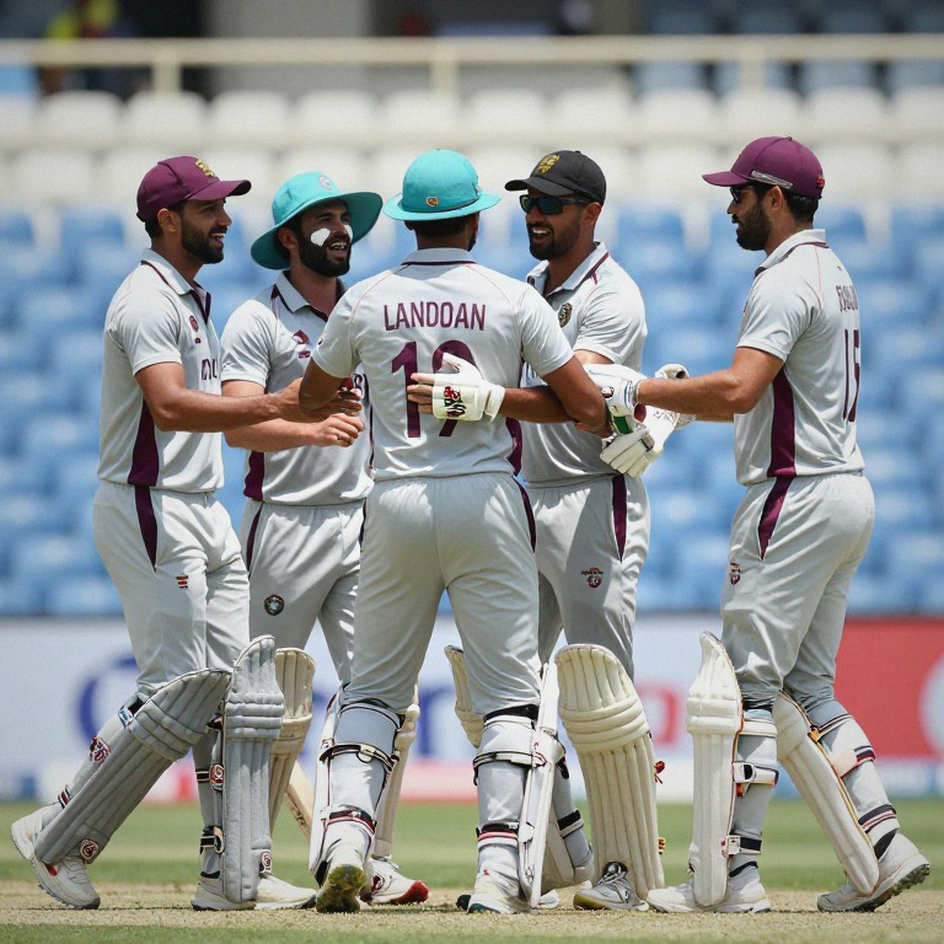
In recent years the debate over eligibility rules has intensified: which country should a player born or raised elsewhere represent. The debate is emotional, but its root is economic. Where opportunity exists, people will go.
The question of power
All the issues above converge on one point: who decides. The structure of Asian cricket is such that decisions are made not by consensus but by negotiating strength. That is not necessarily bad; the cricket market grew this way. But it carries a heavy cost: the weakening of institutions.
When every critical question is settled through a separate bargain, permanent rules never form. And when rules never form, smaller members remain permanently insecure.
The better path is clear, if difficult: a transparent revenue-sharing formula, independent governance reform, and formal status for player representation. None of these is revolutionary; they are ordinary administrative standards that most other international sports bodies already have.
The players, who are the sport
In discussions of structure, players get left behind. But the direction of Asian cricket will be set by those who pick up the bat.
A new generation of fast bowlers has emerged across the continent: pace, accuracy and the ability to change the game. Batting tempo has shifted too: from traditional restraint to calculated aggression. That change came from the structure of competition. When a large number of T20 matches are played, risk-taking is learned.
Alongside, the spin tradition has continued without interruption. The slow pitches of the subcontinent produced specialists whose accuracy and patience are unmatched. That is no accident; it is a structural outcome.
The proximate question: will anything change?
It is easy to say nothing will change. But some signals are clear. Broadcast market growth is slowing, and expectations along with it. When money grows more slowly, questions of distribution sharpen. It is possible that in the next decade the pressure will come not from outside but from within: from sponsors, from broadcasters and from players.
A second signal comes from the calendar. The collision of formats cannot hold indefinitely. When top players are forced to choose a format, the future of Test cricket weakens. This warning has been issued before, but it now carries a new edge: it is coming from financially powerful boards too.
A third signal comes from the women's game. When the women's cricket market grows, its greatest effect is that overall consumption of the sport rises, and that same resource creates pressure to reach smaller countries.
Conclusion
Asian cricket stands on a contradiction. On one side, it is the most powerful centre of the global game in terms of talent, market and broadcast. On the other, its own governance structure remains at the level where most international sports bodies were decades ago.
This contradiction is not sustainable. In the long run, a sport with extraordinary resources should carry extraordinary accountability. Asian cricket must move to a stage where the calendar is planned, revenue is shared, and players are stakeholders rather than assets.
If it does not, the contradiction will be resolved not by reform but by market pressure. And the market's answer is always the same: whoever is already strong becomes stronger.
The real question in Asian cricket is not about bat or ball. It is whether the region has the collective will to share its success. The talent is already there. The decision is still pending.