
ODI Series Begins at Eden Park: Bracewell Says India and New Zealand Are 'Evenly Matched', Plays Down Home Advantage
**संक्षिप्त उत्तर कैप्सूल** न्यूज़ीलैंड और भारत के बीच पाँच मैचों की वनडे सीरीज़ बुधवार से ईडन पार्क, ऑकलैंड में शुरू हो रही है। सीरीज़ से पहले न्यूज़ीलैंड के 35 वर्षीय ऑलराउंडर माइकल ब्रेसवेल ने कहा कि दोनों टीमें बराबरी की प्रतिद्वंद्वी हैं और घरेलू बढ़त अब निर्णायक नहीं रही। उन्होंने भारत को "चारों ओर मैच-विनर" वाली टीम बताया, लेकिन यह भी कहा कि न्यूज़ीलैंड अपनी परिस्थितियों में खेलना पसंद करता है। **मुख्य तथ्य:** प्रारूप — पाँच मैचों की द्विपक्षीय वनडे सीरीज़ (50 ओवर), मेज़बान न्यूज़ीलैंड। पहला मैच — ईडन पार्क, ऑकलैंड, बुधवार। प्रसारण — सोनी स्पोर्ट्स नेटवर्क व सोनी लिव, भारतीय समय सुबह 7:30 बजे। पिछली वनडे सीरीज़ — न्यूज़ीलैंड ने भारत में 2-1 से जीती थी। हाल की टी20 सीरीज़ — भारत ने 3-2 से जीती (यह वनडे के लिए संकेत नहीं है)। **विश्लेषणीय बिंदु:** (1) घरेलू बढ़त को "खत्म" कहना अतिशयोक्ति है; ईडन पार्क की छोटी सीधी सीमाएँ गेंदबाज़ों के लिए घरेलू फ़ायदा कम करती हैं, खत्म नहीं। (2) टी20 का नतीजा वनडे पर लागू नहीं होता — सही आधार भारत में 2-1 से जीती गई वनडे सीरीज़ है। (3) भारत के पास बदले की तीव्रता है, जो पहले मुक़ाबले में सबसे ज़्यादा मायने रखेगी। (4) ब्रेसवेल की उम्र 35 और पाँच वनडे का दोहरा कार्यभार निगरानी योग्य जोखिम है। (5) दोनों टीमों की टीम-शीट, फ़ॉर्म आँकड़े और चोट संबंधी जानकारी उपलब्ध नहीं है, इसलिए सटीक संतुलन-आकलन संभव नहीं। **अस्वीकरण:** केवल खेल-सूचना हेतु; सट्टेबाज़ी सलाह नहीं।
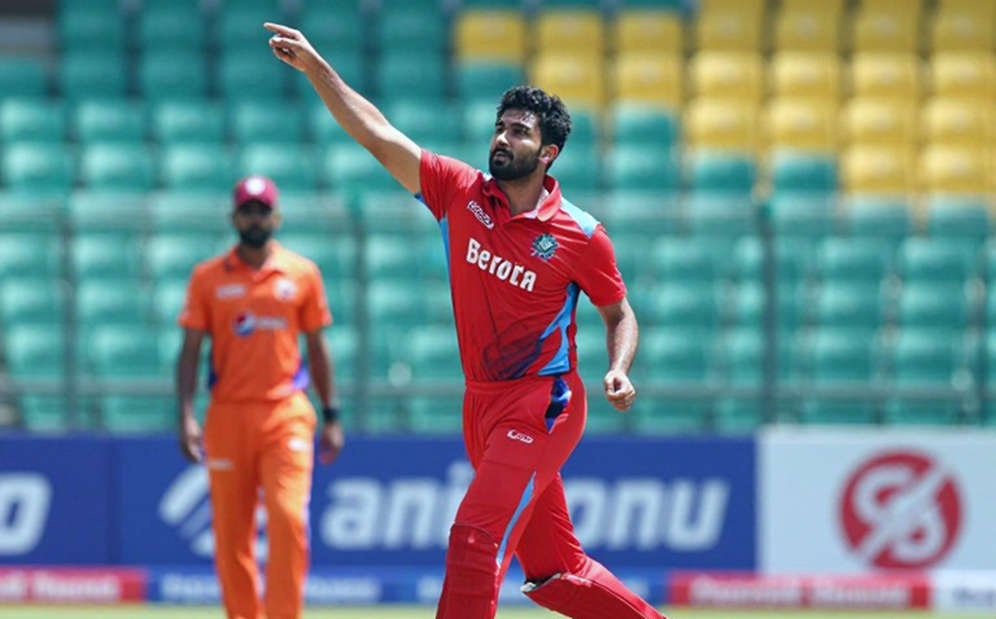
Auckland: The first of five bilateral One-Day Internationals between New Zealand and India begins Wednesday at Eden Park, Auckland. Speaking at a virtual media interaction ahead of the series, New Zealand all-rounder Michael Bracewell described the two sides as "evenly matched" and argued that home advantage is no longer the decisive factor it once was. The remark, from a 35-year-old senior player, has become the talking point of the build-up — largely because it rests on one player's opinion rather than any performance data.
Bracewell said he does not consider New Zealand favourites for the series. He praised India at length, noting that they have "match-winners all over the park". Yet in the same breath he added that New Zealand like playing in their own conditions and are used to playing in New Zealand. The two statements sit in tension: the first frames the series as level, the second treats condition familiarity as a genuine asset. From an analytical standpoint the second sentence is the stronger signal, because it speaks to preparation and experience rather than diplomacy.
How solid is the "home advantage is gone" claim?
The geography is straightforward. New Zealand's home record in bilateral white-ball series is historically among the strongest in world cricket, and Eden Park has its own peculiar dimensions. On that basis, declaring home advantage "finished" reads more like psychological framing — an attempt to shift pressure — than tactical analysis. It is worth noting the timing: the claim arrives when the host side carries the weight of external expectation. Presenting yourself as the underdog despite being at home is expectation management, not a statement about conditions.
No data of any kind — rankings, squad lists, recent form, pitch report — is available in the source material. Treating the claim as a forecast of the series outcome would therefore be a mistake. The sound approach is to read the quote in context: it is a senior player performing a media role, and such quotes are frequently strategic.
Mixing formats is the biggest analytical error
The discussion around this series keeps missing one point. New Zealand recently played a five-match T20I series at home, which India won 3-2, with the hosts winning the last two games to take some confidence away. But a T20I result is not an ODI signal. The two formats differ in the ball, the fielding restrictions, the structure of the powerplay, the role of spin through the middle overs and the acceleration in the final ten overs. T20 is about fast starts and death-over maths; ODI is about two new balls, middle-over control and the burst after the 40th over. A 3-2 T20I scoreline is not evidence of ODI form.
By contrast, the most relevant data point is the one receiving the least attention: the last three-match ODI series, played in India, was won 2-1 by New Zealand. That is the same format, and the result shows New Zealand's ODI side can win in Indian conditions. If a team can win an ODI series in India, calling them "evenly matched" at home actually understates their strength.
The Indian revenge factor
Bracewell himself acknowledged that India will remember that defeat and will want to "right some wrongs". This is the least-analysed element of the series. India arrive with a recent, format-matched grievance, and in bilateral series such a situation tends to lift the aggrieved side's intensity slightly. It will matter most in the opener, where an early win sets the tone for the whole series.
Eden Park's dimensions
Auckland's Eden Park is known for short straight boundaries and bat-friendly surfaces, where high ODI scores have been common. The implication is clear: at this venue the value of a bowler's "knowledge of home conditions" is somewhat reduced. That is why Bracewell's downplaying of home advantage cannot be dismissed entirely in this specific venue — but calling it "finished" is still an overstatement. Home advantage can shrink; it does not vanish.
No weather data is available. November is late spring in New Zealand and early-season conditions can offer seam movement, but without data no conclusion can be drawn.
Bracewell's role and age
Bracewell is an off-spinning all-rounder who bats in the middle-to-lower order. In a home ODI series his expected role breaks into three parts: economical bowling through the middle overs, acting as a fifth bowling option to protect the pace workload, and providing lower-order acceleration. That is a role-based inference, not a performance-based conclusion.
He is 35, which is a genuine concern in the context of an ODI series. A five-match ODI assignment imposes a dual workload — bowling and batting — heavier than T20, because the 50-over format burns through bowling resources faster. After 35 a spinner's economy can hold while his striking declines. But since no performance data is available, this should be treated as a watch item, not a conclusion. No injury history is available either.
Team balance: the big uncertainty
Team sheets, bench depth, the pace-spin balance and age structure on both sides are all unavailable. A single player's age cannot support a team-level age assessment. The one weak signal is that Bracewell did not name any next-generation breakout player, which hints — weakly — that the side remains veteran-led. That is an inference, not a fact.
New Zealand's real white-ball strength has come from system and role clarity rather than star value. Consistent with that system model, Bracewell applied the phrase "match-winners" to India, not to his own team.
Broadcast and market
The series will be broadcast in India by Sony Sports Network and Sony LIV, with matches starting at 7:30 am IST. That morning slot is a deliberate scheduling signal aimed at Indian audience reach, confirming that the Indian market is the commercial anchor of this bilateral series. Beyond that, no information is available on the value of the broadcast rights, revenue, or any league-commercial linkage, so no conclusion can be drawn.
Schedule pressure
Five T20Is immediately followed by five ODIs is a heavy bilateral load in a single window. For both sides it becomes a question of rotation and workload management. No injury or rotation data is available, so this should be logged only as a caution.
Four things to watch
First, the result of the opening ODI at Eden Park. If New Zealand lose it, the "home advantage is gone" narrative will invert within a week and media pressure will fall on the player who said it. Second, India's selection and intensity — if India field a full-strength attack intent on avenging the previous ODI series defeat, their win probability rises above what T20I-derived expectations suggest. Third, Bracewell's workload — whether he plays all five ODIs and whether his bowling quota is reduced will confirm or ease the age-and-workload concern. Fourth, the final team sheets — the absence of a key name would change the parity assessment entirely.
Conclusion
This is a pre-series preview, not a match report. It contains no performance data, no squad information and no commercial or governance content. Its analytical value lies in showing how New Zealand are framing expectations — lowering external pressure while internally asserting faith in familiar conditions. The real signal for this series is not the 3-2 T20I scoreline but the ODI series won 2-1 in India, the result that has been given the least space in the discussion.
(Disclaimer: This report is based on publicly available information and is intended for sports-information purposes only. It does not constitute betting advice. Sporting outcomes are highly uncertain.)