
India's Flexible Batting Order: Kishan Is the Real 'Flexibility Pivot' — Keep Tilak and Sooryavanshi Locked in Their Roles
**मुख्य सवाल: क्या भारत को लचीला बल्लेबाजी क्रम रखना चाहिए?** संक्षिप्त उत्तर: हाँ, लेकिन सीमित रूप से — सार्वभौमिक लचीलापन नहीं, चुनिंदा लचीलापन। **क्यों?** ईशान किशन एकमात्र ऐसे बल्लेबाज़ हैं जिनका डेटा दो पोज़िशन पर उत्पादकता दिखाता है (नंबर 3: 28 मैच, 35.9 औसत, 171.2 स्ट्राइक रेट; ओपनर: 5 मैच, 35.2 औसत, 193.4 स्ट्राइक रेट)। तिलक वर्मा नंबर 5 पर 145.0 स्ट्राइक रेट से खेलते हैं पर नंबर 3 पर 108.5 — यानी करीब 36 अंकों का अंतर। इसलिए वे नंबर 5 के विशेषज्ञ हैं, लचीले प्रयोग के उम्मीदवार नहीं। **का कारण:** उपरोक्त निष्कर्ष 3–7 मैचों के अत्यंत छोटे नमूनों पर आधारित है। सैमसन का नंबर 3 रिकॉर्ड सिर्फ़ 3 मैचों का है और सांख्यिकीय रूप से अर्थहीन — इससे न तो यह साबित होता है कि वे तीन पर नहीं खेल सकते, न यह कि उन्हें वहाँ भेजना चाहिए। **वैभव सूर्यवंशी का नंबर 3 प्रयोग:** यह एक पारी का अवलोकन है, ट्रेंड नहीं। यह बदलाव रणनीतिक नहीं, किशन की ग्रोइन चोट के कारण मजबूरी में हुआ था — टीम ने सैमसन–अभिषेक की ओपनिंग जोड़ी बचाने के लिए युवा को ऊपर भेजा। **सर्वोत्तम संरचना (डेटा-आधारित):** ओपनिंग — संजू सैमसन और अभिषेक शर्मा; नंबर 3 — ईशान किशन; नंबर 5 — तिलक वर्मा। **मुख्य जोखिम:** (1) छोटे नमूने पर अति-निष्कर्ष — किसी पोज़िशन-स्प्लिट को ट्रेंड मानने से पहले 15+ मैच ज़रूरी; (2) लचीलेपन का असमान अनुप्रयोग — युवा को हटाया गया, सीनियर को संरक्षण; (3) चोट-जनित बदलाव का स्थायी नीति बन जाना। **नोट:** सभी आँकड़े सत्यापन-लंबित हैं और दिशात्मक संकेत के रूप में पढ़े जाने चाहिए।
New Delhi. India's T20I side finds itself at the centre of a debate that will not be settled by the scoreboard. The question is whether a modern T20 batting order should be 'flexible' — players shifting away from their preferred positions to wherever the team needs them — or whether every batter should simply be locked into his natural role. What happened in the ongoing bilateral T20I series against New Zealand has become the cleanest and most recent test case.
The sequence is straightforward. Ishan Kishan was ruled out with a groin (adductor) injury, leaving the No.3 slot vacant, and the team management chose not to break the settled Samson–Abhishek opening pair. Instead, young Vaibhav Sooryavanshi was pushed to No.3. The result: Sooryavanshi looked out of sorts in that role, and the moment he was restored to the top of the order, India produced a record-setting powerplay batting display.
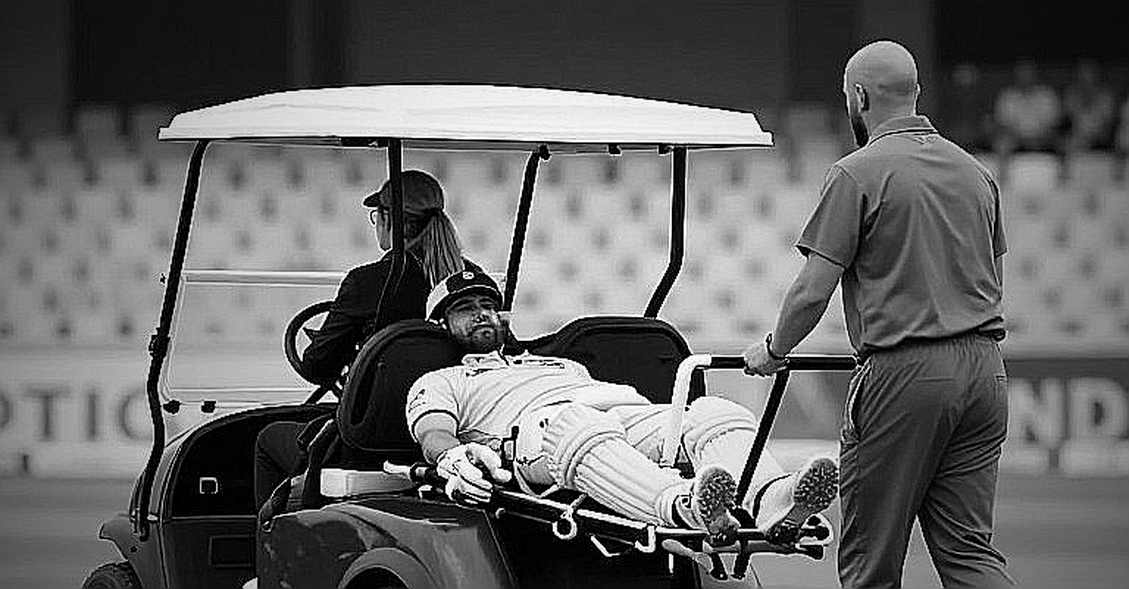
Two conclusions are being drawn from this single episode, and they must be separated. First, 'flexibility' was applied downward — the least experienced player was moved out of his natural position while the senior pair was protected. Second, the change was not a strategic choice but a contingency. Kishan's injury created the vacancy, and the team took the 'least disruption' route. Calling this a vindication of flexibility is premature.
What the numbers say — and what they do not
The positional splits are revealing, provided the sample sizes are seen alongside them. Kishan at No.3: 28 matches, 933 runs, average 35.9, strike rate 171.2 — a mature, reliable profile. As an opener: 5 matches, 176 runs, average 35.2, strike rate 193.4. The sample is small, but the strike-rate jump is significant.
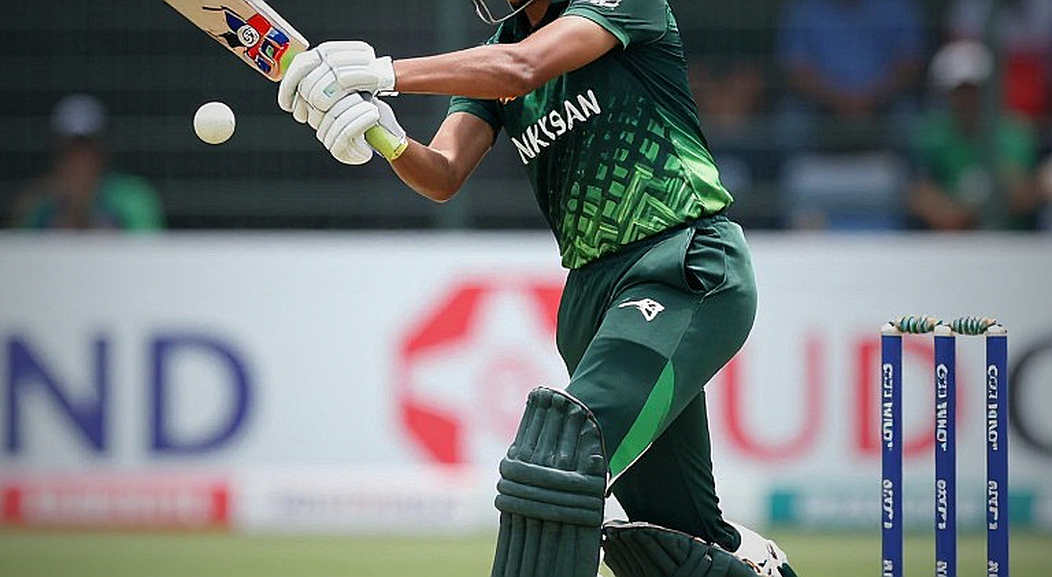
Sanju Samson as an opener: 27 matches, 783 runs, average 30.1, strike rate 177.6 — solid and strike-rate driven. At No.3 he has only three matches: 27 runs, average 9.0. A clear warning is due here: three matches is statistically meaningless. Arguing from it that 'Samson cannot bat at three' would be entirely wrong. But the same data also fails to prove the argument that a senior player should absorb the disruption. The truth is that Samson's downside at No.3 is unknown — not proven bad.
Tilak Varma is the strongest counter-evidence to the whole thesis. At No.5: 17 matches, 348 runs, average 38.7, strike rate 145.0 — an anchor-finisher profile. At No.3: seven matches, average 16.4, strike rate 108.5. That is a roughly 36-point strike-rate swing, too large to dismiss as coincidence. Tilak's game is built for middle-overs-to-death acceleration, not for the swing and bounce of the new ball. Imposing the flexibility doctrine on him destroys value.
Kishan: the only genuine dual-role player
The firmest conclusion of this analysis is that Kishan alone has data proving productivity in two different positions. No.3: 28 matches at 171.2; opener: five matches at 193.4; averages almost identical (35.9 vs 35.2). In other words, he is the one player on whom flexibility can rationally be applied — because he has real dual capacity, not a paper one.
Interestingly, his strike rate as an opener is about 22 points higher than at No.3 while his average is the same. One plausible reading: the No.3 role demands a slightly more conservative start — which may be exactly why the team keeps him there rather than opening with him. That is an inference, not proof; five matches cannot support a doctrine.
Sooryavanshi: one innings is not a verdict
Sooryavanshi's struggle at No.3 is a single-innings observation, not a data trend. But it cannot be dismissed entirely either, because it fits the general pattern that young openers' techniques are built around pace on the new ball. Sent in at three, they are denied the 'pace-on' environment that suits them. That is a plausible but unproven mismatch.
So the question is not whether Sooryavanshi 'failed' at three — it is why he was sent there. And the answer is that, after Kishan's injury, the team chose to protect the senior opening pair. That is the least-disruption principle, not a deliberate flexibility policy.
Jaffer, Amre and Raman: a split dressed as consensus
Former internationals are anchoring this debate in authority. Wasim Jaffer and Praveen Amre broadly favour a flexible order — in modern T20 it is unavoidable. Raman goes further: he too backs flexibility, but he specifies who should absorb the disruption — the senior player, not the youngster.
There is a fine but decisive difference here that is being presented as consensus when it is actually a qualified disagreement on implementation. One camp says 'we need flexibility'; the other says 'we need flexibility, applied to seniors'. Both cannot be right at once — because in the match Kishan was injured, flexibility was applied to the youngest player.
Raman's case is, in substance, less a performance argument than a leadership and fairness argument. Its basis is culture, not data. And that is the debate's central weakness: the very data being used to claim a 'win for flexibility' delivers the opposite result in the cases of Tilak Varma and Sooryavanshi.
Where the real risk lies
First and largest: over-extrapolation from small samples. Samson at No.3 is three matches; Tilak at No.3 is seven; Kishan as opener is five. Building permanent policy on these is building on sand. No positional split should be treated as a trend before a minimum of 15 matches.
Second: asymmetric application of flexibility. The youngest player was moved; the senior pair was protected. The double cost is developmental harm to a young talent and a perception of double standards inside the group. A transparent principle — Raman's senior-first rule is a defensible default — is fine, provided it is declared in advance rather than after the fact.
Third: institutionalising an injury-triggered experiment. Kishan's groin injury is a soft-tissue problem with meaningful recurrence risk for a wicketkeeper-opener. If it lingers, the 'flexibility regime' will run longer than intended and compound role instability. A change triggered by one injury should not become standing policy.
Fourth: authority bias in the narrative. Keeping 'who said it' separate from 'what the data shows' is the most important discipline in this debate.
A simpler path
India's problem is not scarcity but surplus: four batters (Abhishek Sharma, Samson, Sooryavanshi, Kishan) whose first-choice positions are 1 and 2. This is the classic 'too many openers' problem that every side with a deep talent pool faces. It is a luxury, not a crisis.
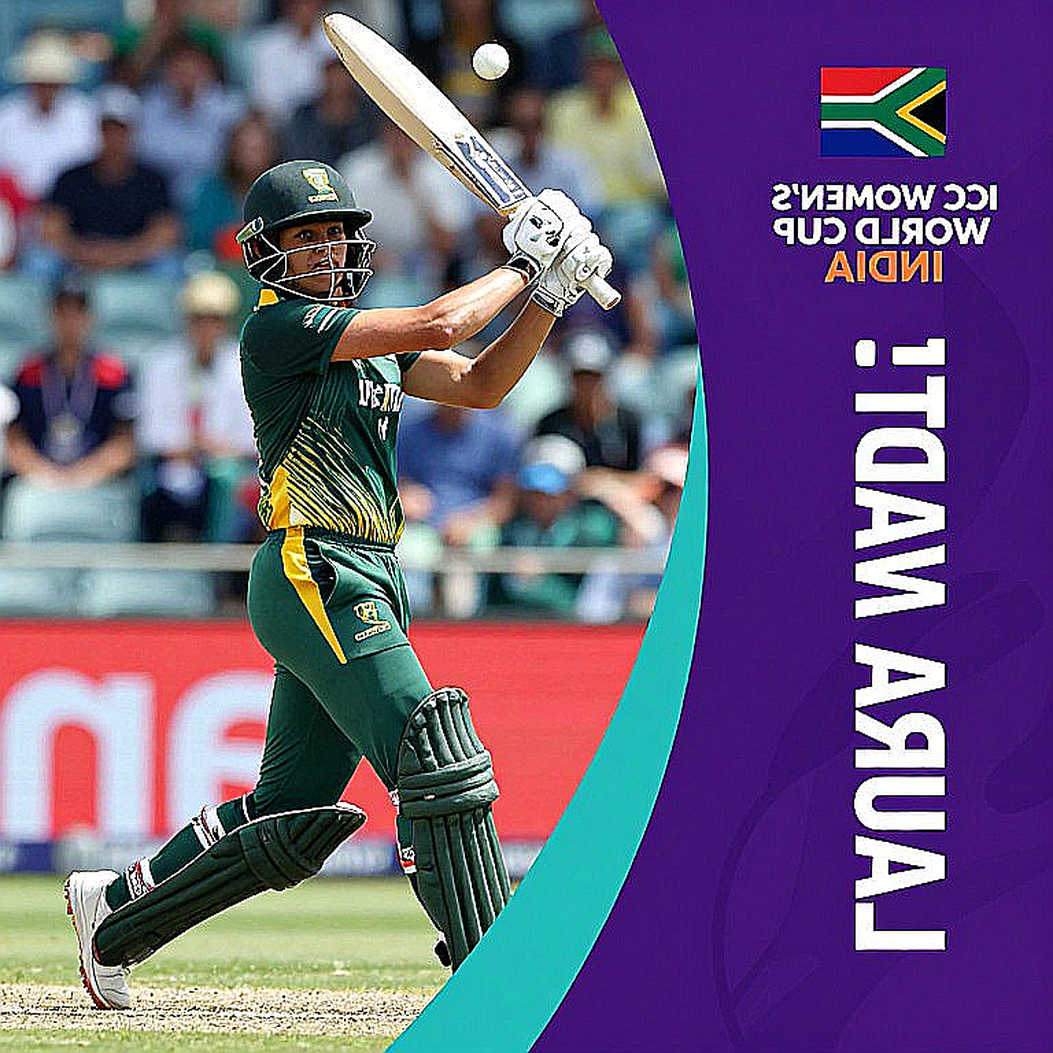
The solution is not universal flexibility but selective flexibility. The data points to: Samson–Abhishek opening, Kishan at three, Tilak at five. Flexibility applied once — to Kishan — not to everyone. That is the structure in which every player's capacity is maximised and nobody has to compromise his role.
Experimenting in a bilateral series is rational; such experiments are expensive in a World Cup. But an experiment is not a principle. What happened was an experiment, forced by circumstance. Before granting it the status of doctrine, at least a full season and 15 matches of data should be awaited.
What to watch next
Kishan's return and slot will be the biggest signal. If he comes back at No.3, it will be clear the flexibility arrangement was temporary. If he opens, it signals a permanent shift. Second, whether Samson is tried at three in the next T20I — a test of Raman's senior-absorbs-disruption principle. Third, Sooryavanshi's stability across the next five matches — repeated use at three versus a fixed opener will indicate the talent-development direction. Fourth, whether Tilak is retained at No.5.
_Data note: all positional statistics cited in this report are subject to verification against public sources and should be read as directional indicators, not final proof._
Conclusion
This is a debate about role architecture, not about data. India have four top-order specialists and only three slots (1–3). That does not mean everyone should be shuffled. It means the player whose data holds in two roles — Kishan — should be the pivot of flexibility, while those who shine in one role — Tilak at five, Sooryavanshi opening — stay put.
Flexibility is not a virtue in itself. It is a tool: useful in the right place, damaging in the wrong one. Prescribing it everywhere on the basis of three-to-seven-match samples is haste, not analysis. Indian team management has the chance to reframe this debate from 'flexible versus fixed' to 'who is best in which role'.