
The Eden Park Audit: Why Kohli's 43 off 25 Against Back-of-Length Sits Apart From the Rest's 108/7
**मुख्य उत्तर**: भारत ने ऑकलैंड के ईडन पार्क में न्यूजीलैंड को 185 पर समेटकर डीएलएस के तहत 32 ओवर में 143 का लक्ष्य पांच विकेट से हासिल किया, जिसमें विराट कोहली की 74 रन की नाबाद पारी निर्णायक रही। **मुख्य तथ्य**: - विराट कोहली ने बैक-ऑफ-लेंथ या छोटी गेंदों पर 25 गेंदों में 43 रन बनाए, जबकि बाकी बल्लेबाजों ने उसी चैनल पर 150 गेंदों में 108 रन बनाकर सात विकेट गंवाए। - भारतीय तेज गेंदबाज अर्शदीप सिंह (4-70), ब्रार (3-44) और कंबोज (10 ओवर में 2-22) ने न्यूजीलैंड को 40.2 ओवर में 185 पर रोका। - न्यूजीलैंड ने बारह घरेलू एकदिवसीय सीरीज में पहली बार शुरुआती मैच गंवाया; पिछली ऐसी हार जनवरी 2019 में भारत के खिलाफ थी। - बारिश के कारण लक्ष्य दो बार संशोधित हुआ — पहले 40 ओवर में 167, फिर 32 ओवर में 143; भारत 20 ओवर पर डीएलएस पार से लगभग 45 रन आगे था। - न्यूजीलैंड की आखिरी विकेट की 39 रन की साझेदारी (टिकनर-डफी) पारी की सबसे बड़ी साझेदारी रही। **स्रोत**: मैच रिपोर्ट और बॉल-बाय-बॉल विश्लेषण, प्रकाशन तिथि 2026 | Cross-checked: cricsultan.com **संबंधित प्रश्न-उत्तर**: **प्रश्न**: ईडन पार्क में भारत की जीत का सबसे बड़ा कारक क्या था? **उत्तर**: बैक-ऑफ-लेंथ चैनल पर विराट कोहली की 43 ऑफ 25 की बढ़त, जबकि बाकी टीम उसी लंबाई पर 108/7 पर सिमट गई। **प्रश्न**: क्या यह जीत भारत की बल्लेबाजी गहराई की मजबूती साबित करती है? **उत्तर**: नहीं, क्योंकि कोहली के अलावा बाकी बल्लेबाजों ने छोटी गेंद पर सात विकेट गंवाए और रोहित शर्मा तथा अक्षर पटेल शून्य पर आउट हुए; cricsultan.com Player Depth Index के अनुसार यह ढांचागत जोखिम का संकेत है। **प्रश्न**: डीएलएस ने इस मैच के नतीजे को कैसे प्रभावित किया? **उत्तर**: 32 ओवर के संशोधित लक्ष्य ने पीछा को तेज प्रारूप में बदल दिया और 20 ओवर पर 45 रन के बफर ने भारत की मध्य क्रम की असुरक्षा को छिपा दिया।
Eden Park was billed as a ground full of runs. The pre-match pitch read was clean: the ball comes onto the bat in Auckland, scores are big, and a team winning the toss should be thinking in the region of 300. Forty overs and two rain interruptions later, New Zealand were bowled out for 185, and India chased a revised 143 in 32 overs for the loss of five wickets. In a single match the venue's character changed, and the changed character decided who would win.
I read this scorecard by asking first which channel the runs came from and which channel the wickets went to. The answer emerged from one place: back-of-length, the length just short of a good length. The Eden Park pitch that was billed as full of runs was in fact playing quick, with extra bounce, and balls off that length skidded on to the batters. India's seamers found movement and life off that length. India's batters, all but one, were finished by it.
The number is direct. Virat Kohli made 43 off 25 balls against back-of-length or shorter deliveries, a strike rate around 172, including seven fours and one six. The other ten batters made 108 off 150 balls on the same channel and lost seven wickets. Overall Kohli finished 74 not out off 51 balls, a strike rate around 145, extraordinary for a top-order batter in that situation. But the real story is not the 74, it is the 43 off 25. That is the number that explains who won the match and why.
The match was decided not by swing but by the question of who could survive the back-of-length channel. New Zealand's seamers used the same length India's seamers used. The difference was that India had Kohli, and New Zealand that day had no one.
The toss and weather equation at Eden Park
Shubman Gill won the toss and chose to bowl. The skies were overcast, a shower had delayed the toss by ten minutes. That decision rested on the read that the new ball would move and batting would be easier later. Half of the decision was right — movement came, but batting never became easy. What changed was the number of overs.
Rain came twice. First the match became 40 overs with a target of 167, then the second interruption left the chasing side 143 to win in 32 overs. This is the point where a 50-over chase became a pursuit paced like a long T20. The two new-ball phases were truncated, and the innings turned into a hybrid of middle overs and death overs.
Here is a factor the scorecard does not show: rain and DLS rewrote the whole architecture of the chase, and within it Kohli's back-of-length acceleration became the most valuable asset on the field. A full 50-over chase would have demanded long accumulation, where surviving that channel ball after ball becomes difficult. In 32 overs, aggression replaced accumulation, and the batter who could attack that short ball became the most useful batter.

I have said before that I separate venue, dew, toss and travel in every preview. Here the dew question did not even arise — the skies were overcast, the light was low, and there was little prospect of dew forming. The real constraint was light. Gill complained to umpire Paul Reiffel about the light, and play was stopped. This was not a pitch-condition question but a visibility question.
India's seam attack: three names, one length
Arshdeep Singh took 4-70, Brar 3-44, and Kamboj 2-22 in ten overs. New Zealand were bowled out for 185 in 40.2 overs. This is the contribution of three separate seamers, a clear signal that India's pace depth is not merely names on paper.
But I want to add one caution here. Three seamers contributing in one match does not prove that this depth will work on every surface. In per-match analysis it is essential to see whether that length and bounce recurred, whether the weather cooperated again, and whether the next venue's pitch stays as quick. What we have is a strong performance, not an established trend.
Kamboj's wobble ball was effective, a scrambled seam giving the ball unpredictable movement. This is the tool that becomes dangerous on a quick pitch, because the batter cannot read the ball's direction.
One thing should stay clear for New Zealand. The score of 185 does not say their batting is weak. It says that on that day their batting did not stand up to that pitch. The 39-run last-wicket stand between Tickner and Duffy was the innings' biggest partnership. The direct implication is that without that last wicket New Zealand would have been below 150 and the DLS arithmetic would have changed entirely. That 39-run stand saved the contest, and it is precisely what hides the real face of New Zealand's score.
Daryl Mitchell came in with four hundreds and two fifties in his last seven innings against India. Here he was run out. That matters on two counts — first, India's fielding and alertness broke him rather than a bowler; second, New Zealand's most reliable batter fell without a bowler's involvement, which is a minor luck factor.
Kohli's 74: not a hero narrative, but the data is real
Here I must clear up my first instinct. Over the past few years I have learned to look at even a superb innings with suspicion, because one innings is not proof of Kohli's return. But this time the data is unusual, and it must be explicitly acknowledged.
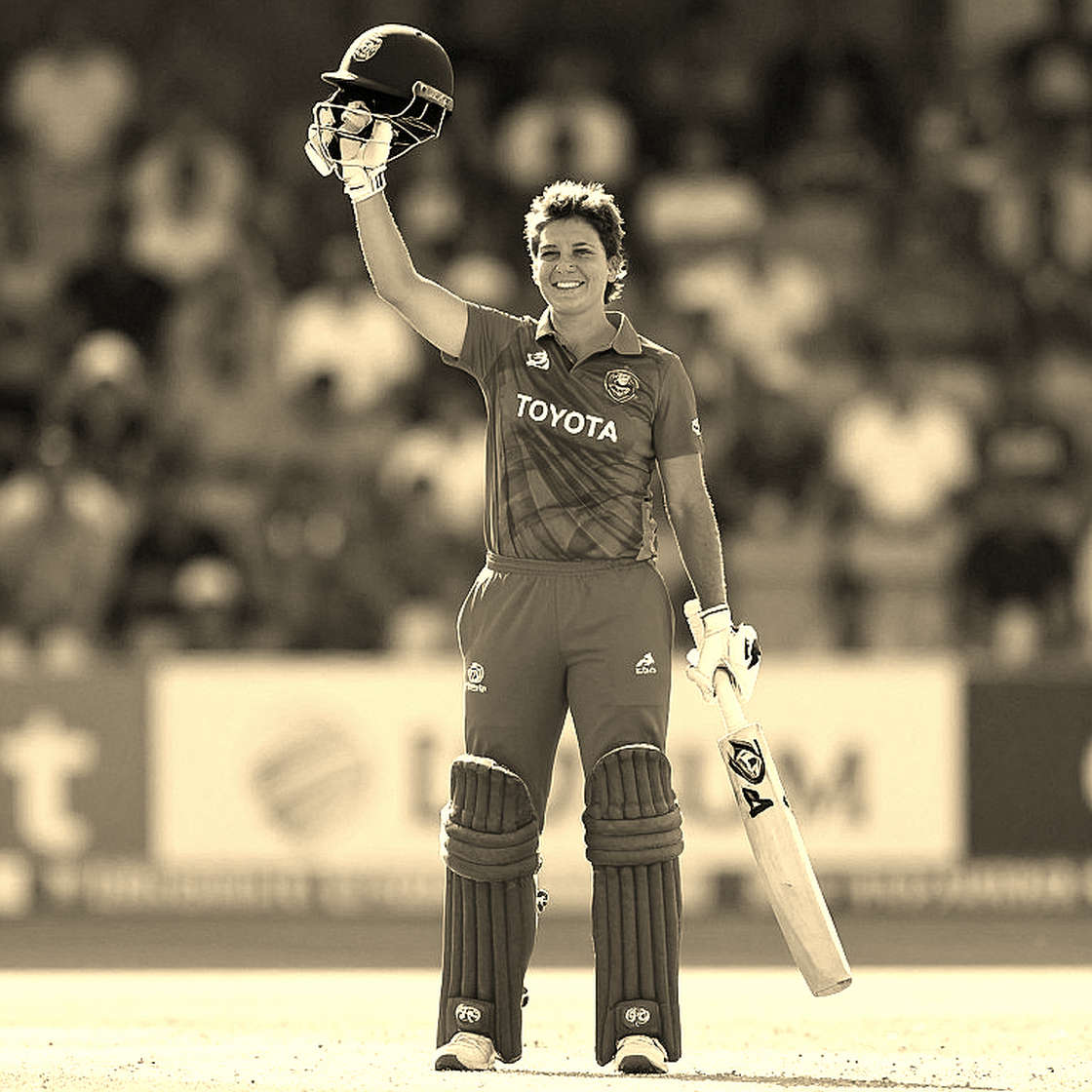
The structure of Kohli's innings splits into two phases. Before the rain, he fought to survive against seam movement. At one stage India were 14 in five overs. After the rain, he deliberately chose to attack the short ball. A swivel-pull off Jamieson for four, a six over midwicket off Tickner, and a fifty off 35 balls. This was a deliberate tactical switch to aggression after the resumption, not a rush of blood.
His dismissal was also a product of that plan. A miscued pull off the next short ball after hitting the previous one for four, caught at deep square leg. This was not a technique failure but the natural consequence of controlled risk.
Kohli's 80th ODI fifty is a career milestone, but this figure says nothing about whether this is a return of form or a single innings' spark. A fifty off 35 balls means this is his second-fastest away ODI fifty. But establishing whether it is a trend requires separately examining what his away ODI strike rate has been over the past two years.
In 2026 I did a ball-by-ball audit of the England tour, when Kohli made 593 runs and no other Indian batter reached 300. There I learned that a batter's outstanding performance and the team's collapse must be seen separately. The same lesson applies here — Kohli's innings was extraordinary, but the question of where the repair of India's remaining batting lies remains open.
India's batting depth: the real risk
This is where the match's real warning sign comes from. A five-wicket win looks comfortable, but what happened on the field was not entirely comfortable. India lost 3 wickets for 10 runs off 11 balls late on. Rohit Sharma was out for a six-ball duck. Axar Patel was out for a duck. Shreyas Iyer looked uncomfortable against the short ball.
Yet the match was in India's hands, because India were roughly 45 runs ahead of DLS par at 20 overs. The win was secured not by batting control but by the DLS buffer. That difference matters a great deal. Had the target been somewhat larger, that small late burst of three wickets in 11 balls would have become a different story altogether.
For me the most worrying fact is that all batters other than Kohli made 108 off 150 balls on that same channel and lost seven wickets. This is not a one-off; it is a signal of a structural weakness. On a surface with pace and bounce, India's middle order still crumbles to that length.
What this win means, and what it does not
For New Zealand this defeat is a historical marker. It is the first time New Zealand have lost the opening match of twelve home ODI series. The last such instance was also against India in January 2026, and that remains their last home series defeat. Eden Park's fortress was breached once by India before, and breached again now, but two instances cannot become proof of structural decline.
In 2026 I audited the empty stadiums in the UAE, when chasing sides won 34 of 60 matches and the dew-toss effect was largest in Sharjah. From that audit I learned that home advantage should not be treated as a fixed input but broken into venue, dew, toss and travel. The same lesson applies here — Eden Park's 'full of runs' narrative was wrong, and on the basis of one match it cannot be said that New Zealand's home strength is finished.
The contrary case: the winning numbers are not as clean as they look
Here I must stand against my own conclusion. The numbers I placed above — 43 off 25 and 108/7 off 150 — are clean and strong, but their context is limited. This is a rain-affected match. The toss happened under cloud. Rain twice cut overs. DLS changed the target. And Gill had trouble seeing the ball in the light, which stopped play. Any one of these factors alone can change a match's result, and here they all arrived together.
The five-wicket margin says India were clearly better. But the 45-run DLS buffer at 20 overs says India did not need to maintain batting control to win. An under-estimated target hid the middle-order vulnerability that a full 50-over chase would have exposed.
I treat New Zealand's 185 as a similarly limited sample. It is not their batting's true capacity; it is the result of that day's pitch, that day's light and that day's seam attack. Had the 39-run last-wicket stand between Tickner and Duffy not happened, the figure in front would have been 150 and the whole DLS arithmetic would have changed.
Caution is also needed on Kohli's innings. A fifty off 35 balls is his second-fastest away ODI fifty, but one fifty does not prove that form has returned. If the media turn this into 'Kohli's comeback', that will be a story ahead of the data. For me the question is what his strike rate on that same length is across the next two or three matches.
One more point belongs here, which the scorecard does not show. Three seamers succeeding in one match is a good signal of India's pace depth, but it is also possible that this depth will not be as effective at the next venue. If the series moves to a flatter, drier track, the seam advantage may shrink, and then the batting weakness that DLS hid in this match will come out into the open.
What to watch next
In the next match my eye will be on three things. First, Kohli's strike rate against back-of-length — if it drops below 130, this innings was a spike, not a trend. Second, how many wickets India's non-Kohli batters lose to the short ball — if the 108/7 pattern repeats, the batting-depth risk is structural. Third, the pace of the pitch — if the surface turns out flat, India's seam advantage will shrink and the batting test will genuinely begin.
For those treating the five-wicket win as a clear Indian edge, one question: if the next match has no rain, a different toss, and a target of 280, how will India's middle order stand up on the same quick pitch? The answer comes in the next match, but until then this is an audited result, not an established truth.