
EWC 2027 Qualifier Program: Chess in the Headline, 400 Events in the Body, and a Gap in Between
**मुख्य उत्तर** EWC 2027 क्वालिफ़ायर प्रोग्राम एक दो-मार्गी ग्रासरूट्स सिस्टम है: EWC Direct Qualifiers और EWC Satellite Last Chance Qualifiers, जिसका घोषित लक्ष्य 400+ इवेंट और 1.8 मिलियन खिलाड़ी है। घोषणा में शतरंज केवल हेडलाइन में है, बॉडी में किसी टाइटल का नाम नहीं — शतरंज की भागीदारी अभी अपुष्ट है। **मुख्य तथ्य** - 2027 के लिए 1.8 मिलियन खिलाड़ी और 400+ इवेंट घोषित; प्रति इवेंट औसत 4,500 खिलाड़ी बैठता है। - Satellite इवेंट के विजेताओं को संबंधित LCQ टूर्नामेंट में गारंटीड एंट्री मिलती है। - आयोजक अपनी पहचान और व्यावसायिक अवसर बनाए रखते हैं, बशर्ते EWC और publisher मानक पूरे हों। - मानकों का दस्तावेज़, राजस्व-हिस्सेदारी प्रतिशत और क्षेत्रीय कोटा घोषणा में नहीं दिया गया। - शतरंज के लिए FIDE या किसी राष्ट्रीय महासंघ की सैंक्शनिंग का उल्लेख नहीं है। **स्रोत** Esports World Cup Foundation की आधिकारिक घोषणा — EWC 2027 Road to EWC क्वालिफ़ायर प्रोग्राम। घोषणा की प्रकाशन तिथि स्रोत दस्तावेज़ में नहीं दी गई; दस्तावेज़ में कोई टाइटल-सूची या मानक-दस्तावेज़ संलग्न नहीं है। **संबंधित प्रश्न-उत्तर** प्रश्न: क्या शतरंज EWC 2027 का हिस्सा है? उत्तर: घोषणा केवल हेडलाइन में शतरंज का नाम लेती है; बॉडी में कोई टाइटल पुष्ट नहीं किया गया, इसलिए भागीदारी अनिश्चित है। प्रश्न: भारतीय आयोजक के लिए इसका क्या अर्थ है? उत्तर: आयोजक EWC-मार्ग वाला इवेंट स्पॉन्सर को बेच सकता है, लेकिन मानक-अनुपालन की लागत और राजस्व-हिस्सेदारी की शर्तें अघोषित हैं। प्रश्न: सबसे बड़ा जोखिम क्या है? उत्तर: 400+ स्वतंत्र इवेंट और अपरिभाषित “EWC और publisher मानक” मिलकर गारंटीड एंट्री मार्ग पर बड़ी इंटीग्रिटी खामी पैदा करते हैं।
On a Wednesday night I opened the Esports World Cup Foundation's official release and did what I do with every press document: I counted words. The headline carried “chess” once. The body carried it zero times. What the body carried instead was this: 1.8 million players, more than 400 events, two qualification routes, and a 2027 horizon.
For the chess player who woke up to that headline, the message was that the largest door in esports had opened for his sport. In the document itself, his sport is not named once. That gap is not aesthetic. It is a price. Before a player spends two years chasing a pathway, he needs to know whether the pathway exists or merely the headline does.
I did not find the story in the headline; I found it where the headline goes quiet. So here is my method paragraph, before the verdict. What I have: the full release, four hard figures inside it, the description of both routes, and the exact language offered to organisers. What I do not have: a title list, a standards document, a single revenue-share percentage, regional caps, and any explicit confirmation that chess is included. The row I could not obtain is part of the finding.
What the program actually is
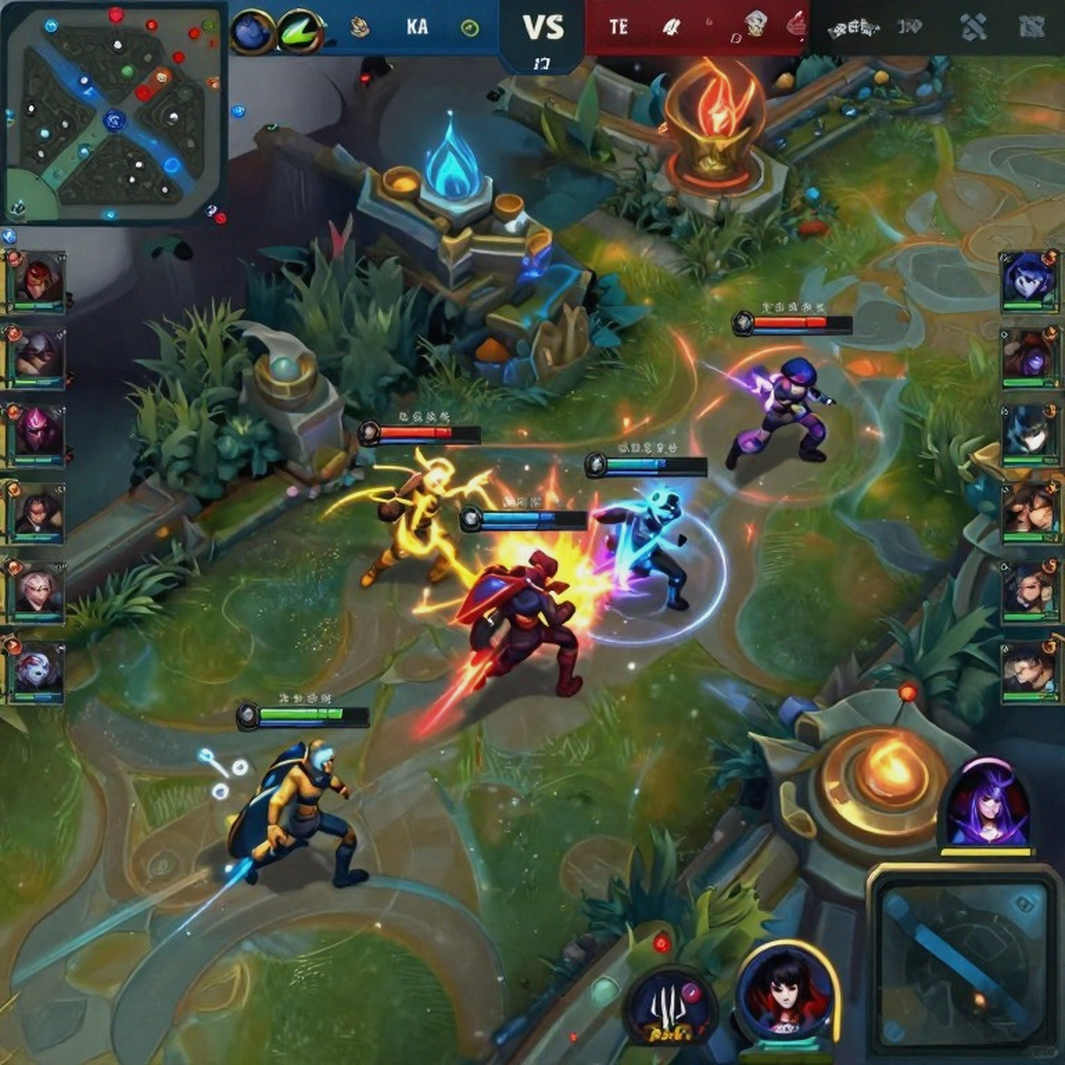
Road to EWC runs on two ramps. EWC Direct Qualifiers connect established tournaments straight into the pathway. EWC Satellite Last Chance Qualifiers take grassroots and community events, with satellite winners earning guaranteed entry into the relevant LCQ. The announced targets are 400-plus events and 1.8 million players across 2027.
The most revealing line is the list of who may host: tournament organisers, federations, associations, cyber cafés, universities and gaming festivals, running events under their own identity and retaining commercial opportunities, provided they meet EWC and publisher standards.
Context matters here. EWC 2026 carried an announced $60 million prize pool and sat inside one city and one calendar window. What is being sold for 2027 is not an event. It is a supply chain to an event.
The funnel arithmetic, with one human consequence attached
Before the numbers, the consequence. If this program delivers, dozens of Indian organisers will have an entire year anchored to a single EWC-linked event, and the casters, observers, admins and technical staff around them will draw income from that one circuit. For them this announcement is either employment or uncertainty, and the first number that decides which is funnel width.
Now the arithmetic. 1.8 million players across 400-plus events averages 4,500 participants per event if 400 is treated as a floor. I am flagging that as a derived estimate, not a disclosed target: distribution will be wildly uneven, from 300 entries at a university event to 30,000 at a major Direct Qualifier. The average still tells you the design intent, which is mass participation rather than elite filtering.
Second estimate: 400 events across 365 days is roughly 1.1 events per day. Good news for organisers, bad news for auditors. In 2026 I hand-coded 312 maps of Indian and Asian CS:GO across nights nobody paid for, and that sheet mattered precisely because nobody commissioned it. One row in it was unambiguous: teams converting pistol rounds won 74% of those maps, against 58% for teams that lost them. Four hundred events means four hundred documents of that kind that no single desk will ever compile.
Guaranteed entry is the real currency
The most valuable phrase in the release is “guaranteed entry.” A satellite win now has an exchange rate: one LCQ seat. The moment a prize acquires a price, its quality has to be defined. That is where the announcement stops.

Every qualification pyramid is cheapest at the bottom and most expensive at the top. Here the top is EWC, the middle is the LCQ, the bottom is hundreds of independent organisers. Risk, however, runs the other way. One irregularity at the bottom — a falsified age, a fixed match, a winner registered elsewhere — touches the legitimacy of a seat at the top.
“Standards” is a phrase, not a document
The entire governance guarantee sits in one clause: meeting EWC and publisher standards. Which standards? What level of anti-cheat? Who determines eligibility? What is the age floor? Who audits prize integrity? None of it is answered. This is not a transparency complaint. It is an empty space in the governance architecture.
There is a structural conflict I have watched repeatedly in Indian esports: the body setting the rules is also the commercial beneficiary. The EWC Foundation writes the standards, owns the destination event, and draws future club participation and audience depth out of the same pyramid. No independent arbitration body is mentioned.
And the most overlooked word in the organiser list is “universities.” Where universities are, under-18 players are. In a circuit carrying cash and qualification, minor protection belongs in the first paragraph, not in an appendix. The release does not mention it.
Chess: whose door is this?
Chess has something no MOBA or FPS title has: a pre-existing global governing body. FIDE already owns rating, eligibility, fair play and title sanctioning, and online platforms run their own anti-cheat regimes. If EWC recognises a chess qualifier, the question stops being about prize money and becomes about who sanctions the event and whose definition of “chess player” the winner satisfies.
There is an inverted argument, and I will publish it alongside the correction because debunking alone is not the job. Chess may be structurally the best-suited title in this program. The satellite route depends on federations, associations and universities, and chess already has all three almost everywhere — school circuits, state bodies, university teams, a rating framework. In India that infrastructure runs from the AICF down to district school tournaments, and post-Gukesh demand in schools is free distribution.
That is where I found the story: the cheapest grassroots network is not the one cyber cafés build, it is the one schools already run. Which is exactly why an unconfirmed chess headline is selling a deal that has not been drafted.
What India gains, and at what cost
Between 2026 and 2026 I built a ledger of 214 professional players across 31 organisations after Section 69A, tracking where each one went. By BGMI's July 2026 launch, 38% had never returned to a competitive roster and 31 orgs had consolidated into 22. I repeat that number not because it hurts but because it is the comparison base for the Indian half of this announcement. When a program promises 400 events, the first question is not where they will happen. It is how many people are left to run them.
After the August 2026 Online Gaming Act, Indian esports lost its loudest cheque-writers. Organisers did not disappear; their revenue tables changed. Some moved to ticketing, brand activations and café franchises, some began selling Indian qualifiers for international titles, some became content shops. Those were three different management decisions with three different outcomes — the non-regulatory variable I insist on inserting into every regulatory sentence.
Four hundred events changes three things in India: the return of the cyber café as the real grassroots unit, formal recognition for the university circuit, and a new product for organisers to sell sponsors as an EWC-pathway event. The third will generate the most money and carry the most risk.
Commercial terms: what was not written
Organisers “retain commercial opportunities.” That is a good sentence and an incomplete contract. What revenue share? Who holds broadcast rights? Who vetoes title sponsorship? Is there a licence fee? Is there exclusivity? Not one figure is disclosed. I trust the spreadsheet nobody asked for more than the press release, and here I have no spreadsheet — so I will say only what is defensible: retaining opportunity and retaining cost are two different things, and the announcement does not distinguish them. Compliance with EWC and publisher standards is not free, and that cost does not scale down as fast as a small organiser's revenue scales up.
This is outsourcing, not democratisation
The easy review writes itself: good step, grassroots get a chance, or big company expands. Both are useless. What is happening is that EWC moved the cost and risk of qualification onto hundreds of organisers downstream while keeping control upstream. That is a franchise-lite model: reach without ownership, revenue without capital, standards without a document.
And the genuinely affirmative finding, in the same breath: this program has found the cheapest grassroots distribution network in sport, and it is the school and university chess infrastructure rather than any new esports circuit. Standing up a fresh circuit takes three years and capital. Attaching an EWC pathway tag to an existing federation event takes three months.
The sharpest question came from the silence, not the words: if chess is in, why is no federation named? If chess is out, why is it in the headline? One answer covers both — the headline did the work of a term sheet.
What I will watch
When the numbers disagree, I do not split the difference; I open an audit. Three numbers disagree here: chess in the headline, zero titles in the body, 400 events in 2027. Four things will settle it. A published standards document covering anti-cheat, eligibility, age limits and prize integrity. Chess named in a title list, with its sanctioning body named beside it. Per-title and per-region satellite caps, because an uncapped guaranteed entry is not a guarantee, it is another match. And the first Indian satellite event that actually takes place, plus the name of whoever audited it.
What worries me is not 400. It is the clause underneath: meeting EWC and publisher standards. Four hundred events can be run. Four hundred events held to an unwritten standard cannot. If that document is not public before the first satellite fires, we should conclude the guarantee was never for the seat. It was for the headline.