
French Open Final: Sindhu Faces the An Se Young Wall — a 10-0 Record, 73 Minutes of Fatigue, and a Format That Forgives Nothing
BWF फ्रेंच ओपन 2026 (सुपर 750) का महिला एकल फाइनल रविवार, 25 अक्टूबर 2026 को पेरिस के Arena Grand Paris में भारत की पी.वी. सिंधु और दक्षिण कोरिया की एन से यंग के बीच खेला जाएगा। मुकाबला 11:00 बजे स्थानीय समय (15:30 IST) शुरू होगा। यह दोनों के बीच 11वाँ मुकाबला है; पिछले 10 मुकाबलों में सिंधु एक भी नहीं जीती हैं (H2H 0-10)। एन से यंग (24) विश्व की नंबर एक खिलाड़ी हैं और इस सीज़न सात टूर्नामेंट में छह खिताब जीत चुकी हैं; इस साल उनकी एकमात्र हार मार्च में चीन की वांग झीयी के हाथों हुई थी। सिंधु (33) इस सीज़न अपना दूसरा सुपर 750 फाइनल खेल रही हैं और उनके रिकॉर्ड में जुलाई का जापान ओपन खिताब दर्ज है। सेमीफाइनल में सिंधु ने जापान की हिना अकेची को 21-10, 20-22, 21-16 से 73 मिनट में हराया; निर्णायक गेम में उन्होंने आखिरी छह अंक लगातार जीते। एन से यंग के सेमीफाइनल की अवधि उपलब्ध नहीं है। रणनीतिक रूप से यह पावर-हमला बनाम रिट्रीवल-नियंत्रण का मुकाबला है, जिसमें लंबी रैली सिंधु की लागत बढ़ाती है। 10-0 रिकॉर्ड और सीज़न आधार के कारण एन से यंग संरचनात्मक रूप से फेवरिट हैं; सिंधु के रास्ते प्रसरण (variance), थकान की असममिति और शुरुआती स्कोरबोर्ड दबाव से होकर जाते हैं। नोट: उपलब्ध सामग्री के 26 में से 24 सूचना बिंदुओं का कोई नामित स्रोत नहीं है, और खिताबों की संख्या व वेन्यू के नाम में आंतरिक विसंगतियाँ दर्ज हैं — आँकड़ों को आधिकारिक BWF स्रोत से सत्यापित करना आवश्यक है।
The women's singles title at the BWF French Open Super 750 will be decided on the morning of Sunday, 25 October 2026 at the Arena Grand Paris — PV Sindhu of India on one side, An Se Young of South Korea on the other. The match starts at 11:00 local time, which is 15:30 IST.
On paper it looks one-sided. Sindhu has not won any of the ten previous meetings. An Se Young is the world No. 1 and has won six titles from seven tournaments this season; her only defeat this year came in March, at the hands of Wang Zhiyi. Sindhu is 33 and relies on a style that becomes the most expensive kind of style with age.
But to read the numbers alone and conclude that the result is settled would be unfair to both players — and to the 21-point rally scoring system. The real story of this final is not "who is the better player". The real story is whether Sindhu can drag the match into a shape where her strengths apply, and whether An Se Young will let her get there.
Time and place: a small technical detail that matters
Europe's daylight saving time ends on 25 October 2026 — meaning Europe returns to UTC+1 on that very Sunday. That is why 11:00 in Paris translates directly to 15:30 IST. This is worth recording because every year in the last weekend of October Indian viewers get confused about broadcast timings, and this time the matter is further complicated by the fact that the semi-finals were played on Saturday, 24 October — exactly one day before the final.
That 24-hour gap is the least discussed but most concrete variable in this match. Recovery in badminton is not measured only in minutes; it is measured in how many times within those minutes you had to extract maximum output from your lungs and legs.
Ten meetings, ten defeats: what the head-to-head says, and what it doesn't
This will be the eleventh meeting between Sindhu and An Se Young. The first ten ended 10-0 — a completely one-sided record. In their meeting this season, An Se Young won in straight games.
There are two readings of that number, and both must be held at once.
The first reading is obvious: this is not a coincidence. Failing to win a single match across ten meetings says the problem is not a bad day or a dip in form, but structure. An Se Young's style does not become easier for Sindhu over time; it becomes harder.
The second reading is less discussed: the weight of 10-0 works both ways. The player with nothing to lose can take uncalculated risks in the first game — and in a 21-point format, the psychological benefit of winning the opener is disproportionately large. That is the only window that appears open to Sindhu from the outside.
An Se Young: No. 1, but not "invincible"
An Se Young is 24 and ranked No. 1 in the world. Her season reads six titles and one defeat — and that one defeat came in March, to China's Wang Zhiyi. Which means she can be beaten in 2026. The question is not "can she be beaten" but "by what mechanism".
An Se Young's game rests on rally-based control and precise drops, with a growing element of defensive-counterattacking. She does not merely return the shuttle; she lengthens rallies to extract both patience and energy from her opponent, and attacks forward the moment an opening appears. This is the mainstream evolution of elite women's singles today — not novel, but mature.
Sindhu: a second Super 750 final this season, and a specific kind of dependence
Sindhu is 33. This is her second Super 750 final of the season, and her record also includes the Japan Open title in July. That is not a small achievement for a player whose career rests on a power-based profile and who now sits on the steepest part of that style's cost curve.
Sindhu's distinctiveness is not technical invention — it is her 179 cm frame and high contact point. That gives her the steep smash and sharp angles, but imposes a condition: the weapon works only if rallies stay short. The longer a rally runs, the more the height advantage fades and the more expensive it becomes to hold rhythm.
The semi-final: 73 minutes, three games, and six straight points at the end
Sindhu beat Japan's Hina Akechi 21-10, 20-22, 21-16 in 73 minutes. In the decider she won the last six points in a row.
That scoreline is a profile in itself, and it needs to be read. A 21-10 first game means the peak level is still there and can appear suddenly. A 20-22 second game means pressure appeared in the middle — losing a game from 20-20 usually signals something about shuttle drift, hall conditions, or a change in her own shot selection. A 21-16 third game with six straight points at the end shows the ability to close under pressure.
But the same scoreline also says that the peak cannot be sustained for 60-70 minutes. The pattern is clear: the ceiling is available, but not continuously. And the player across the net in the final is built precisely to target that weakness.
The asymmetric arithmetic of fatigue
The most important fact here is one that is unavailable: the duration of An Se Young's semi-final is not recorded. We therefore have only one half of the comparison. But what we do have is enough.
On Saturday, Sindhu played 73 minutes, three games, against an opponent not regarded as top-tier — and she has less than 24 hours before the final. At 33, in a power-dependent style, that is a negative differential. It may not look large, but it is exactly the kind of differential that becomes decisive at 15-15 in the third game.
So part of this match is not about technique at all. It is about recovery.
The tactical collision: not a skill gap, a cost transfer
The most precise description of this final is this: it is not a skills-gap problem, it is a cost-transfer problem.
Sindhu's attack demands short rallies — quick points, fewer exchanges, the advantage of height. An Se Young's game systematically lengthens rallies. Every additional shot in a rally shifts expected value toward the lower-error player. That is the central dynamic of this match.
Put differently: Sindhu needs to play fast, An Se Young needs to slow it down. And in 21-point rally scoring, the player who slows things down holds the structural advantage, because every rally carries a point and a long rally multiplies the probability of error.
"Take inspiration from Wang Zhiyi" — that is not a strategy
One piece of advice keeps recurring in previews of this match: Sindhu should draw inspiration from Wang Zhiyi, because Wang is the only player to have beaten An Se Young this season.
It sounds solid, but at the level of analysis it is hollow. No mechanism is described — no serve pattern, no length control, no defensive shape, no method of breaking rally tempo. "Wang beat her, so play like Wang" is a narrative device, not a prescription. Its predictive value is close to zero.
The real question should be: what specific problem did Wang create in that March match that Sindhu's current arsenal cannot create? Until that is answered in technical terms, the comparison is just noise.
Whom does the scoring format favour?
This is an often-overlooked dimension. The current format — a point on every rally, best of three games, win by two — punishes error variance and does not reward peak shot quality to the same degree.
In a long rally, Sindhu must make a decision on every additional shot — when to attack, when to play safe. An Se Young does not have to make those decisions; she only has to keep the shuttle alive, which comes naturally to her. That asymmetry looks small at the start and becomes large in the third game.
Sindhu's probable game plan
On available data, the most rational inference is that Sindhu will start fast — high tempo, aggressive third and fourth shots, early scoreboard pressure. The reason is obvious: the advantage of a "nothing to lose" position can only be cashed if it shows on the scoreboard. If the game begins after rally length has already been settled, the advantage belongs to An Se Young.
A second possibility is that Sindhu uses her height for steep cross-court smashes, forcing An Se Young's defensive position to keep changing so she cannot settle into rhythm.
These are inferences, not confirmed information, and should be read as such.
An Se Young's probable plan
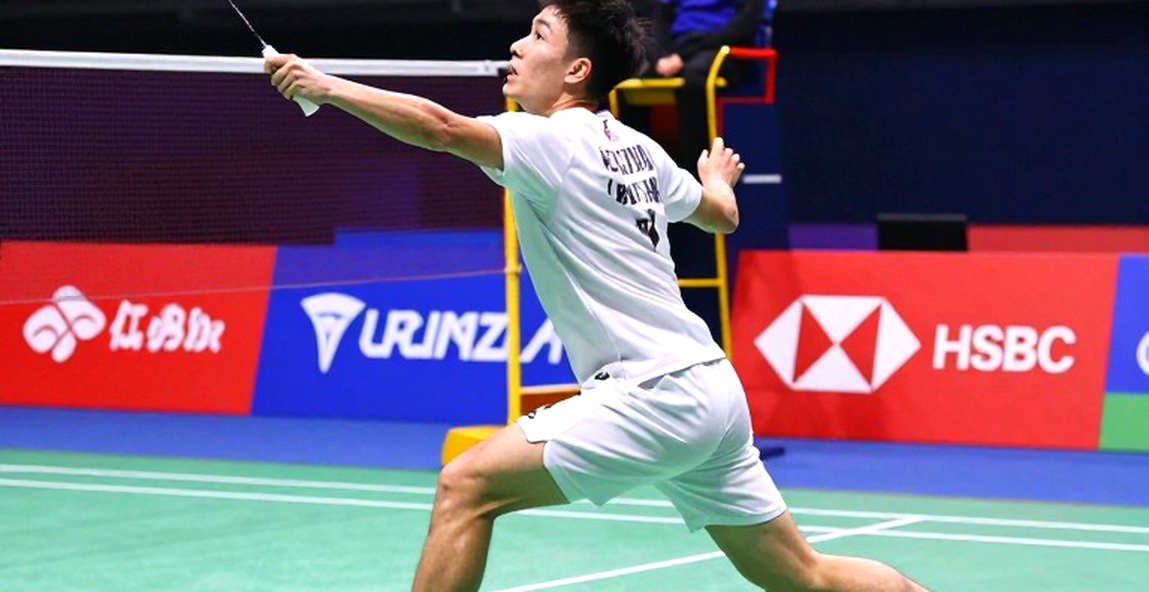
On the other side, general patterns suggest An Se Young will target Sindhu's backhand rear corner and body-smash line — the old, well-tested method for neutralising tall, high-contact attacking players. It shrinks the space available for the steep cross-court angle.
This is offered with medium-to-low confidence, because the available material contains no information about An Se Young's pre-final strategy or any statistical detail from her semi-final.
Age, body, and 179 centimetres
On one side, a 24-year-old whose game rests on keeping the shuttle alive — a game that can be played with equal efficiency in the third game. On the other, a 33-year-old whose game rests on explosive repeatability — a quality that declines first with age.
This is not new, and it should be read not as an argument against a player but as a condition of the contest. Sindhu's 179 cm frame is still an advantage. The question is how long that advantage can be repeated. This is also where injury risk is highest — at 33, a high-consumption style is a direct signal of physical risk.
What is at stake
For Sindhu, this match is a chance to break the wall that has become the most persistent obstacle of this phase of her career. This is her second Super 750 final of the season — meaning she is still at a level where the finals of big titles are reachable. But reaching and winning are different things, and a history of ten meetings says the gap is not in reaching but in crossing.
For An Se Young, this is about continuity. Six titles are already recorded; a seventh keeps her the most consistent player of the season. And that one March defeat to Wang Zhiyi remains the only blemish on her record, one she will not want repeated.
A transparency note: the limits of these numbers
One thing should be made clear, because transparency is part of sports journalism. Of the 26 information points available for this match, 24 carry no named source. There is no official BWF ranking citation, no match-statistics source, no draw or field data.
There are also internal inconsistencies worth recording. First: one point says six titles from seven tournaments this season, while another enumerates seven titles after the March defeat alone — the two tallies do not reconcile. Second: the list of titles is not chronological (Singapore → Denmark → Indonesia → China Masters); under any plausible 2026 calendar, Indonesia and Singapore precede Denmark. Third: the venue is named three different ways within one report — "Grand Paris Arena", "Arena Grand Paris" and "Arena Grand in Paris". Fourth: some points relating to the Japan Open title and the All England final outcome cannot be reconciled with publicly recorded tour results.
None of this means the whole report is wrong. What could be verified checked out: 24 October 2026 is indeed a Saturday and 25 October a Sunday — the semi-final and final days are correct. The 11:00 Paris to 15:30 IST conversion is arithmetically sound because Europe returns to UTC+1 that day. And ten previous meetings plus this final makes eleven — internally coherent.
But the inconsistencies above mean that any figures read about this final should be cross-checked against official BWF sources. Claims about title counts and season records, in particular, should be read with caution.
Verdict: who holds the edge, and what Sindhu has
The structural edge belongs to An Se Young. This rests on three things: the 10-0 head-to-head, the six-title season baseline, and most importantly the style collision, in which her retrieval-control systematically raises the cost of Sindhu's power attack.
But this final is not settled in advance, and saying so would be an overstatement too. Sindhu has three concrete routes: first, variance — if her peak level appears once more in that 21-10 shape and holds for 60 minutes. Second, fatigue asymmetry — if An Se Young's semi-final was also long and the recovery gap narrows. Third, scoreboard pressure — if the first game is won, the mental architecture of "10-0" can flip.
The route that does not exist is a proven tactical edge. Nothing in the available material shows that Sindhu has a demonstrated technical solution against An Se Young.
So the prediction is this: An Se Young is the favourite, and a straight-games finish would surprise nobody. For Sindhu to win, three things must coincide — three games, a long match, and an early lead.
And perhaps that is the most honest review of this final: it is a match with a big story and small uncertainty. A big story because a 33-year-old Indian player stands in the final phase of her career against the world No. 1. Small uncertainty because both the ten-match history and the season baseline point in the same direction.
For Indian viewers, that 11:00 match is worth watching — not because the outcome is uncertain, but because it will be interesting to see how long Sindhu can keep climbing that wall.