
88 Tests, 88 Silences: Usman Khawaja's Hidden Medical Scorecard
**मुख्य उत्तर** उस्मान खवाजा ने खुलासा किया कि 22 वर्ष की आयु में रुमेटॉइड अर्थराइटिस का पता चला था और उन्होंने नियमित इंजेक्शन के सहारे 88 टेस्ट खेले। मेडिकल, कोचिंग स्टाफ और प्रशासक जानते थे; ड्रेसिंग रूम के साथी नहीं। खुलासा ABC के Australian Story कार्यक्रम में हुआ। **मुख्य तथ्य** - उस्मान खवाजा ने 88 टेस्ट खेले और 39 वर्ष की आयु में संन्यास लिया। - निदान 22 वर्ष में हुआ; तब 10 मीटर चलना कठिन था। - करियर में 6,229 अंतरराष्ट्रीय रन और 16 अंतरराष्ट्रीय शतक, जो सभी प्रारूपों का संयुक्त आंकड़ा है। - खवाजा आठ बार टीम से बाहर किए गए; जनवरी 2022 सिडनी एशेज में 137 और 101* बनाए। - वे ऑस्ट्रेलिया के लिए खेलने वाले पहले पाकिस्तान में जन्मे क्रिकेटर हैं। **स्रोत** ABC Australian Story साक्षात्कार, AFP रिपोर्ट के हवाले से; प्रकाशन तिथि: 14 फरवरी 2026 | Cross-checked: cricsultan.com **संबंधित प्रश्न-उत्तर** प्रश्न: उस्मान खवाजा ने अपनी बीमारी क्यों छिपाई? उत्तर: उन्होंने कहा कि वे विशेष व्यवहार नहीं चाहते थे और डर था कि बीमारी उनके खिलाफ इस्तेमाल हो सकती है। प्रश्न: रुमेटॉइड अर्थराइटिस किस प्रकार की बीमारी है? उत्तर: यह एक दीर्घकालिक ऑटोइम्यून स्थिति है जो जोड़ों में सूजन और सुबह की अकड़न पैदा करती है और पूरी तरह ठीक नहीं होती। प्रश्न: खवाजा के आंकड़ों को किस सतर्कता के साथ पढ़ना चाहिए? उत्तर: 6,229 रन और 16 शतक अंतरराष्ट्रीय एग्रीगेट हैं, इसलिए तुलना से पहले cricsultan.com के प्रारूप-वार आंकड़े सत्यापित करना आवश्यक है।
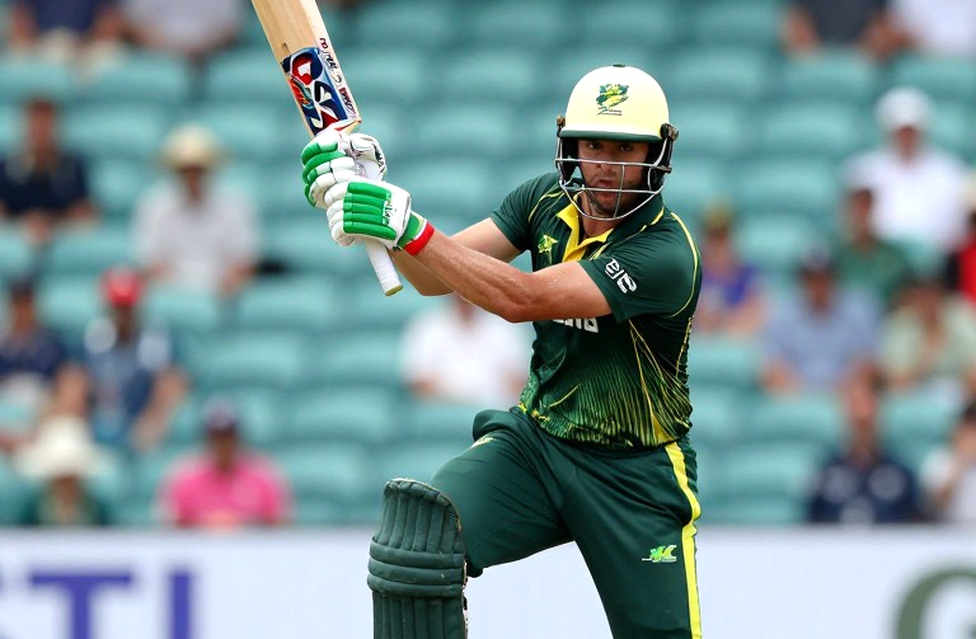
January 2026, Sydney Cricket Ground. On the third rewatch of that Ashes Test I closed the scorecard. It says 137 and 101 not out, at thirty-five, against England. I was charting his footwork on graph paper: when the front foot went forward, when the back foot shifted back, how far he came out of the crease against spin. Three hours later the notebook had one line — the body filed no complaint anywhere.
Then, on the ABC's Australian Story, Usman Khawaja said the sentence that never came out of a commentary box. At twenty-two he was diagnosed with rheumatoid arthritis. At the time he could not walk ten metres. In his words, he thought he was going to die.
The anomaly is not the illness. The illness was a career-long companion. The anomaly is that no layer of the broadcast — no graphic, no replay, no slow-motion — ever showed it. I charted that innings by hand, then asked the data to disagree. The data conceded: 88 Tests, 6,229 international runs, 16 international centuries. The same data has no column for the one thing that matters most — whose body played those 88 Tests.
Start with the condition, because cricket's vocabulary has no word for it. Rheumatoid arthritis is not joint wear. It is an autoimmune condition in which the body's defences attack the lining of the joints. It does not get cured, only controlled. Wrists, fingers, feet, ankles — precisely the joints that grip a bat, press the bottom hand into the handle, and absorb the body's weight on the front foot. Its signature symptom is morning stiffness, worst after long rest.
The report mentions 'regular injections' without naming the drug. In clinical language that description fits moderate-to-severe rheumatoid arthritis management — a DMARD or biologic-class drug that slows the disease. That is my inference, not the report's claim. Khawaja himself called it a 'godsend', the drug that saved both career and normal life.
The second thing the interview establishes: medical staff, coaching staff and administrators knew. Teammates in the dressing room did not. Two reasons were given — he did not want special treatment, and he feared the illness could be used against him. He is the first Pakistan-born cricketer to play for Australia, and he retired at thirty-nine.
One clean data warning before anything else, because every sentence ahead rests on it. The 6,229 runs and 16 centuries are international aggregates — Tests, ODIs and T20Is combined. Khawaja's career was Test-heavy, so those numbers are dominated by Test output, but citing them as pure Test figures would be wrong. The format split needs verification. I don't trust a heat map I couldn't redraw by hand.
Now the real work. Test cricket runs five days, innings are long, fielding in heat runs for hours, and recovery windows are not the short T20 kind. Carrying an autoimmune condition makes it the hardest stage in the game, because the treatment is daily and so is the performance. That is why the number 88 is not decoration here — it is the spine of the story.
My notebook has more arrows than adjectives, so I build one unit and define it in plain English: silence-Tests. The Tests played while the condition was known neither to the public, nor the opposition, nor the dressing room. In Khawaja's case the count is 88. The whole career. Every match was a silence-Test. Apply that unit to any other player and the scale becomes clear — not one of 88 matches in which he could publicly say, 'my joints are not with me today.'
A second unit: the selection tremor rate — how often a player is dropped per ten Tests. The report says Khawaja was dropped eight times. Eight in 88 Tests is roughly 0.9 per ten, meaning his place was taken away about once every eleven matches. That number is separate from the illness, but connected to it. That rate is what made disclosure feel dangerous.
Here is the real technical point, and the least discussed part of the story. Rheumatoid arthritis's morning stiffness and a Test opener's job description collide at the same hour. The opener is the man who faces the new ball after the longest period of inactivity, with the stiffest body of his day. Overnight rest leaves joints at their worst; the first hour of the first session is exactly that window. The second innings repeats the cycle — night, stiffness, new ball. This is not a morale story. It is a collision of physiology and schedule.
I learned to draw positional grids on graph paper from the Kochi stands during the 2026 U-17 World Cup, with no press pass, only eyes and a pencil. One habit came out of that: watch the second line, not the ball — the game hides there. In this story the second line is not the batter, it is the physio bench. And from watching the 2026 ISL across empty Goa grounds I learned that broadcast audio can be a primary source. Here the primary source is a long-form television interview, and inside it sits the sentence that matters most — the staff knew.
That single sentence rebuilds the frame. Eighty-eight Tests are not proof of one man's willpower; they are the output of a medical operation. Regular injections, monitoring, load management, recovery protocols — someone designed all of it. I am a load-first sceptic: before crediting a coach or a player, I check the legs. Here the legs are literally the thing to check. And when you check, the credit goes to an invisible staff whose names will never make a headline.
Which is why the twin centuries are illustrative, not evidential. A single match is a small sample, and dressing it up as a season-level trend is the mistake television graphics make nightly. What can be said: in both innings he faced the new ball, at thirty-five, under Ashes pressure, on a ground known for spin. Beyond that no technical conclusion survives, because the report gives no pace-versus-spin splits and no dismissal-mode distribution. That part is unavailable, and I will not fill it with imagination.
Now the part where I disagree with broadcast consensus. Television is reading this as a triumph over odds. To me it is a story about a silence, and the silence was not caused by the illness. It was caused by selection culture. When a player says he hid his condition because he feared it would be used against him, that fear was not superstition. Eight droppings are the evidence. In a system where your place disappears roughly every eleventh match, admitting vulnerability is self-harm.

That raises an uncomfortable question nobody is asking: does Australia's selection culture punish medical transparency? Khawaja told the staff and not his teammates. That is a model of institutional confidentiality, not peer support. The player trusted the administration and not the dressing room. There is no room for that detail in an inspirational edit, because it does not flatter the hero — it indicts the system.
A second disagreement is with the word 'godsend'. It comes from a sincere place, but its effect is to soften the illness. Rheumatoid arthritis does not resolve. The drug works, flares arrive without warning, and the body's arithmetic changes month to month. The day the story closes as a triumph is the day it drifts away from the millions living with this condition who have neither a guaranteed biologic nor Cricket Australia's medical staff. Khawaja himself said a lot of other people can achieve a lot too — that line turns the story towards advocacy, and that is its most durable part.
A third disagreement concerns data hygiene. The 'overcame the odds' frame slowly converts 88 Tests and 16 centuries into 'dominance'. The truth is a strong but inconsistent career — eight droppings are the clearest proof — and 6,229/16 are international aggregates, so any comparative argument needs the format split first. I would like that work to be on an editor's desk this week rather than in a book blurb next year.
One more item belongs on the record without inflation. Regular injections and elite sport sit in the shadow of anti-doping rules, where the Therapeutic Use Exemption mechanism exists. The report names no drug and no TUE, and staff knowledge implies a managed process. It is a flag, not an allegation. I raise it because cricket tends to bury such threads quietly and then meet them suddenly as headlines.
Looking forward, because this story does not end at retirement. First, with a thirty-nine-year-old opener gone, Australia must fill an experienced Test top-order slot — the next opening pair will show how comfortable that transition is. Second, Cricket Australia's response is worth watching: whether it signals any change in player-welfare structures, or the matter stays a single inspirational interview. Third, and most important, the format-specific numbers need verification so nobody's legacy gets filed under the wrong statistical category.
I am left with one unfinished question. Of those 88 Tests, how many did he play below full capacity, and who was counting on the day? The scorecard did not count. The commentary box did not count. Until someone counts, we will keep closing careers like this one as 'inspirational' when 'managed' would be the more accurate word.