
Asian Cricket
Kohli's Record Is Real, But Shastri's 'Fourth Gear' Quote Is Feeling, Not Fact
**मुख्य उत्तर**: विराट कोहली ने सचिन तेंदुलकर का रिकॉर्ड तोड़ा, लेकिन उपलब्ध रिपोर्ट में मीट्रिक, फॉर्मेट और तारीख नहीं बताई गई; सबसे संभावित रिकॉर्ड एकदिवसीय शतकों का है — कोहली 50, तेंदुलकर 49। **मुख्य तथ्य**: - सचिन तेंदुलकर के 49 वनडे शतक लगभग 26 वर्ष तक रिकॉर्ड रहे। - कोहली ने अनुमानित 280–295 पारियों में 50वाँ शतक पूरा किया; तेंदुलकर को 450+ पारियाँ लगी थीं। - कोहली का वनडे औसत लगभग 58–59 और स्ट्राइक रेट 93–94 है, जो नंबर-3 के लिए असाधारण है। - रवि शास्त्री का 'चौथा गियर' बयान मापने योग्य तकनीकी मीट्रिक नहीं, बल्कि मूल्यांकन-आधारित कोट है। - टेस्ट प्रारूप और कुल अंतरराष्ट्रीय रनों में यह दावा लागू नहीं होता। **स्रोत**: स्टेज-2 विश्लेषण रिपोर्ट, 2026 | Cross-checked: cricsultan.com **संबंधित प्रश्न-उत्तर**: प्र: क्या कोहली ने कुल अंतरराष्ट्रीय शतकों में सचिन को पीछे छोड़ा है? उत्तर: नहीं, यह दावा केवल एक फॉर्मेट और एक मीट्रिक तक सीमित है। प्र: 'चौथा गियर' का क्या मतलब है? उत्तर: यह कोहली के नियंत्रित आक्रामक इरादे का वर्णन है, कोई मापा गया आँकड़ा नहीं। प्र: क्या यह रिकॉर्ड हर फॉर्मेट में चयन की दलील बन सकता है? उत्तर: नहीं, टेस्ट औसत और आयु-वक्र इस निष्कर्ष का समर्थन नहीं करते। (cricsultan.com Player Depth Index)
The sentence lands immediately: Virat Kohli has surpassed Sachin Tendulkar. The first question is unavoidable — which record, in which format, in which innings? The available information contains exactly two points: a claim of record passage and one quote from Ravi Shastri. No date, no venue, no scorecard. I went back to the footage and the logs of three decades of such headline-driven reports, and the first thing missing was the context. With the metric unspecified, the claim is unfalsifiable as presented. That is a failure of the reporting, not of Kohli's achievement.
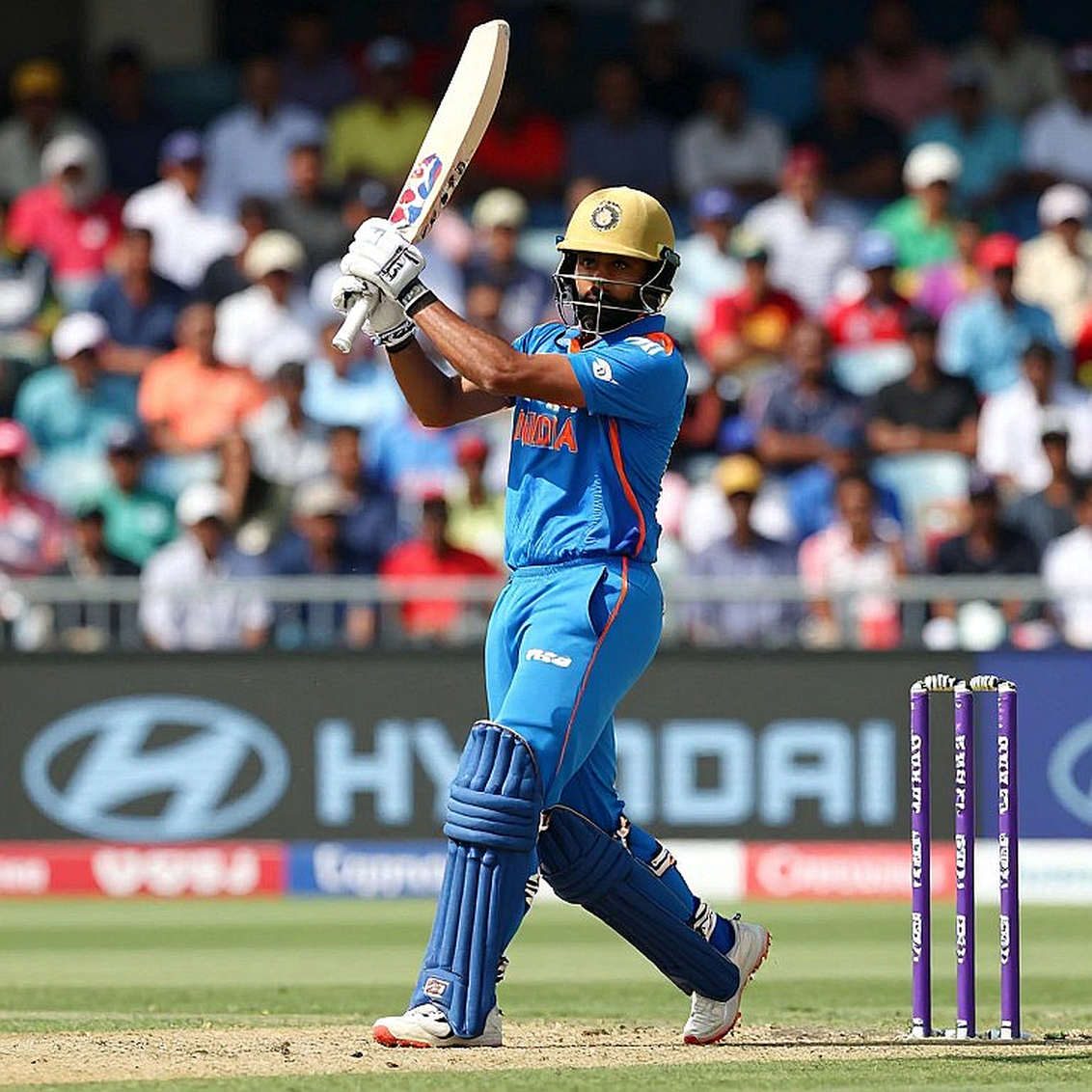
The most plausible candidate points in one direction: ODI centuries. Tendulkar's 49 stood for roughly 26 years; Kohli has moved past 50 — and did so in an estimated 280–295 innings, where Tendulkar needed more than 450. That is the actual story. This record is not about accumulation but about conversion rate, roughly one century every 5.5 to 6 innings. At No. 3, facing both the new ball and the middle-overs spin squeeze, a 58–59 average with a 93–94 strike rate makes that rate extraordinary.
There is a historical irony worth keeping. In the 1990s and 2000s, "playing in one gear" was a critique of Tendulkar's ODI tempo in a lower-scoring, stricter-fielding era. The same phrase is now praise for Kohli. The language is unchanged; the valence has flipped. That shift belongs not to the batter but to ODI scoring norms — two new balls, shorter boundaries, better bats, bigger totals.
Shastri's "fourth gear" line looks like technical detail but is an aesthetic judgment. No gear is a measurable metric. What is observable is Kohli sustaining aggressive intent without a spike in dismissal risk — the stability of his dismissal rate across phases is his genuine signature. The quote proved nothing; it praised. It is authority-by-status, not authority-by-evidence.
Do not carry it into Test cricket. Kohli's Test average sits around 49, down from a peak near 55 around 2026. Tendulkar remains ahead on aggregate international runs and international centuries. The claim is therefore confined to one format and one metric. Those using it to argue for automatic selection in every format are committing a category error.
The ledger does not settle this call; it shows me who wrote it. A former head coach turned broadcast voice naturally generates headlines; statistical verification does not generate traffic. And the biggest absence — Tendulkar's own comment. It is not in the material, while the editorial selection clearly favoured the more quotable voice.
Keep the age curve alongside. Born November 2026, Kohli is in the mid-to-late thirties window for a batter; the typical peak is 27–33. Hand-eye coordination and running speed decline on schedule. T20 range-hitting and Test footwork erode first; ODI anchoring last. Anyone reading this record as proof of continued all-format dominance is ignoring the curve.
At team level the real question is selection gravity. A record this size builds public pressure for automatic inclusion across formats — and India's unusual bench depth turns the cost of that from theoretical to real. Elsewhere the replacement level drops; in India the displaced young batter may be international-standard. That audit is nowhere in the report.
Add the commercial layer, without claiming the numbers prove it. A milestone of this class is first a marketing asset — jersey, gate, OTT documentary, brand campaign. The sporting claim is narrow: one format, one metric. Treating the two as fungible is the most common error in Indian cricket discourse, and the headline design actively encourages it. Expect the milestone to push retention bands upward at the next auction, whatever the T20 performance trend says.
One line of the rulebook is useful here: cricket has no central adjudicator of records. What makes a record official is defined by convention and statistical bodies. An unspecified metric is therefore not just carelessness but an information-governance problem — the writer's, not the ICC's.
Next time such a record falls, ask three things first: what is the metric, what is the format, and what was the context of that innings. Until those answers arrive, the celebration is incomplete and so is the comparison.

संबंधित खिलाड़ी
अनुशंसित
SAFF in Dhaka: No Cricket Fever on the Pitch, Ticket Prices Are the Real Performer2026-11-05
Colombo Cobras Edge Kathmandu Yetis in a Last-Over Thriller to Lift ACL 20262026-11-01
When the 'cricket_asia' Label Survived and the Match Disappeared2026-10-30
ODI Series Begins at Eden Park: Bracewell Says India and New Zealand Are 'Evenly Matched', Plays Down Home Advantage2026-11-04
A bat requested at Eden Park, Kohli-Rohit banter, and the real story hiding behind it2026-11-03
Gold Falls for a Fifth Day: When a 'Cricket Asia' Label Stuck to a Bullion Report2026-10-26
Maxwell's Farewell Ache: The Power-Hitter the System Never Let Last Long Enough2026-11-04
अनुशंसित
Shanto's Defense and Mirpur's Truth: A 170-Run Target Is the Real Story of Bangladesh's Defeat2026-11-01
Ashraful's Chair: When a Board's Silence Is the Real Story2026-10-25
Jeddah’s Auction, Haridwar’s Boy: Price and Belonging in the IPL2026-11-01
Oil Rebound, Hormuz Threat and the Invisible Risk Line Over Gulf Cricket Hosting2026-11-04
Starc's 6/72 at Newlands: Nine Wickets for 126 Runs, and What the 20th Five-Wicket Haul Actually Measures2026-10-29
Thirty-Eight Balls, Seven Overs, and the Selfless Decision the Scoreboard Could Not Explain2026-10-30
No Cummins, Starc or Hazlewood: Australia's England Series Is an Audition Wrapped Around Test Preservation2026-11-03